
Muamba de Galinha
Muamba de Galinha is a rich Angolan chicken stew made with red palm oil and okra, perfect served with funje or rice.
Contents (5 sections)▾
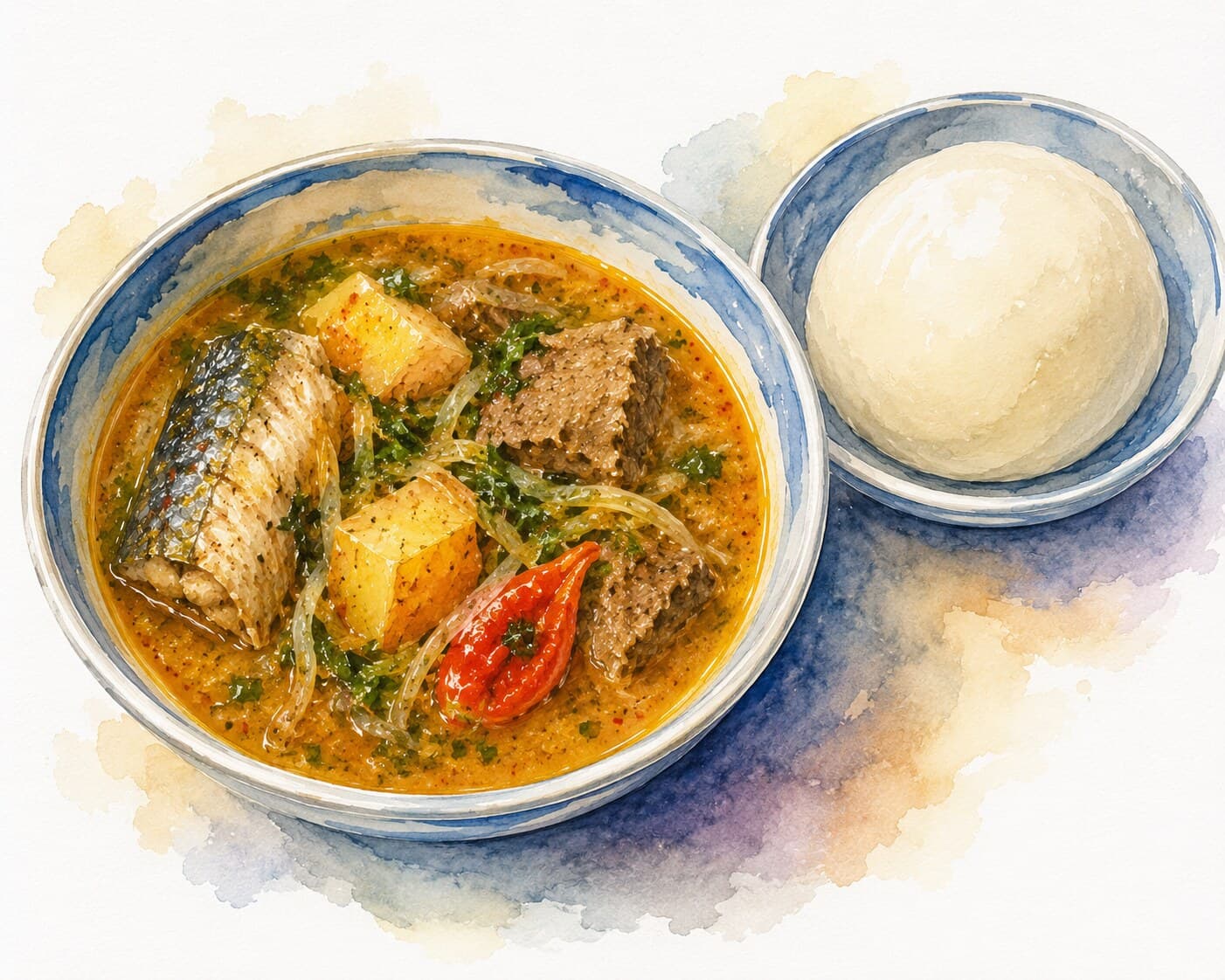
Ingredients
- 1 kg chicken, cut into pieces
- 250 ml red palm oil
- 200 g okra, sliced
- 4 cloves garlic, minced
- 1 large onion, diced
- 2 medium tomatoes, chopped
- 2 jindungo chilies, chopped
- Salt to taste
- Black pepper to taste
- Water as needed
Steps
In a large pot, heat the red palm oil over medium heat until it shimmers, about 3-5 minutes. This helps to release the flavors of the oil.
Add the diced onion and minced garlic, sautéing until the onion is translucent, around 5-7 minutes.
Stir in the chopped tomatoes and jindungo chilies, cooking for another 5 minutes until the tomatoes soften.
Add the chicken pieces to the pot, seasoning with salt and black pepper. Cook for about 10 minutes, turning occasionally, until the chicken is browned on all sides.
Pour in enough water to cover the chicken, bring to a boil, then reduce the heat and simmer for 30 minutes. This allows the flavors to meld together.
Add the sliced okra to the pot, stirring gently. Simmer for an additional 10-15 minutes, or until the okra is tender and the sauce thickens.
Why this works
Muamba de Galinha combines the rich, nutty flavor of red palm oil with the unique texture of okra, which serves to thicken the stew naturally while providing a distinct taste. The method of sautéing the onions and garlic before adding the other ingredients ensures that their flavors are fully developed and released into the dish. The browning of the chicken enhances the depth of flavor through the Maillard reaction (the flavor-building browning that happens when meat meets dry heat), creating a more complex and savory base. If the stew seems too thin after adding the okra, simply allow it to simmer uncovered for a few more minutes to reduce the liquid and thicken the sauce further. This technique is key in achieving the ideal consistency without compromising on flavor, ensuring a satisfying and hearty meal.
Common mistakes
Cutting the chicken into pieces too large to cook through safely.
Target: Cut bone-in chicken into small to medium pieces so that the browning-then-simmering time fully cooks the meat near the bone; it should reach 74°C/165°F, show no pink, and release clear juices when pierced.
Why it matters: Large, thick pieces can look done on the outside after browning while the meat closest to the bone is still underdone, even after 30-45 minutes of simmering. Bone-in chicken is especially prone to this, since the bone conducts heat more slowly than the surrounding meat.
What to do: Cut pieces down to a size that cooks evenly within the simmering time, and check the piece closest to the bone — not just the surface — before serving.
Overheating the red palm oil until it smokes.
Target: Heat the oil only until it shimmers and starts to release its aroma, not until it smokes.
Why it matters: Red palm oil carries a distinctive, nutty flavor and a deep orange-red color that define this dish; heating it past its smoke point scorches those compounds, turning the oil bitter and dulling its color.
What to do: Watch for a gentle shimmer and a change in aroma over medium heat, then add the onion right away rather than leaving the oil over high heat unattended.
Keeping the pot at a hard boil once the chicken and okra are in.
Target: Bring the stew up to a boil only briefly, then drop it to a gentle simmer — a lazy bubble, not a rolling boil — for the remaining cooking time.
Why it matters: A vigorous boil toughens chicken by driving moisture out of the muscle fibers faster than it can cook through gently, and it breaks okra down into a stringy, less pleasant texture rather than letting it soften and thicken the sauce evenly.
What to do: Lower the heat as soon as the stew reaches a boil, and keep it at a gentle simmer for both the chicken and the okra stages.
Adding the okra too early, or leaving the pods whole.
Target: Slice the okra and add it only in the final 10-15 minutes, as the recipe directs.
Why it matters: Okra thickens the stew through mucilage (a natural, slightly sticky substance in the pod) that releases from the cut surfaces; whole pods release far less of it, and okra simmered too long turns soft and mushy rather than tender with a bit of structure.
What to do: Slice the pods before adding them, and stop simmering as soon as they turn tender rather than letting them cook down further.
What to look for
- Chicken that shows no pink and yields clear juices when pierced near the bone. Check the thickest, closest-to-bone part of a piece, not just the surface, before serving.
- Oil and sauce with a vibrant red-orange color rather than a dull brown. Scorched palm oil dulls the color and tastes faintly bitter — a sign it was overheated early on.
- A sauce with visible body from the okra, coating the back of a spoon. Thin, watery sauce means the okra needed more time or more pieces; a stringy, disintegrated texture means it simmered too long or too hard.
- A gentle, lazy bubble at the pot's surface rather than a rolling boil. This pace keeps the chicken tender and the okra intact rather than tough or mushy.
A note on history
Muamba de Galinha (also written moamba de galinha) is often named, alongside funje — the cornmeal or cassava-flour porridge it's traditionally served with — as a national dish of Angola, though sources differ on which of the two holds the title outright. Its ingredients trace two of the main threads running through Angolan cuisine: red palm oil, garlic, okra, and jindungo (a hot local chili) reflect Central African cooking traditions built around palm products, while onions and tomatoes point to the centuries of Portuguese colonial rule that shaped the country until its independence in 1975. That layering — an indigenous technique and ingredient base, with colonial-era additions folded in over generations — is typical of how many dishes across formerly colonized Central and West Africa took shape, and it's part of why muamba de galinha is often cooked for family gatherings and celebrations as a dish that carries a sense of Angolan identity (Angolan cuisine, Wikipedia; National Dish).
Get the essays in your inbox — free
Weekly notes on flavor, fermentation, and food history — the writing behind the Atlas of Flavor. No spam; unsubscribe anytime.