
Montadito de Anchoa y Pimiento
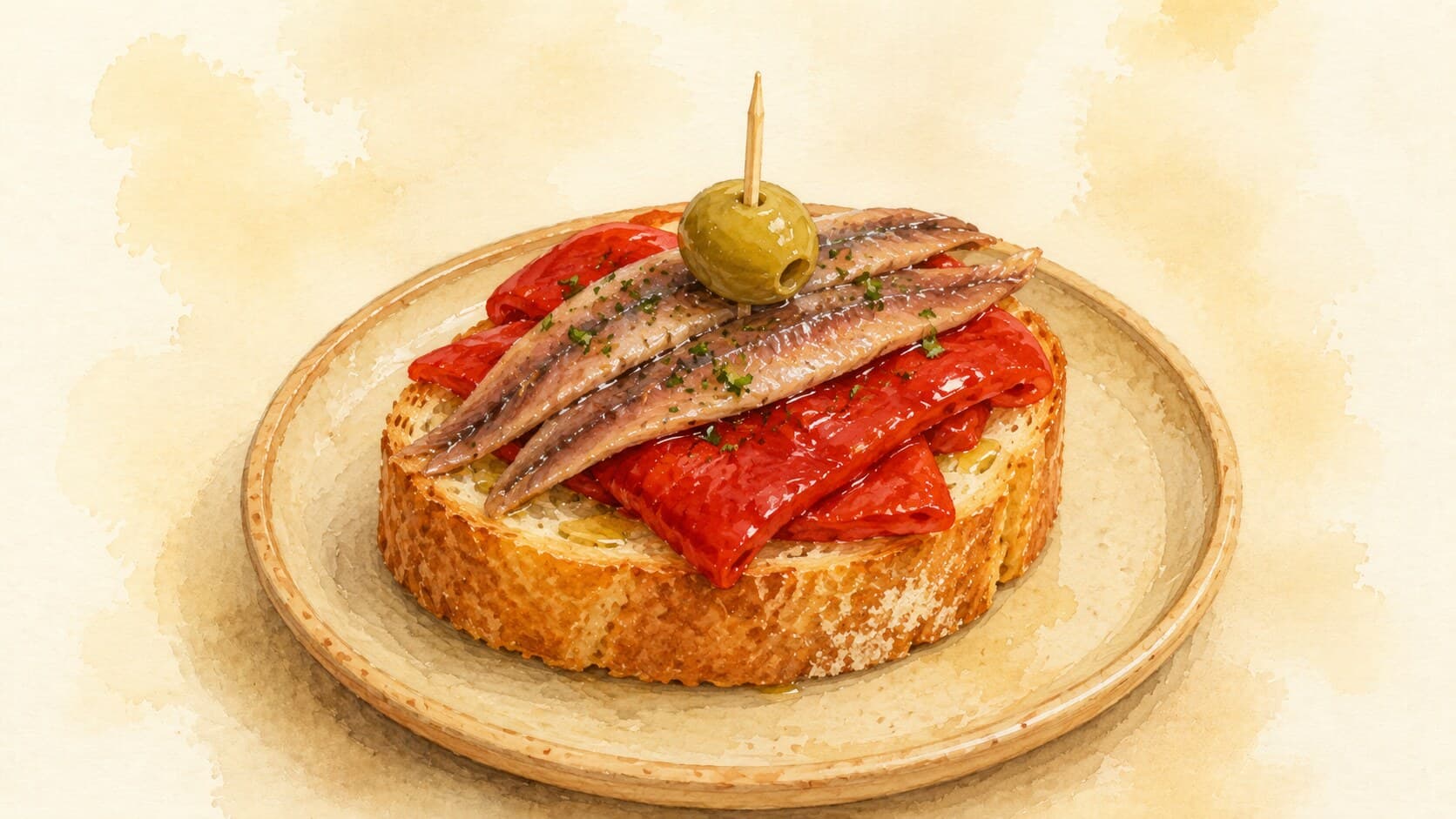
A simple yet flavorful Spanish montadito featuring anchovy, roasted pepper, and olive on toasted bread.
Contents (5 sections)▾
Ingredients
- 6 slices of small round bread (about 2 cm thick)
- 6 salt-cured anchovy fillets
- 6 strips of jarred roasted red peppers (piquillo)
- 6 black olives, pitted
- olive oil, for drizzling
- salt, to taste
- black pepper, to taste
Steps
Preheat your oven to 180°C (350°F). Arrange the slices of bread on a baking sheet.
Drizzle the bread slices with olive oil and bake for 10 minutes, or until golden and crisp.
Once toasted, remove the bread from the oven and let it cool slightly.
On each slice of bread, layer a strip of piquillo pepper, followed by a salt-cured anchovy fillet.
Top each anchovy with a black olive, securing the components together with a toothpick.
Season with salt and black pepper to taste, then serve immediately.
Why this works
This montadito showcases how each ingredient plays a crucial role in flavor and texture. The toasted bread provides a sturdy base with a delightful crunch that contrasts the softness of the anchovy. The salt-cured anchovy introduces a savory umami (the savory "fifth taste" — meaty, brothy depth) note, while the piquillo pepper (a small, sweet Spanish red pepper traditionally roasted over a wood fire and sold jarred) adds a touch of sweetness and smokiness, enhancing the overall taste profile. The olive adds brininess and serves as a finishing touch that completes the bite. If the anchovy seems too salty, you can balance it by using a milder olive or adding a touch of lemon juice for brightness. Each component is essential, and their assembly highlights the beauty of simplicity in Spanish cuisine. This technique teaches the importance of balance and harmony in flavor, making it an excellent entry point for those new to tapas assembly. It’s a straightforward way to appreciate the quality of each ingredient without overwhelming the palate.
Common mistakes
Treating cured anchovies as raw fish. Target: salt-cured anchovy fillets (the brown-skinned, packed-in-oil kind sold as "anchoas") are already a ready-to-eat preserved food — they are cured, not raw. Keep them refrigerated, and once the jar or tin is opened, use within 1–2 weeks; never go past the package "use-by" date. Why it matters: Properly cured anchovies have been salt-aged for months — the salt cure (a controlled process that draws out water and prevents bacterial growth) is what makes them safe to eat without cooking. They are not the same product as fresh anchovies or vinegar-cured boquerones, which have shorter shelf lives. Confusing the categories — or leaving an opened jar at room temperature thinking "they're cured, it's fine" — is how anchovies go off and how the bread starts to taste sour and metallic. What to do: Buy reputable salt-cured anchovies (Cantabrian-style is the gold standard), keep them refrigerated, and use a clean utensil each time you reach into the jar. Cover any remaining fillets with the oil they came in. If they ever smell off-puttingly sharp (beyond their normal briny aroma) or look slimy, discard them.
Skipping the olive-oil drizzle before toasting. Target: brush or drizzle the bread lightly with olive oil on both sides before it goes into the oven; toast until golden and audibly crisp. Why it matters: Dry-toasted bread on its own becomes brittle and crumbles under the weight of the toppings. The thin oil film fries the surface starches as they brown, building a sturdier crust that can carry the anchovy and pepper without disintegrating into the plate. Oil also adds flavor — and crucially, the bread is the only neutral element in the trio, so it needs that lift. What to do: Lightly drizzle both sides of each slice, lay flat on a baking sheet, and toast at 180°C until the surface looks like a light caramel color and a tap sounds hollow. Don't go too dark — bitter charred toast competes with the anchovy.
Using a wet, water-packed piquillo strip without draining. Target: lift the piquillo strips out of their jar liquid and let them drain briefly on a paper towel before placing on the toast. Why it matters: Jarred piquillos sit in their own juices, which are tart and watery. Place a dripping strip on toasted bread and the toast turns soggy from below within minutes — by the time the montadito reaches the table, the crisp base is gone. Drained strips, by contrast, sit cleanly on the toast and release just enough sweetness without flooding the bread. What to do: Open the jar, lift out the strips with a fork, and let them rest on a paper towel for 1–2 minutes. If they look very wet, blot the top side too. The faintly oily, drained piquillo lays flat and stays put under the anchovy.
Assembling too far ahead of serving. Target: assemble within 15 minutes of eating; the toothpick goes in last, just before plating. Why it matters: This is a constructed bite, not a marinated dish. Anchovy oil seeps into bread, lemon-juice acidity (if used) softens the toast, and the toppings shed moisture as they sit — all of which collapse the contrast that makes a montadito work. The crisp-soft-savory-sweet arrangement is at its peak in the first 15 minutes; after an hour the textures blur. What to do: Prep your components (toasted bread cooled, peppers drained, anchovies portioned, olives ready) in advance, then assemble at the last minute. If serving at a party, set out an assemble-yourself station with the components in separate dishes — guests build their own and it stays crisp.
What to look for
- A toast that holds its shape under the toppings without bending. The bread should feel firm and snappy in your hand, with a hollow tap on the underside. Bread that wilts as you pick up the montadito is either undertoasted or has been sitting under the toppings too long — eat it fast or build a new one.
- An anchovy strip that drapes across the pepper, not curling tightly. A good salt-cured fillet relaxes into a soft, slightly glossy ribbon — brown-skinned, no crystals of salt on the surface, no broken texture. A stiff, curled fillet that resists laying flat means it has dried out in the jar or sat too long; the flavor will be sharper and saltier than it should be.
- A piquillo that looks plumply velvety and matte, not slick with juice. Properly drained piquillos look like a thin red leather — soft, slightly puckered at the edges from where they were peeled, with a matte rather than wet surface. Liquid pooling on the toast around the pepper means it wasn't drained enough.
- The first bite gives you four distinct sensations. Crunch from the toast, give from the pepper, melt from the anchovy, snap from the olive. If any one of those merges into another — for instance, the toast has gone soft and feels the same as the pepper — the assembly has been sitting too long.
A note on history
The tapa tradition is generally traced to Andalusia in southern Spain, where small bites — originally placed on a "tapa" (lid) over a wine glass to keep flies out — became a culinary genre of their own. The montadito is the Andalusian form, a small piece of bread with something "mounted" (montado) on top, and is distinct from the Basque pintxo, which is the northern variant typically held together with a small skewer (pintxo means "spike" in Basque) (Eye On Food Tours, Piccavey).
Get the essays in your inbox — free
Weekly notes on flavor, fermentation, and food history — the writing behind the Atlas of Flavor. No spam; unsubscribe anytime.