
Manti
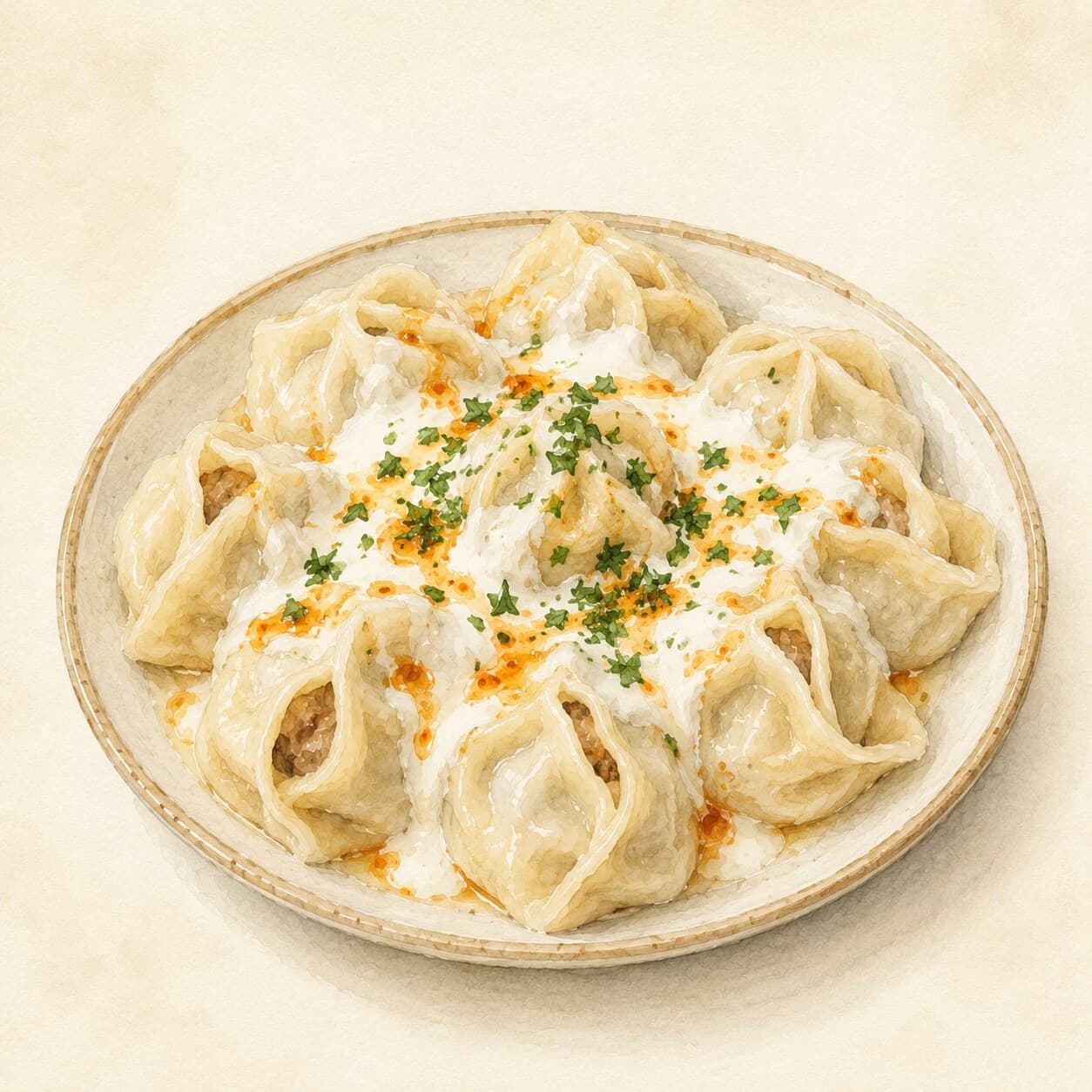
Manti are delightful Central Asian steamed dumplings filled with savory meat and topped with a rich yogurt-garlic sauce and flavorful paprika butter.
Contents (5 sections)▾
Ingredients
- 250 g thin wheat-dough wrappers
- 300 g ground lamb or beef
- 1 medium onion, finely chopped
- 1 tsp salt
- 1/2 tsp black pepper
- 1 cup yogurt
- 2 cloves garlic, minced
- 50 g butter
- 1 tsp paprika
- 1/2 tsp chili flakes (optional)
Steps
In a bowl, mix the ground meat, chopped onion, salt, and black pepper until well combined. This will ensure even flavor distribution in the filling.
Place about 1 tablespoon of the filling in the center of each wheat-dough wrapper. Fold the sides over and pinch to seal tightly. This prevents the filling from leaking during steaming.
Prepare a steamer, bringing water to a boil. Steam the manti for 15 minutes, or until the dough is tender and the meat is fully cooked. Steaming is essential for achieving a soft texture. Cook the ground meat until it reaches 71 °C / 160 °F on an instant-read thermometer (no longer pink throughout) — colour, float and time are guides, not the safety test.
While the manti are steaming, combine the yogurt and minced garlic in a bowl, mixing well. This creates a refreshing sauce that complements the rich dumplings.
In a small saucepan, melt the butter over medium heat. Once melted, stir in paprika and chili flakes if using, cooking for 1-2 minutes until fragrant. This enhances the flavor of the butter, giving it a vibrant color.
Serve the steamed manti topped with the yogurt-garlic sauce and drizzle with the paprika butter for a rich finish.
Tools you'll want
Why this works
Manti’s success hinges on the balance of flavors and textures. The thin wheat wrappers allow for a delicate bite, while the ground lamb or beef provides a rich filling that harmonizes with the sharpness of onion. Steaming the dumplings ensures they remain moist and tender, essential for the ideal texture. If the dumplings break while sealing, it may be due to overfilling or the dough being too dry. To prevent this, ensure your wrappers are pliable and only use the recommended amount of filling. The yogurt sauce, mixed with garlic, adds a creamy tang, cutting through the richness of the meat, while the paprika butter adds a contrasting warmth and color. Together, these elements create a well-rounded dish that captures the essence of Central Asian cuisine.
Common mistakes
Overfilling the wrappers.
Target: About 1 tablespoon of filling per wrapper — enough to fill, not to strain the seams.
Why it matters: As the meat heats, it swells and releases juice and steam. Pack in too much and there's no room for that pressure, so the dumpling splits open and its juices — the best part — leak into the steamer.
What to do: Resist the urge to overstuff. It's better to make a few more dumplings with less filling each than to lose them to burst seams.
Loose or dry seals.
Target: Edges pinched firmly shut with no gaps, the dough still soft and slightly tacky where it joins.
Why it matters: Manti are sealed by pressing damp dough against itself. If the edges have dried out or aren't pressed hard enough, they pop open as the filling expands and the dumpling empties out.
What to do: Work with a few wrappers at a time and keep the rest covered with a cloth so they don't dry. If an edge feels dry, dab it with a wet fingertip before pinching. Press along the whole seam, not just the tips.
Crowding the steamer so dumplings touch.
Target: A single layer with a little space between each dumpling.
Why it matters: Raw dough is sticky. Dumplings pressed against each other fuse together and tear apart when you lift them out, spilling the filling.
What to do: Leave gaps, and lightly oil the steamer surface or line it (with cabbage leaves or parchment with a few holes poked in) so the bottoms release cleanly. Steam in batches if needed.
Scorching the paprika butter.
Target: Warm, foaming butter stirred with paprika just until it turns deep red and smells fragrant — 1 to 2 minutes, no more.
Why it matters: Paprika is a ground spice with sugars that burn fast. Left on heat too long or over a flame that's too high, it turns from sweet and red to bitter and brown in seconds.
What to do: Melt the butter, then take the pan off the heat (or drop to very low) before stirring in the paprika. The residual warmth is enough to bloom the color and aroma. Pour it over the dumplings right away.
Steaming with the water touching the dumplings.
Target: Boiling water below, dumplings above it, cooked by steam only.
Why it matters: Manti are steamed, not boiled. If the water level reaches them, the bottoms go soggy and waterlogged and the seams weaken.
What to do: Check that the water sits below the steamer basket, and top it up with already-hot water if it boils low during the 15 minutes.
What to look for
- Sealed dumplings before steaming: seams pinched tight with no gaps or thin, stretched spots. Hold one up — nothing should shift or leak.
- The steam: a strong, steady cloud rising through the basket, with the water at a lively boil underneath but not splashing up to the dumplings.
- Doneness: the dough turns from matte and pale to slightly glossy and translucent, and the filling feels firm through the wrapper. The filling is ground meat, so colour and clear juices are not the safety test — an instant-read thermometer pushed into the filling of the largest dumpling should read 71°C / 160°F.
- The paprika butter: bright red, foaming, and fragrant — not browned, and with no burnt, acrid smell.
- The yogurt sauce: smooth and pourable, the garlic fully stirred through with no dry pockets, so every dumpling gets an even coat.
A note on history
Manti belong to a family of filled dumplings that spread along the Silk Road, with roots among Turkic and Mongol peoples of Central Asia; the name is linked to the Turkic mantou / mantau, meaning bread cooked in steam. The Mongol expansion of the 13th century helped carry the dish westward into Persia and the Caucasus, and related dumplings survive across the region — from Central Asian manti to Turkish mantı and Korean mandu. (Manti (food) — Wikipedia)
Get the essays in your inbox — free
Weekly notes on flavor, fermentation, and food history — the writing behind the Atlas of Flavor. No spam; unsubscribe anytime.