
Kurt Soup
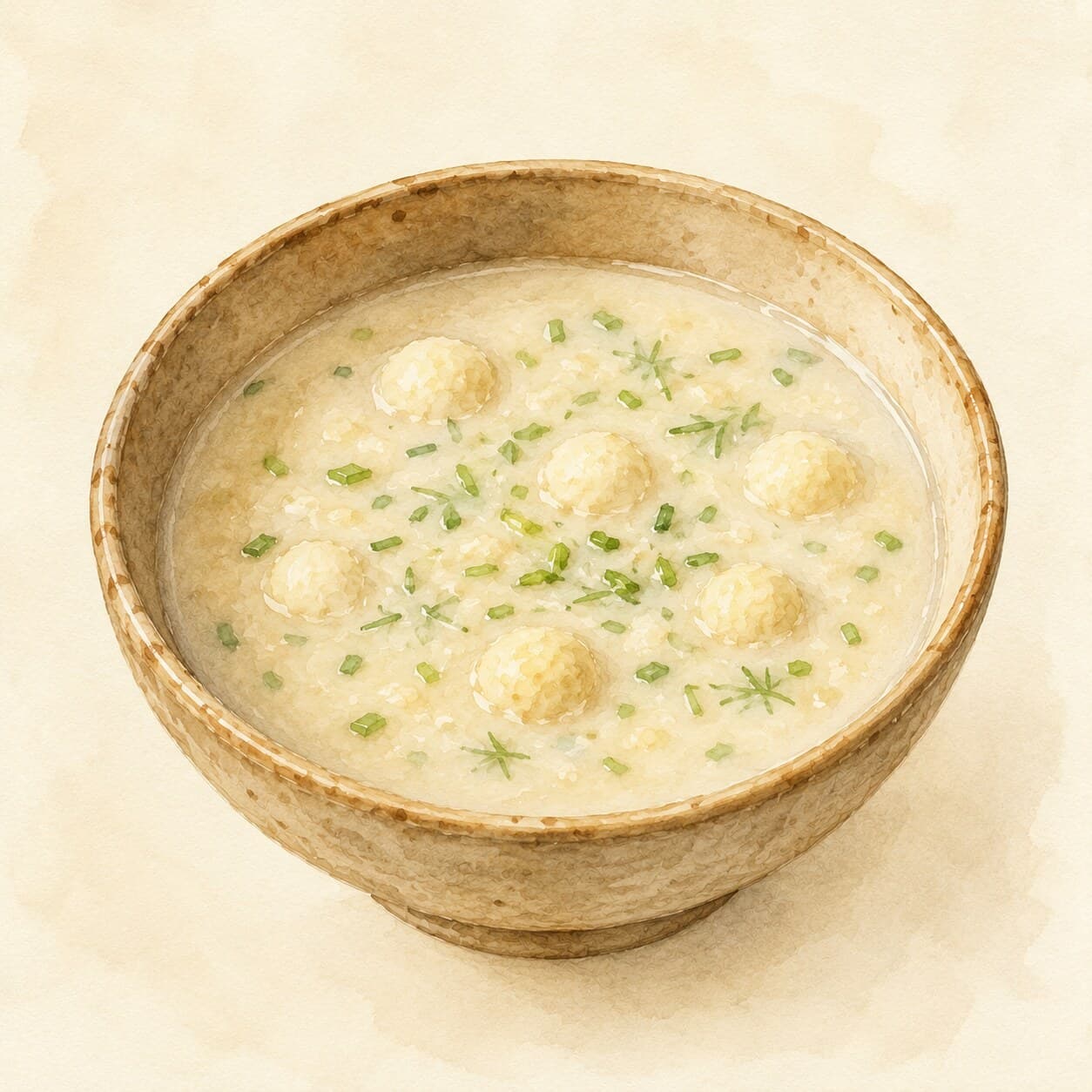
Kurt Soup is a tangy and hearty Central Asian dish made by reconstituting dried yogurt balls in a savory broth.
Contents (5 sections)▾
Ingredients
- 100 g kurt (dried fermented salted yogurt balls)
- 1 liter water
- 200 g wheat dumplings or noodles
- 1 cup fresh herbs (like dill or cilantro), chopped
- Salt to taste
- Pepper to taste
Steps
In a large pot, bring 1 liter of water to a simmer over medium heat.
Add the kurt balls to the simmering water and let them rehydrate for about 10 minutes, stirring occasionally to help them dissolve.
Once the kurt has dissolved into a tangy broth, add the wheat dumplings or noodles and cook according to package instructions, usually about 5-7 minutes.
Season the soup with salt and pepper to taste, and stir in the chopped fresh herbs just before serving.
Why this works
The technique of reconstituting kurt balls in hot broth allows the dried yogurt to slowly dissolve, releasing its tangy flavor into the soup. This method also prevents overcooking the kurt, which could result in a less appealing texture. It's important to monitor the simmering while adding the dumplings or noodles; if the broth seems too thick, you can always add a bit more water to achieve the desired consistency. Conversely, if the soup tastes too salty due to the kurt, add a splash of lemon juice to balance the flavors. Overall, this dish showcases the unique flavor of kurt, making it a comforting and nutritious option.
Common mistakes
Kurt that never fully dissolves.
Target: A smooth, evenly cloudy broth with no chalky lumps before you add the dumplings.
Why it matters: Kurt is dried hard — the balls need time and gentle heat to soften and break down. If you rush, you get gritty white pieces sitting in a thin, under-flavored broth instead of the tangy, milky body the soup should have.
What to do: Give the kurt a full 10 minutes at a gentle simmer (small bubbles, not a rolling boil), pressing and crushing the softened balls against the side of the pot with the back of a spoon to help them break apart. Grating the kurt on the large holes of a box grater before it goes in speeds this up a lot.
Salting on autopilot.
Target: Taste the broth after the kurt has dissolved, then decide if it needs any salt at all.
Why it matters: Kurt is a salted, fermented dairy — it releases a surprising amount of salt as it dissolves. Salt added out of habit at the start can push the finished soup too far, and you can't take it back out.
What to do: Hold the salt until the kurt is fully dissolved. Taste first. Often you'll need little or none. If it has tipped too salty, a splash of water or a squeeze of lemon juice pulls it back into balance.
Boiling it hard.
Target: A steady, lazy simmer the whole time — you should see gentle movement, not a violent churn.
Why it matters: Kurt is a dairy product, and a hard boil makes the milk proteins clump and separate (curdle), turning a pleasant creamy broth grainy and split-looking.
What to do: Keep the heat at medium or lower. If the pot starts to boil aggressively, pull it off the heat for a moment or turn the burner down until it settles back to a simmer.
Dumplings in too early.
Target: Add the wheat dumplings or noodles only once the kurt has become a proper broth.
Why it matters: Dropped into water that's still full of undissolved kurt, the dumplings can cook to done before the broth is ready — leaving you either overcooked, mushy dumplings or a broth that never came together.
What to do: Dissolve the kurt first, confirm the broth tastes tangy and looks smooth, then add the dumplings and time them by their package instructions.
Herbs thrown in too soon.
Target: Fresh dill or cilantro stirred in right at the end, off or nearly off the heat.
Why it matters: These soft herbs carry the fresh, green top-note (aroma) of the dish. Simmered for several minutes, they go dull, dark, and lose the lift that balances the tangy broth.
What to do: Chop them while the soup cooks and stir them in during the final minute, just before you ladle it into bowls.
What to look for
- Kurt starting to soften: the hard white balls turn matte and yielding, and press easily into a paste against the pot — that's your cue they're ready to be crushed and stirred to speed dissolving.
- Broth is ready: evenly cloudy and milky, no chalky lumps left, with a clean, pleasantly sour smell. A spoonful tastes tangy and lightly salty on its own.
- Right simmer, not a boil: small bubbles breaking gently at the edges of the pot, the surface barely moving — quiet, not roaring.
- Curdling warning sign: tiny grainy specks and a split, watery look mean the heat is too high; lower it right away.
- Dumplings done: they float and feel tender but still springy when pressed, matching the timing on the package.
- Ready to serve: herbs bright green and fragrant, the broth steaming and smelling fresh and sour — serve straight away while the herbs are still lively.
A note on history
Kurt (also spelled qurt or qurut) is one of Central Asia's oldest preserved foods: strained fermented milk salted and dried into hard balls, made by herders as a light, long-lasting, protein- and calcium-rich road food. It dates back at least to the nomads of the Eurasian steppe, and a 13th-century missionary to the Mongol empire, Friar William of Rubruck, famously described the dried result as "hard as iron slag." Reconstituting these balls in hot water to make a tangy soup or broth is a natural extension of a food designed, above all, to be revived far from home. (Sources: Atlas Obscura — What Is Qurt; Atlas Obscura Foods — Kurt/Kurut)
Get the essays in your inbox — free
Weekly notes on flavor, fermentation, and food history — the writing behind the Atlas of Flavor. No spam; unsubscribe anytime.