
Mafé
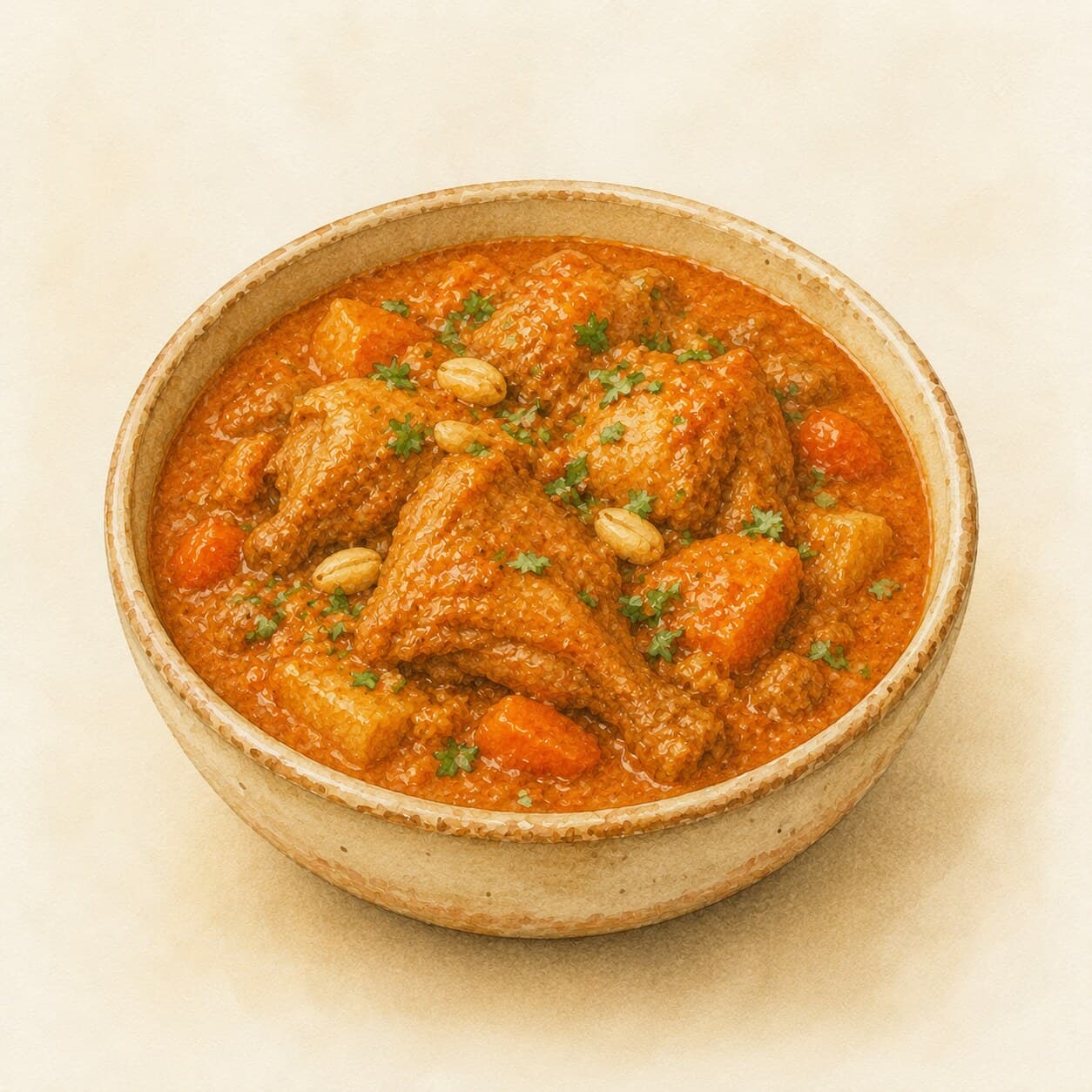
Mafé is a rich and hearty peanut stew from Senegal, featuring chicken or beef simmered with sweet potatoes and a blend of spices.
Contents (5 sections)▾
Ingredients
- 500 g chicken or beef, cut into chunks
- 250 g unsweetened natural peanut butter
- 400 g tomatoes, chopped
- 200 g sweet potato or carrot, diced
- 1 large onion, chopped
- 1 scotch bonnet pepper, whole
- 2 tbsp vegetable oil
- 1 tsp salt
- 1 tsp black pepper
- 1 liter water
Steps
In a large pot, heat the vegetable oil over medium heat. Add the chopped onion and sauté for about 5 minutes until translucent, which enhances the flavor base.
Add the chicken or beef chunks to the pot and brown for about 10 minutes, ensuring even cooking and flavor development.
Stir in the chopped tomatoes, diced sweet potato or carrot, salt, and black pepper. Cook for an additional 5 minutes until the tomatoes break down.
Pour in the water and bring the mixture to a boil. Then, reduce the heat to low, cover, and let it simmer for 30 minutes, allowing the ingredients to meld.
Add the peanut butter and the whole scotch bonnet pepper, stirring well to incorporate the peanut butter into the broth. Simmer for another 20 minutes, adjusting seasoning as needed.
If the stew seems too thick, add a little more water until the desired consistency is achieved. Serve hot, removing the scotch bonnet before serving.
Why this works
The technique of long-simmering allows the natural peanut butter to dissolve seamlessly into the tomato broth, creating a rich and creamy body for the stew. The slow cooking helps meld the flavors of the chicken or beef, sweet potatoes, and spices, resulting in a deeply satisfying dish. The scotch bonnet pepper adds a subtle heat that complements the nutty flavor without overpowering it. If the stew seems too thick, you can add more water gradually until you reach a pleasing consistency. This technique ensures that the peanut butter does not separate or become oily, but instead integrates beautifully into the dish. The balance of proteins and carbohydrates makes it a fulfilling meal that resonates with the heart of Senegalese cuisine.
Common mistakes
Stirring in the peanut butter (a common allergen) too early or over high heat.
Target: Add the peanut butter only after the meat is nearly done, then keep the heat gentle rather than at a boil.
Why it matters: Peanut butter is an emulsion of oil and ground peanut solids that can separate or scorch under high heat, leaving an oily sheen on top and a burnt, bitter edge at the bottom of the pot.
What to do: Lower the heat before stirring the peanut butter in, add it gradually, and stir occasionally so it doesn't catch on the bottom of the pot.
Serving the chicken or beef before it's cooked through.
Target: Simmer the meat until it is fully cooked with no raw or pink color at the center.
Why it matters: The long simmer is what tenderizes tougher cuts, but that only happens if the meat truly reaches full doneness throughout; a piece that looks cooked on the outside can still be underdone at the center if the simmer is cut short.
What to do: Cut into the thickest piece near the end of cooking to confirm it's opaque throughout (chicken) or shows no raw color (beef); keep simmering if there's any doubt.
Piercing or chopping the scotch bonnet pepper without meaning to make the stew spicier.
Target: Keep the scotch bonnet whole and unbroken if you want mild background heat that you can remove later; only pierce or chop it if you want more heat.
Why it matters: A whole chile releases its warmth slowly, while a split or chopped one releases much more capsaicin (the compound that makes chiles hot) into the stew, and that heat can't be removed once it's stirred through.
What to do: Add it whole, taste the stew partway through cooking, and only break it open once you've judged the heat level; lift it out entirely before serving if you're cooking for a mixed group.
Skipping the browning step and adding everything to the pot at once.
Target: Sauté the onion and brown the meat first, before the tomatoes and water go in.
Why it matters: Browning builds a savory base at the bottom of the pot that a stew assembled all at once won't develop, leaving the final sauce tasting flatter.
What to do: Give the onion and meat their own few minutes in the hot oil, and scrape up any browned bits once the liquid is added.
What to look for
- Meat with no raw or pink color at the center. Cut into the thickest piece near the end of cooking — chicken should look opaque throughout and beef should show no raw color; keep simmering if either looks underdone.
- A sauce that looks glossy and unified, not oily or grainy on top. Once the peanut butter is fully incorporated over gentle heat, the stew should look like a smooth, thick gravy rather than a separated one.
- Sweet potato or carrot that yields easily when pierced but still holds its shape. Tender pieces that keep their form are the target; if they've dissolved into the sauce, they went in too early or simmered too long.
A note on history
Mafé (also written maafe) is generally traced to the Bambara and Mandinka communities of Mali and Senegal, where it developed as a way to enrich a meat-and-vegetable stew with ground peanuts. Peanuts are not native to West Africa — they arrived from the Americas through early modern trade networks, part of a broader exchange of crops between continents that also brought tomatoes and chiles into African kitchens. Once established as a regional crop, peanuts became the base of one of West Africa's defining stews.
From its roots in the historical territory of the Mali Empire, mafé spread across West Africa and beyond through trade, migration, and the movement of people over the colonial era, picking up regional variations along the way — some versions favor chicken or lamb over beef, some add okra or leafy greens, and the amount of chile heat varies widely by household. The dish is cooked and claimed across multiple West African countries today, and like many stews with a long oral history, its precise origins are carried through family and community tradition rather than a single documented account.
Get the essays in your inbox — free
Weekly notes on flavor, fermentation, and food history — the writing behind the Atlas of Flavor. No spam; unsubscribe anytime.