
Loukoumades
Delight in crispy Greek loukoumades, honey-soaked dough balls perfect for special occasions.
Contents (5 sections)▾
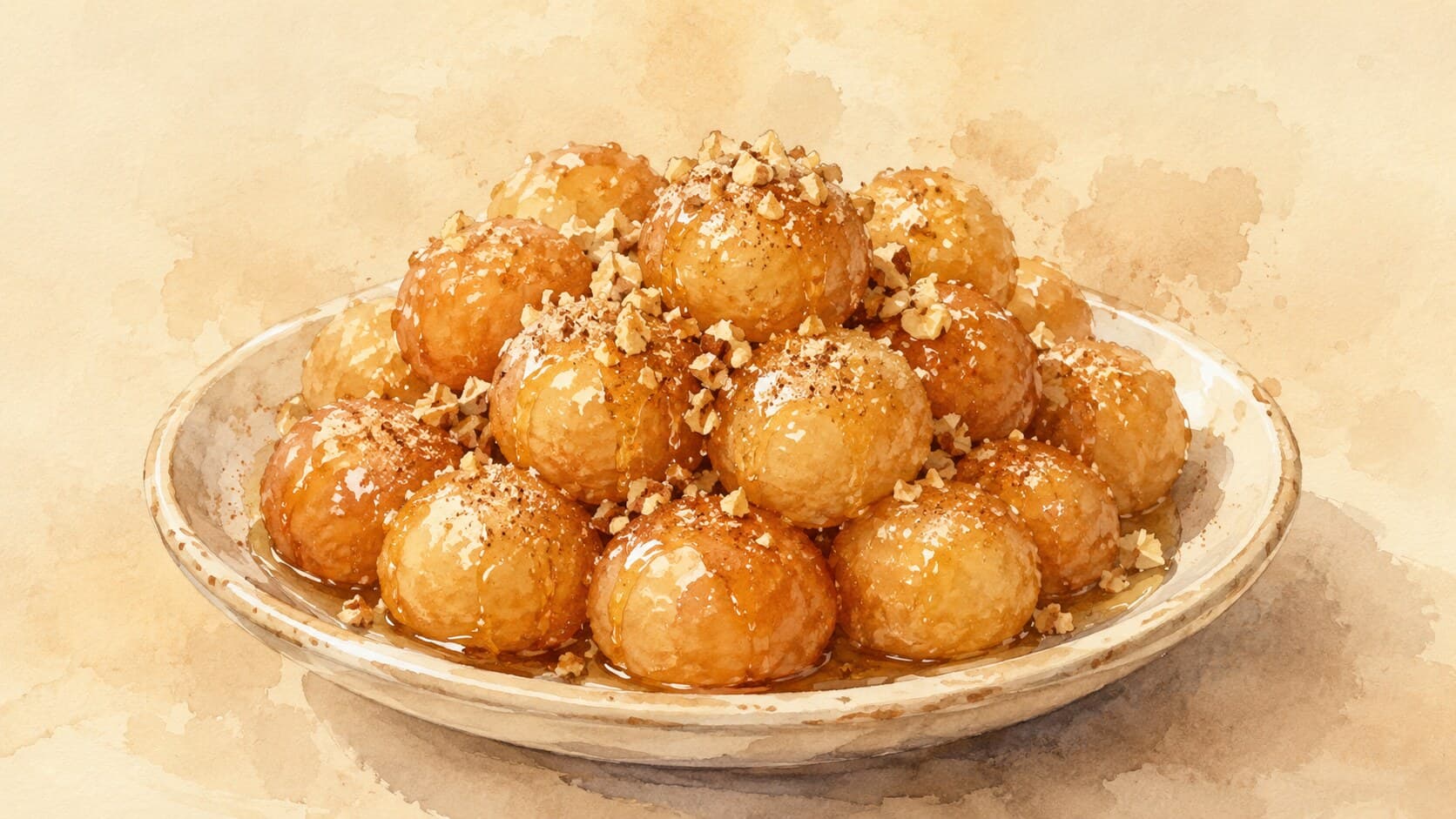
Ingredients
- 250 g all-purpose flour
- 7 g active dry yeast
- 200 ml warm water
- 1 tbsp granulated sugar
- 1/2 tsp salt
- 1/2 tsp ground cinnamon
- 500 ml vegetable oil (for frying)
- 200 g honey
- 100 ml water (for syrup)
- 1/2 cup chopped walnuts
- 2 tbsp sesame seeds
Steps
In a bowl, combine warm water, yeast, and sugar. Let sit for 5 minutes until frothy, indicating the yeast is active.
Mix in flour, salt, and cinnamon until a smooth batter forms. Cover the bowl and let it rise in a warm place for about 30 minutes, or until doubled in size.
In a saucepan, combine honey and water. Heat until warm and mixed well; set aside.
Heat oil in a deep pot to 180°C (350°F). Using a spoon, drop tablespoon-sized portions of batter into the hot oil.
Fry for about 4-5 minutes or until golden brown, turning occasionally for even cooking. Use a slotted spoon to remove the loukoumades and drain them on paper towels.
Immediately drizzle the warm honey syrup over the fried dough balls, then sprinkle with chopped walnuts and sesame seeds before serving.
Tools you'll want
Why this works
The technique of using a yeasted batter ensures that the loukoumades (small Greek honey-soaked dough balls, fried until puffed) become light and airy, as the yeast creates bubbles that expand during frying, resulting in a crispy exterior and a fluffy interior. The key to perfecting this recipe lies in controlling the oil temperature; if the oil is too hot, the outsides will brown quickly while the insides may remain uncooked. Conversely, if the oil is not hot enough, the batter will absorb too much oil and become greasy. To rescue any undercooked loukoumades, you can return them to the hot oil for a minute or two. This method also allows for a quick frying time, ensuring a delightful texture. The warm honey syrup adds sweetness and enhances the overall flavor of the dough, while the nuts and sesame provide a delightful crunch that contrasts with the soft, pillowy dough.
Safety note. Loukoumades are deep-fried, so standard hot-oil practices apply: oil at the specified temperature, never above its smoke point, kept dry, lid on hand to smother any flare-up. Honey note: the syrup that finishes loukoumades is traditionally honey-based. Do not serve to children under 12 months — infants are at risk from honey-borne Clostridium botulinum. Substitute a simple sugar syrup if you need to serve the dish to that audience.
Common mistakes
Yeast batter dropped before it has fully proofed. Loukoumades depend on a batter (a wet dough, almost a thick pancake batter) that has visible bubbles all the way through. Fry it before the yeast has done its work and you get dense, oil-soaked dumplings instead of airy honeycombed ones. Target: batter that has roughly doubled in volume, with a webby underside you can see when you lift a spoonful — that web is the gluten holding gas bubbles. Why it matters: the airy interior of a finished loukoumas is made by yeast-produced CO₂ trapped in gluten before frying, then violently expanded by oil heat. Without enough bubbles going in, the inside cooks tight and gummy. What to do: let the batter rise in a warm spot (24–28°C is ideal). When you tap it, it should jiggle, not slump. If it has only risen a little after 30 minutes, your yeast or your water was too cold — wait longer rather than frying too early.
Oil too hot — outside burned, inside raw, no safety margin. The single most common loukoumades failure: golden colour on the outside means nothing if the inside is still raw dough. Target: oil at 170–175°C (340–350°F), measured with a thermometer. Each dumpling takes 3–4 minutes to cook through, with frequent rolling. Why it matters: at 190°C+, the surface browns in under a minute while the centre never gets above 80°C. Eating raw fermented batter (raw flour + raw yeast at room temperature inside a hot crust) is a recognised cause of foodborne illness — both flour pathogens and Bacillus risk apply. Browning is not cooking. What to do: test one dumpling first. Cut it in half — the inside should be dry, airy, with no glossy raw streak. If it's golden outside and gummy inside, drop the heat 10°C and add another minute. Then fry the rest.
Honey syrup poured cold over hot loukoumades — they go soggy and grey. The honey-soak step is the soul of the dish. But the syrup needs to be warm and the dumplings need to be hot, or the syrup just slides off and turns the crust greasy. Target: syrup warmed to about 60°C just before serving; dumplings drained, still hot from the oil, then drenched. Why it matters: warm syrup wicks into the porous crust by capillary action — the dumpling literally drinks it in. Cold syrup beads up on the surface and slides off, leaving a glaze that turns sticky rather than crisp. What to do: time it: have the syrup warming on a low burner while the last batch fries. The moment the dumplings come out of the oil and onto paper towels, transfer them to a bowl, pour the warm syrup over, and toss. Top with walnuts and sesame immediately.
Hot oil and hot syrup both ignored as burn hazards. This is a deep-fry + hot-sugar dessert. The two most common kitchen burns are oil splashes (180°C+) and sugar burns (which stick to the skin). Both are present here at once. Target: stable pot on a back burner, no children or pets nearby, a metal lid within arm's reach, never adding wet batter to oil that just spat. Why it matters: sugar syrup sticks to skin and continues burning after contact — much worse than water at the same temperature. Hot oil ignites near 200°C and spreads if water hits it. What to do: never throw water on an oil fire — smother with a lid. Use a slotted spoon to lower batter, not your fingers. If syrup splashes, run cold water on it immediately. (Honey safety: as above, never serve honey-finished loukoumades to children under 12 months — Clostridium botulinum risk.)
What to look for
- A batter that webs across the spoon when you lift a portion, not a solid lump. The web is the yeasted gluten matrix — that's what makes the inside open and honeycombed. No web means under-proofed.
- Dumplings that float and roll over by themselves after about 30 seconds in the oil. This is the air inside expanding. They should be light enough to bob to the top, then turn on their own once the underside browns. If they sink, the batter is too wet or the oil is too cold.
- A crisp golden shell with a dry, airy, no-glossy-streak interior when cut in half. Both the exterior and interior have to read as "cooked". A golden exterior alone tells you nothing.
- Syrup absorbing into the hot dumpling rather than pooling underneath. When timing is right, you can watch the syrup vanish into the crust within seconds. A pool at the bottom of the bowl means one side was wrong — syrup cold, or dumplings cool.
A note on history
Loukoumades have a serious claim to being one of the world's oldest documented desserts. Greek sources describe small fried dough balls dipped in honey — called honey tokens (charisioi) — awarded to victors of the ancient Olympic Games, the first of which is recorded in 776 BC (Greek Reporter, Philoso Kitchen). The Hellenistic poet Callimachus wrote about them in the 3rd century BC. The modern name loukoumades derives, via Arabic luqmat al-qadi (literally "the judge's morsel") and Turkish lokma, from a long chain of cross-cultural exchange across the eastern Mediterranean. The dish you fry today, almost 2,800 years later, traces a remarkably unbroken line.
Get the essays in your inbox — free
Weekly notes on flavor, fermentation, and food history — the writing behind the Atlas of Flavor. No spam; unsubscribe anytime.