
Latkes
Crispy and golden brown latkes, perfect for Hanukkah or a weekend brunch.
Contents (5 sections)▾
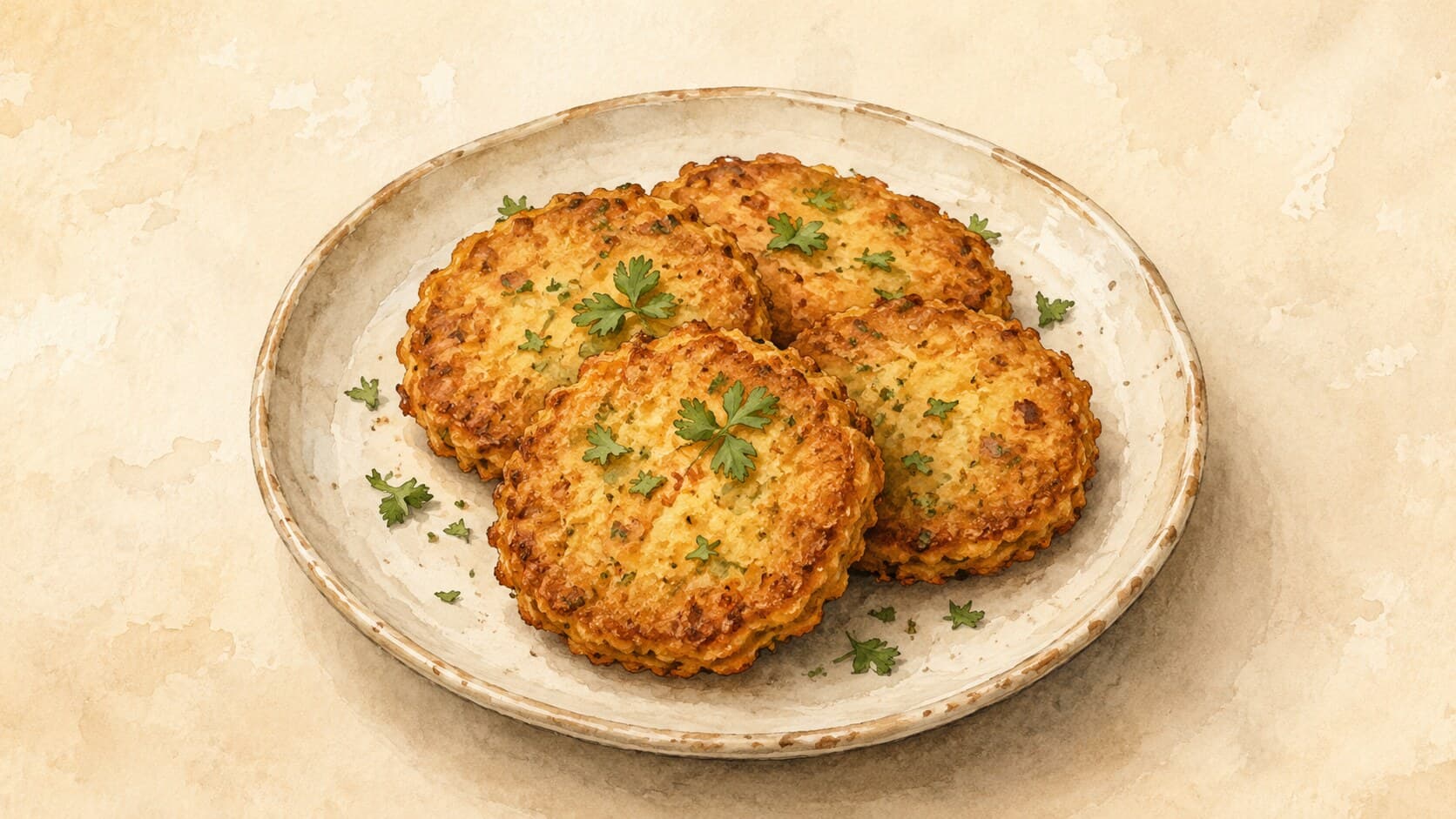
Ingredients
- 1 kg potatoes, peeled and coarsely grated
- 1 medium onion, grated
- 2 large eggs
- 100 g matzo meal (or flour)
- 1 tsp salt
- Oil for shallow frying, approximately 500 ml
Steps
In a clean kitchen towel, squeeze out excess moisture from the grated potatoes and onion. This step is crucial to achieve crispy latkes.
In a large mixing bowl, combine the drained potatoes and onion with eggs, matzo meal, and salt. Mix until well combined.
Heat approximately 1 cm of oil in a large skillet over medium heat (about 180°C). To test if the oil is ready, drop a small amount of the mixture into the oil; it should sizzle immediately.
Spoon the mixture into the hot oil, flattening each portion slightly. Fry for about 4-5 minutes on each side, or until deep golden and crisp.
Transfer the cooked latkes to a paper towel-lined plate to drain excess oil and keep warm in a low oven until all batches are cooked.
Why this works
The success of latkes hinges on the moisture control of the potatoes and onions. By squeezing out excess liquid, you ensure that the latkes fry rather than steam, achieving that desired crispy texture. Binding the mixture with eggs and matzo meal (or flour) helps hold the ingredients together during frying. If the batter seems too wet, you can add a bit more matzo meal to absorb the excess moisture. Conversely, if the latkes break apart while frying, it might be due to not enough binding agents; adding another egg can help. The key is maintaining the right amount of oil and heat; too low will result in soggy latkes, while too high may burn them before they cook through. A consistent medium heat allows for an even fry, resulting in that signature golden-brown crust without compromising the softness inside.
Common mistakes
Potato mixture too wet, latkes steam instead of fry. Target: Grated potato that feels barely damp when you squeeze a handful — no liquid runs. Why it matters: Water on the potatoes turns to steam in the oil; steam pushes oil away from the surface, so instead of frying you get a pale, soft pancake that absorbs grease without browning. The Maillard reaction (the heat-driven chemistry that creates the golden crust and roasted aroma) needs the surface above 140 °C — impossible while water is evaporating. What to do: After grating, pile potatoes and onions in a clean cloth, gather the corners, and twist hard over a bowl. Let the squeezed liquid sit a minute — starch sinks to the bottom; pour off the cloudy water and scrape the white starch back into the potatoes. That starch helps bind.
Centre raw, outside burned (BLOCK-level safety: raw potato is hard to digest, and undercooked thick latkes can hide raw centres). Target: Latke fully cooked through, centre tender all the way to the middle when you tear one open; oil temperature steady at 170–180 °C (340–360 °F). Why it matters: Raw potato starch is largely indigestible — it needs heat to gelatinise (the granules swell and burst, becoming digestible and silky). If the oil is too hot, the crust forms before the centre cooks; if too thick, the centre never reaches the temperature needed. The Hanukkah classic should be crisp outside, tender inside, never chalky. What to do: Spread each scoop thin — about 1 cm at the edge, 1.5 cm centre. Use a thermometer if you can; if not, drop a small piece of mixture in — it should sizzle steadily, not violently. Cook 3–4 minutes per side, until deep gold and firm. Tear one open before serving the batch to check.
Hot-oil splashing burns (BLOCK-level safety). Target: Gentle lowering of the batter into oil; no splashing; oil never smoking. Why it matters: Hot oil burns are among the worst kitchen injuries. Wet potato dropped from height splashes oil onto skin; oil heated past its smoke point (~200 °C for most neutral oils) breaks down and risks fire. Water hitting hot oil also flashes to steam violently. What to do: Dry potatoes thoroughly (squeezed in cloth, then patted with paper). Lower scoops with a spatula held close to the oil surface — let them slide in, not drop. Keep a lid nearby. Never leave hot oil unattended. If oil smokes, lower the heat immediately.
Oil too cold, latkes soggy and grease-laden. Target: A piece of batter dropped in sizzles immediately with steady bubbles; thermometer reads 170–180 °C. Why it matters: Below ~160 °C, the latke absorbs more oil than it sets. The surface stays porous, and instead of crust you get pale, greasy potato. Above 180 °C the crust forms before the inside cooks. What to do: Heat oil patiently before the first batch; test with a single small dollop. Between batches, give the oil 30 seconds to recover heat. Drain finished latkes on a wire rack over paper towels — paper towel alone traps steam from below and softens the crust.
What to look for
- A faint rim of bubbles around each latke when it first hits the oil: the oil is at temperature; if it sits silent and pale, the oil is too cold.
- A deep mahogany-gold crust, not pale yellow, on the first side after 3–4 minutes: Maillard browning is complete; flip now, not earlier.
- A firm edge that lifts cleanly with a spatula: the starch has set; lift too early and the latke tears apart.
- A torn-open centre that's tender and translucent, not chalky white: the starch has gelatinised; the latke is cooked through.
A note on history
Latkes' connection to Hanukkah comes from the oil-miracle tradition — a single flask of consecrated oil that burned for eight days — which is why Jews eat foods fried in oil during the festival. The earliest written reference to fried pancakes (levivot) on Hanukkah is in a 1322 poem by Rabbi Kalonymus ben Kalonymus, but the original Hanukkah pancakes in 14th-century Italian Jewish tradition were ricotta-based; the potato latke is a much later adaptation, emerging in Eastern Europe in the late 18th or early 19th century, when potatoes became cheap and widely available. Sources: A Brief History of Latkes (Reform Judaism), The Real History of Potato Latkes (The Nosher / My Jewish Learning).
Get the essays in your inbox — free
Weekly notes on flavor, fermentation, and food history — the writing behind the Atlas of Flavor. No spam; unsubscribe anytime.