
Laksa Johor
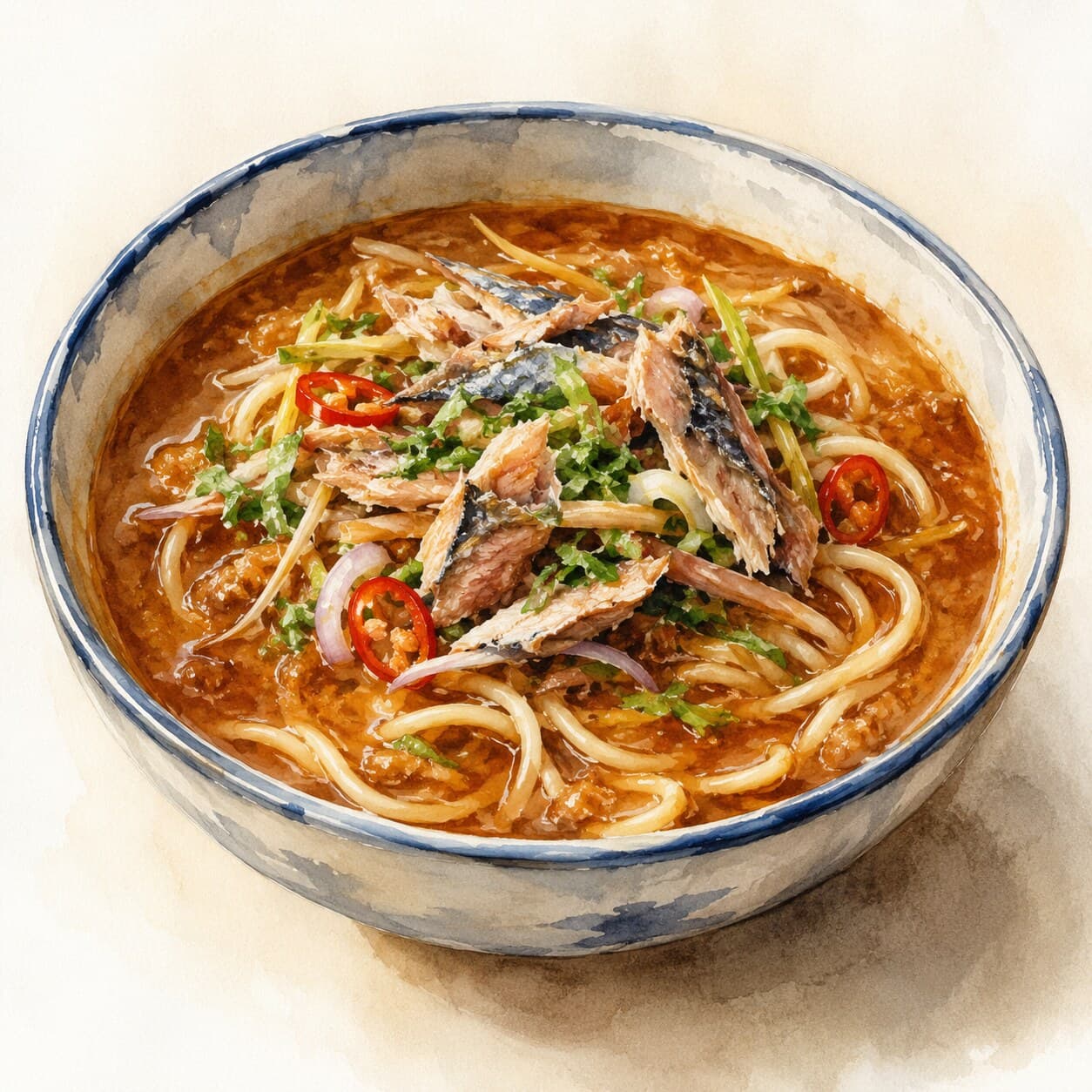
Laksa Johor is a unique Malaysian dish that combines spaghetti with a rich fish gravy for a delightful fusion of flavors.
Contents (5 sections)▾
Ingredients
- 200 g spaghetti
- 300 g mackerel fillets
- 200 ml coconut milk
- 2 tbsp kerisik (toasted coconut)
- 2 tbsp laksa spice paste
- 1 cucumber, sliced
- 1 handful daun selom (or Vietnamese cilantro)
- 1 liter water
- Salt to taste
Steps
Cook the spaghetti according to package instructions until al dente, about 8-10 minutes. Drain and set aside.
In a pot, bring 1 liter of water to a boil. Add the mackerel fillets, cooking for about 5 minutes until they are cooked through.
Remove the mackerel from the pot and let it cool slightly. Once cooled, flake the fish and set aside.
In the same pot, add the laksa spice paste and cook for 2 minutes over medium heat until fragrant.
Add the coconut milk and flaked mackerel to the pot, stirring well. Simmer for another 5 minutes until the gravy thickens. Season with salt to taste.
To serve, place a portion of spaghetti in a bowl, ladle the fish gravy over it, and garnish with sliced cucumber, daun selom, and kerisik.
Why this works
The uniqueness of Laksa Johor lies in its use of spaghetti, which provides a different texture and absorbs the thick fish gravy beautifully. The combination of mackerel and coconut milk creates a rich and creamy base, while the laksa spice paste introduces a depth of flavor that is both aromatic and satisfying. If the gravy becomes too thick, simply add a splash of water or more coconut milk to achieve your desired consistency. This dish shows how traditional ingredients can be adapted into modern forms without losing their essence. The fresh cucumber adds a crunchy contrast to the creamy gravy, while the daun selom brings a refreshing herbaceous note that rounds out the dish beautifully. The toasted kerisik adds an additional layer of flavor and a slight nuttiness, making each bite complex and enjoyable.
Common mistakes
Undercooking the fish so the center stays raw or translucent.
Target: Poach the mackerel until it turns fully opaque and flakes apart easily with a fork, with no glassy or translucent patches left at the center.
Why it matters: Fish that is only lightly poached can look done on the outside while staying raw in the middle, which is both a food-safety risk and unpleasant to eat; mackerel in particular should be cooked through fully rather than served rare.
What to do: Simmer the fillets gently until they flake cleanly into opaque pieces, checking the thickest piece before removing it from the pot.
Rushing the spice paste (rempah, a pounded or blended mix of aromatics) instead of frying it out properly.
Target: Cook the laksa spice paste in oil over medium heat until it darkens slightly and smells fragrant rather than raw, before adding any liquid.
Why it matters: A spice paste added straight into liquid without frying first tastes sharp and uncooked; frying it in oil first lets the aromatics bloom and lays the real flavor foundation for the gravy.
What to do: Stir the paste often in the hot oil for two to three minutes, until the raw smell fades and it turns a shade darker, before pouring in the coconut milk.
Boiling the gravy hard once the coconut milk goes in.
Target: Keep the gravy at a gentle simmer after adding the coconut milk, not a rolling boil.
Why it matters: Coconut milk is an emulsion (a stable blend of fat and water); boiling it hard can break that emulsion, splitting the fat out into oily curds and leaving a grainy, separated gravy instead of a smooth one.
What to do: Lower the heat as soon as the coconut milk is added, and if it does start to split, take the pot off the heat and stir gently to help it come back together.
Cooking the spaghetti too early and letting it sit and clump before serving.
Target: Time the noodles to finish around when the gravy is ready, and serve promptly once assembled.
Why it matters: Noodles left sitting continue to absorb moisture and starch from each other, clumping together or turning soft past their ideal texture, which loses the contrast this dish is built around.
What to do: Drain the spaghetti well and, if there will be any wait before serving, toss it with a little oil to keep the strands separate.
What to look for
- Fish that flakes into clean, opaque pieces with no raw center. This is the clearest sign the mackerel is fully cooked; any glassy or translucent flesh means it needs more time.
- A gravy that coats the back of a spoon instead of running off it. As the coconut milk and kerisik (toasted coconut paste) reduce together, the gravy should thicken lightly; thin and watery means it needs a few more minutes of simmering.
- Noodles with a little bite left in them (al dente, or firm to the bite), not soft all the way through. Since the spaghetti sits under hot gravy at the table, slightly undercooking it at first keeps it from turning mushy by the time it's eaten.
A note on history
Laksa Johor stands apart from other Malaysian laksas for one unusual choice: dried spaghetti in place of rice vermicelli or thick rice noodles. Local food writing commonly traces this substitution to the Johor royal court in the nineteenth century, where European-influenced tastes at the sultan's table are said to have led cooks to fold imported pasta into a dish that kept its rempah-based fish gravy. As with many royal-kitchen origin stories, the exact details are hard to verify and vary in the telling, but the pairing has since become the dish's defining feature rather than a curiosity.
Beyond the noodle swap, Laksa Johor belongs to a broader Southeast Asian tradition of fish-based gravies thickened with toasted coconut and spice paste, a technique shared with related dishes across the Malay Peninsula and neighboring Sumatra. The dish remains closely tied to Johor state identity today, served at gatherings and by street vendors, and is often cited as an example of how Malaysia's port-city history of trade and migration continues to shape everyday food.
Get the essays in your inbox — free
Weekly notes on flavor, fermentation, and food history — the writing behind the Atlas of Flavor. No spam; unsubscribe anytime.