
Koshari (Egyptian Rice, Lentils & Pasta)
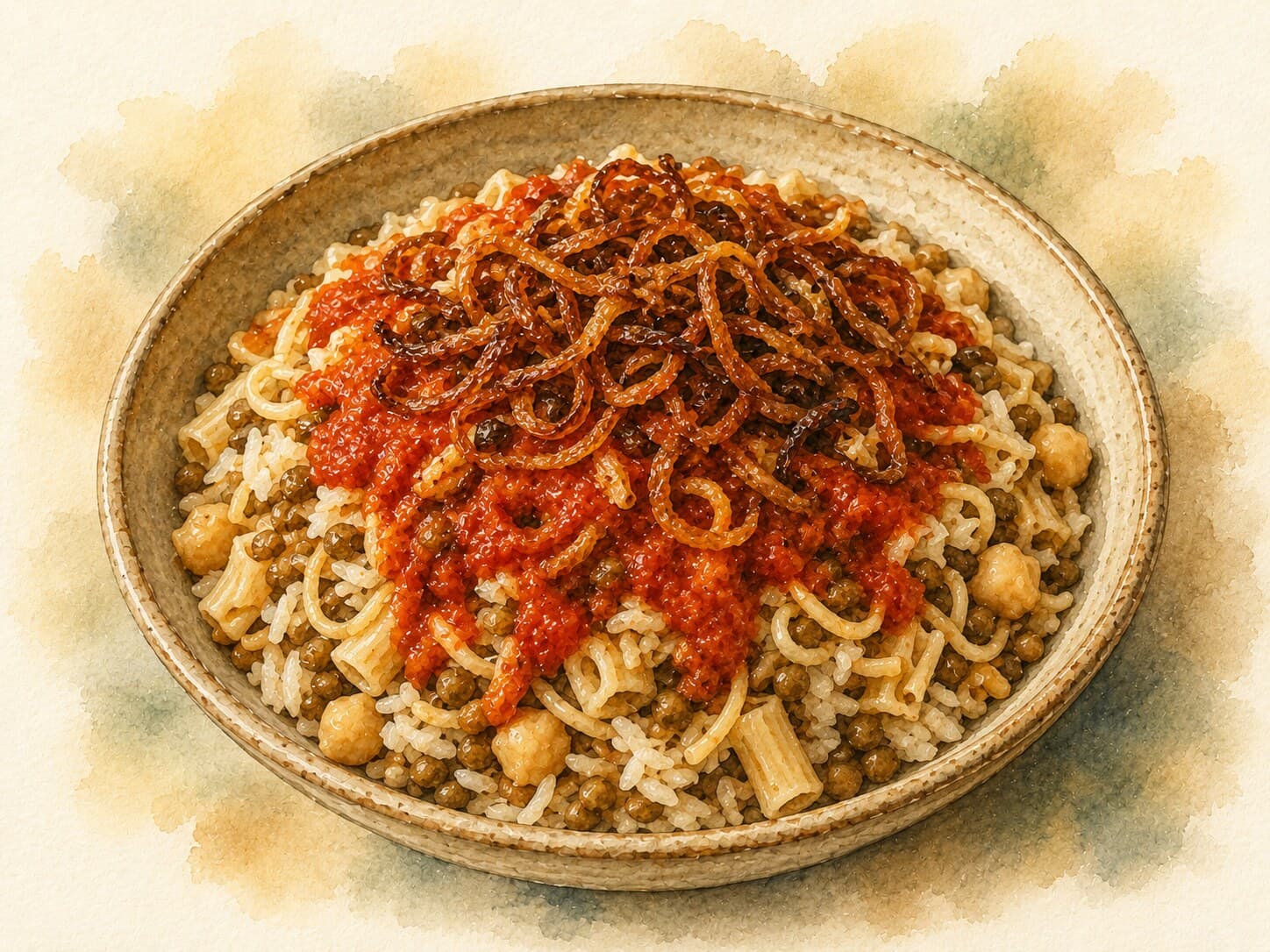
Koshari combines rice, lentils, pasta, and chickpeas, topped with crispy onions and a spiced tomato sauce for a hearty Egyptian dish.
Contents (5 sections)▾
Ingredients
- 200 g rice
- 100 g lentils
- 100 g pasta
- 200 g canned chickpeas, drained
- 2 medium onions, thinly sliced
- 400 g canned tomatoes
- 1 tbsp tomato paste
- 2 cloves garlic, minced
- 1 tsp cumin
- 1 tsp coriander
- 1/2 tsp chili powder
- 1 tbsp vinegar
- Salt to taste
- Black pepper to taste
- Oil for frying
Steps
In a pot, add water and salt, bring to a boil. Cook rice, lentils, and pasta separately according to package instructions until tender, about 10-15 minutes.
While the grains cook, heat oil in a pan over medium heat. Fry the sliced onions until golden and crispy, about 8-10 minutes, and set aside on paper towels.
In the same pan, add garlic, cumin, coriander, and chili powder, sauté for 1-2 minutes until fragrant. Add canned tomatoes and tomato paste, simmer for 10 minutes.
Layer the cooked rice, lentils, pasta, and chickpeas on a serving plate, starting with rice at the bottom.
Top with the tomato sauce and finish with the crispy fried onions. Drizzle with vinegar and season with salt and pepper to taste.
Why this works
Koshari's success lies in its layered texture and the harmony of flavors between the rice, lentils, pasta, and chickpeas. Each component contributes to the overall heartiness of the dish, making it a fulfilling meal. The crispy onions add a delightful crunch, contrasting with the soft grains and legumes. The spiced tomato sauce ties everything together, injecting moisture and richness. If the sauce seems too thick, add a splash of water to achieve your desired consistency. Balancing spices is crucial; taste and adjust seasoning as necessary. The vinegar drizzled on top adds a sharp note that brightens the dish, enhancing each bite with a tangy kick. This dish is not only economical, but its layered construction allows for customization, making it a versatile choice for any table.
Common mistakes
Cooking everything in one pot.
Target: Rice, lentils, and pasta cooked separately, each to its own correct doneness, then combined only at assembly.
Why it matters: Each starch has its own absorption rate and cook time. Lentils in with rice will turn the rice gummy from their starch; pasta needs salted boiling water and an al-dente lift; rice wants steam and rest. A one-pot koshari (Egyptian street-food bowl of layered lentils, rice, pasta, and chickpeas, finished with tomato sauce and fried onions) is mush. The contrast — fluffy rice, tender lentils, springy pasta — is the entire dish. This is also the safety point: every component must be fully cooked through before layering.
What to do: Run three pans in parallel. Time them so they finish within a few minutes of each other — pasta is fastest (about 8 minutes), rice next (15-18 minutes), lentils last if not pre-soaked (20-30 minutes).
Wet, soggy crispy onions.
Target: Onions sliced paper-thin, dried on a cloth for 10 minutes, fried in 2-3 cm of 160°C oil until deep mahogany — not gold, mahogany — then drained on paper.
Why it matters: Onions are mostly water. Thrown into oil wet, they steam first, then fry — and never crisp properly, going limp the moment they cool. Mahogany color is where the natural sugars have caramelized far enough to set a crisp shell that survives sauce contact. Pale-gold onions go soft on the plate. Watch heat: hot oil splatters when wet onions hit it, so keep the pan deep enough and the onions truly dry.
What to do: Slice on a mandoline if you have one; salt lightly and rest 10 minutes to draw moisture; pat fully dry. Fry in batches, stirring once or twice. Pull just before they look "done" — they darken further as they cool.
Bland, thin tomato sauce.
Target: Tomato sauce reduced by about a third, garlic and spices toasted in oil first, finished with vinegar.
Why it matters: A koshari with watery sauce tastes like rice with ketchup. The traditional sauce — called salsa or daqqa — is bright, slightly spicy, and concentrated enough that a ladle covers the bowl without flooding it. Toasting cumin and coriander in oil before adding tomato wakes the volatile aromatics; raw spice stirred in at the end tastes dusty.
What to do: Heat oil. Add garlic and dry spices, sizzle 30 seconds until fragrant. Add tomato paste, fry 1 minute. Add tomatoes, simmer 15-20 minutes until thickened. Finish with vinegar off heat.
No final vinegar drizzle.
Target: A teaspoon or so of vinegar (white or apple cider) drizzled at the table, not stirred in — added per portion just before eating.
Why it matters: Koshari's signature is the sharp bright lift that vinegar brings to the dense carbohydrate base. Without it, the bowl tastes flat and heavy after the second bite — the carbs need acid to keep tasting interesting. Cairo street vendors keep vinegar bottles right at the counter for this reason. Some traditions also offer a hot sauce (shatta) alongside.
What to do: Have vinegar on the table. Pour a small spoonful over each bowl. Diners can add more. Hot sauce optional alongside.
What to look for
- Lentils when done: tender enough to crush easily between your fingers, but still holding their shape. If they're falling apart into mash, they were overcooked — pull earlier next time.
- Rice when done: each grain separate, fluffy, no pooled water at the bottom. If sticky, more water hadn't yet evaporated — rest covered another 5 minutes.
- Onions ready to pull: deep mahogany — almost worrying — and sizzling slows. Pale equals soggy on the plate; black equals bitter.
- Sauce ready: thick enough to coat a spoon and slowly drop off in sheets, not pour like soup. Tastes spice-forward, with the cumin clearly present.
- Final bowl: clean visible layers — pale rice, brown lentils, gold pasta, red sauce, dark onion crown. If everything blurs together, the components are too wet or the assembly was stirred.
A note on history
Koshari is Egypt's national dish and the most popular street food in the country, traditionally assembled in vast pots and served by the bowl in dedicated koshari shops in Cairo and Alexandria (Egyptian Streets). Most food historians trace its modern form to the 19th century, when British-occupied Egypt saw rice arriving from Asia, pasta arriving with Italian workers, and lentils long established in the region — street vendors combined the cheap starches into a filling meal for laborers (Seattle Koshari; NPR / The Salt). The name itself is widely derived from the Hindi/Urdu khichri, a rice-and-lentil dish that may have travelled with Indian troops or Indian Ocean trade (Daring Gourmet). The result is one of the world's clearest examples of how a national dish can be assembled from imported parts under economic pressure and become a culture's icon.
Get the essays in your inbox — free
Weekly notes on flavor, fermentation, and food history — the writing behind the Atlas of Flavor. No spam; unsubscribe anytime.