
Ful Medames (Egyptian Stewed Fava Beans)
Ful Medames is a traditional Egyptian dish of stewed fava beans, perfect for a hearty breakfast.
Contents (5 sections)▾
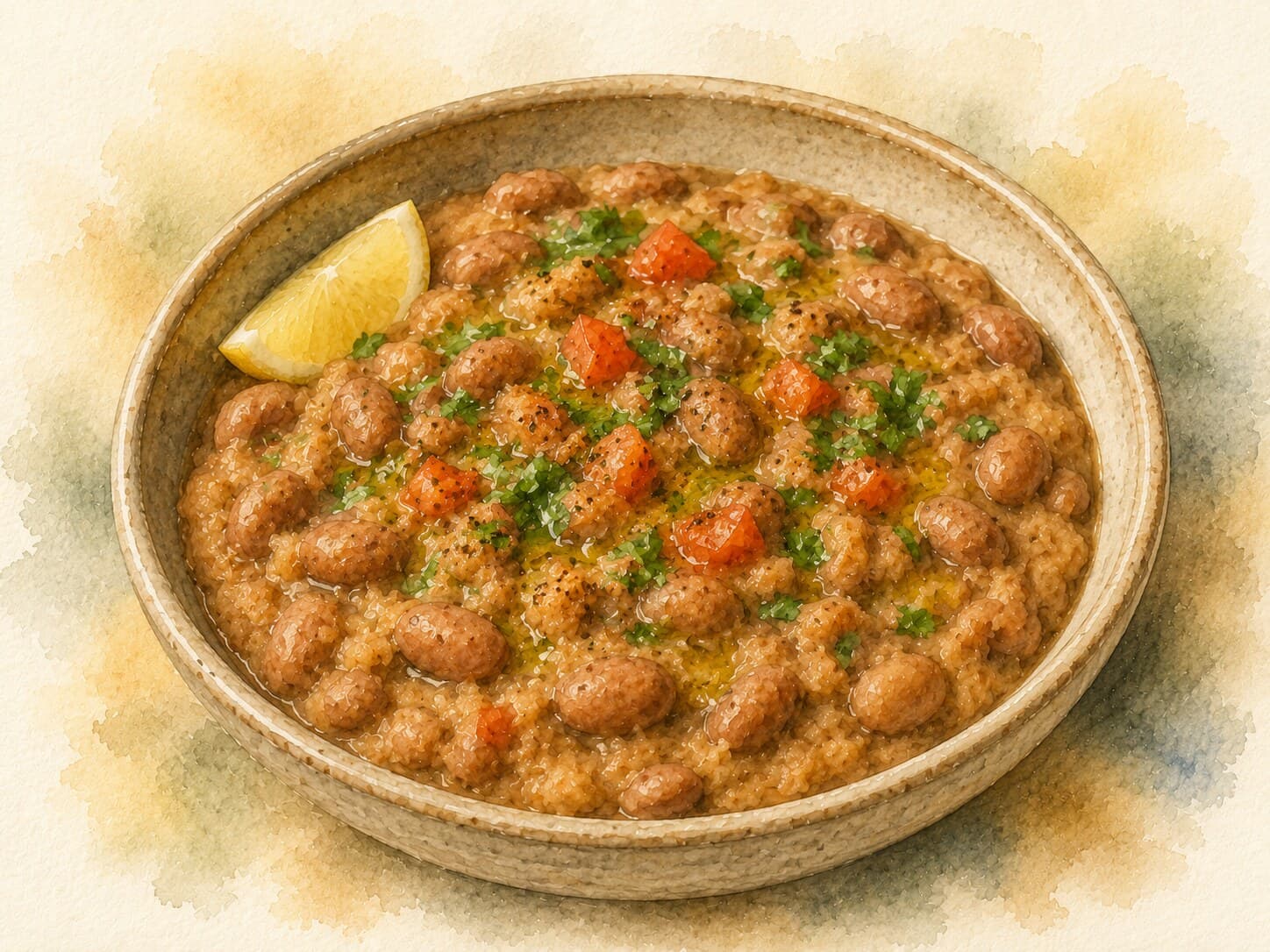
Ingredients
- 500 g fava beans, dried
- 1 liter water
- 4 tbsp olive oil
- 1 clove garlic, minced
- 1 tsp ground cumin
- 1 lemon, juiced
- Salt, to taste
- Black pepper, to taste
- Fresh parsley, for garnish
Steps
Soak the fava beans in water overnight to soften them, which helps them cook evenly.
Drain the beans and place them in a pot with 1 liter of fresh water. Bring to a boil over medium heat, then reduce to a simmer.
Simmer the beans for about 1 to 1.5 hours or until they are fully tender. Stir occasionally to prevent sticking.
Once tender, use a fork or potato masher to mash about half of the beans. This will thicken the stew and create a creamy texture.
Add the olive oil, minced garlic, ground cumin, lemon juice, salt, and black pepper to the pot. Stir well and let it simmer for an additional 5 minutes.
Serve the Ful Medames warm, garnished with fresh parsley and a drizzle of olive oil.
Why this works
The technique of slow simmering the fava beans (large, flat dried beans with a buttery, earthy flavor) is crucial, as it allows their flavors to develop fully while achieving the right tenderness. Mashing some beans thickens the dish, enhancing its creamy consistency without needing additional thickeners. The combination of olive oil, garlic, and cumin adds layers of flavor, balancing the earthiness of the beans. If the mixture seems too thick, simply add a splash of water to adjust the consistency. Conversely, if it's too watery, continue simmering to reduce it until the desired thickness is reached. The slow cooking process also helps to break down the fibers in the beans, making them easier to digest and enhancing their natural flavors.
Common mistakes
Skipping the overnight soak, or under-cooking the beans.
Target: Soak dried fava beans overnight, then simmer (cook in liquid just below the boil, with small lazy bubbles) 1 to 1.5 hours until completely tender — soft enough to crush easily against the side of the pot.
Why it matters: Dried fava beans are dense and starchy; without a long soak and a full simmer the centers stay firm and chalky, and the dish never reaches its creamy texture. Properly cooked beans are the entire foundation of ful — there is nothing else to hide behind.
What to do: Soak overnight to rehydrate, drain, and simmer in fresh water until a bean smashes with no resistance. Cook longer if needed; beans are forgiving and cannot be over-simmered into harm here.
Salting the beans hard at the start of the simmer.
Target: Season with salt near the end, once the beans are already tender.
Why it matters: Salt added to the cooking water early can slow the softening of some dried beans, and you cannot judge the final seasoning until the dish has thickened. Salting at the end gives a cleaner, more controlled result.
What to do: Simmer the beans in plain water, and add salt (along with the olive oil, garlic, cumin, and lemon) only after they are soft and you mash them.
Not mashing any of the beans.
Target: Crush about half the cooked beans with a fork or masher, leaving the rest whole.
Why it matters: The mashed beans release their starch into the liquid and thicken the stew into the signature loose-but-creamy texture; skip this and you have thin bean soup instead of ful. Mashing all of them, on the other hand, loses the pleasant contrast of intact beans.
What to do: Mash roughly half against the side of the pot, then stir — adjust with a splash of water if too thick, or a few more minutes of simmering if too loose.
Adding the lemon and raw garlic at the very start.
Target: Stir in the olive oil, minced garlic, cumin, and lemon juice near the end, after the beans are tender.
Why it matters: Acid from lemon, added early, can keep the beans firm, and long cooking dulls the bright lift of fresh lemon and the sharpness of raw garlic. These are finishing flavors — they belong at the end (the acid is what cuts the earthy richness of the beans).
What to do: Build the beans first, then fold in the oil, garlic, cumin, and lemon and let everything warm together for a few minutes before serving.
What to look for
- The beans after simmering: fully tender, a bean crushing to a smooth paste with no chalky center. They have cooked long enough to mash and thicken.
- The stew after mashing: loose and creamy, thickened by the starch of the crushed beans but still loose enough to scoop. The texture is set by the half-mash, not by any added thickener.
- The consistency before serving: spoonable and cohesive, neither soupy-thin nor stiff and dry. Adjusted with water or a little more simmering to the right body.
- The finished dish: glossy with olive oil on top, bright with lemon and savory with garlic and cumin. The earthy beans lifted by acid and aroma at the end.
A note on history
Ful medames is one of Egypt's oldest and most enduring dishes — fava beans have been cultivated in the Nile Valley since ancient times, with archaeological finds of the beans in tombs, and the dish itself is often traced back thousands of years (Wikipedia). In medieval Cairo, ful was famously cooked overnight using the banked heat of the public bathhouse fires, where fuel was scarce, and collected warm in the morning to be sold as breakfast (Wikipedia). Today it is eaten at any hour and is counted among Egypt's national dishes (Wikipedia).
Get the essays in your inbox — free
Weekly notes on flavor, fermentation, and food history — the writing behind the Atlas of Flavor. No spam; unsubscribe anytime.