
Knafeh
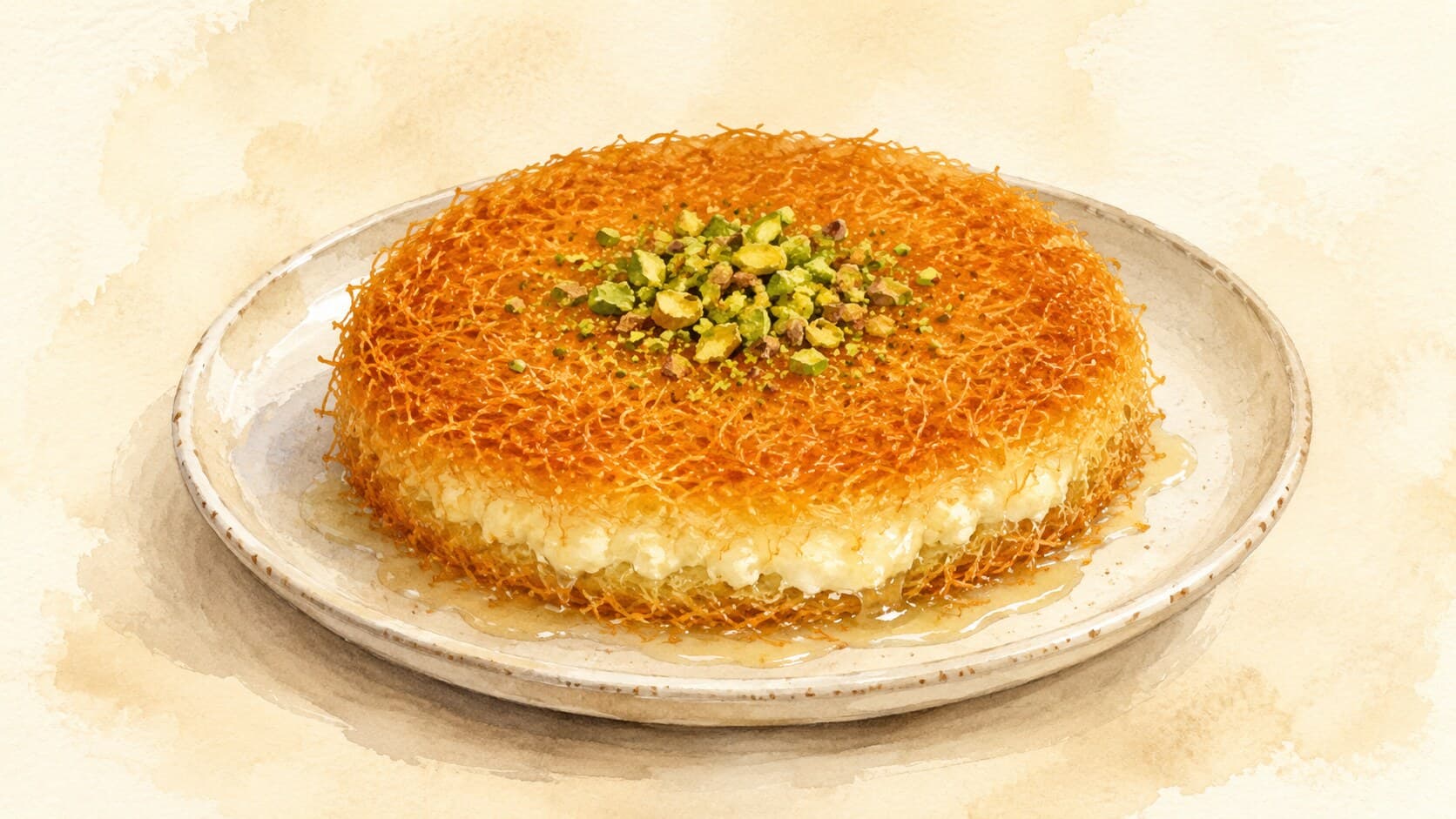
Knafeh is a traditional dessert featuring crispy kataifi dough layered with melted cheese, often soaked in orange-blossom syrup.
Contents (5 sections)▾
Ingredients
- 250 g kataifi dough
- 200 g mozzarella cheese, shredded
- 100 g unsalted butter, melted
- 50 g pistachios, crushed
- 200 ml water
- 150 g sugar
- 30 ml orange-blossom water
- 1 tsp lemon juice
- to taste, ground cinnamon
Steps
Preheat your oven to 180°C (350°F). This ensures even cooking of the kataifi dough.
In a saucepan, combine water, sugar, and lemon juice. Bring to a boil over medium heat, then reduce to a simmer for 10 minutes. Stir in orange-blossom water and set aside to cool.
Carefully separate the kataifi dough into strands and place in a bowl. Pour melted butter over the dough and toss to coat evenly.
Spread half of the kataifi dough in a greased round baking dish, pressing it down firmly. Layer the shredded mozzarella cheese on top.
Cover the cheese with the remaining kataifi dough, pressing down to secure it. Bake in the preheated oven for 15 minutes, or until golden brown.
Once baked, remove from the oven and immediately pour the cooled syrup over the hot knafeh. Allow it to soak for at least 10 minutes before serving.
Garnish with crushed pistachios and a sprinkle of cinnamon before slicing and serving.
Why this works
Knafeh's structure relies on the contrast between crispy kataifi dough and melted cheese. The kataifi, made of fine strands, crisps when mixed with melted butter and baked at a high temperature, achieving the desired texture. A combination of mozzarella and a traditional cheese like Nabulsi melts beneath the kataifi, providing a stretchy quality. Soaking the baked pastry in orange-blossom syrup is essential for moisture and flavor. If the kataifi appears dry, adding more melted butter before baking can help maintain crispness. If the syrup isn't absorbing well, gently poking holes in the knafeh post-baking can facilitate absorption. This dish emphasizes the interplay of textures and flavors, requiring careful execution for optimal results.
Common mistakes
Pouring hot syrup over hot knafeh.
Target: Cool syrup over hot pastry — that is the rule. The syrup should be at room temperature (or even fridge-cold), the knafeh straight from the oven.
Why it matters: Hot syrup on hot pastry slides off and soaks unevenly — the kataifi (the fine shredded pastry, sometimes spelled kataif) goes from crisp to soggy in seconds. Cold syrup on hot pastry sizzles, hisses, and is drawn evenly into every strand by the temperature gradient. This is also the safety point: pouring boiling syrup over a hot tray and lifting it is how home cooks get burned — make the syrup early, let it cool fully.
What to do: Make the syrup first, even the night before. Refrigerate while the knafeh bakes. Pour the moment the pan comes out, in a slow even stream from the center outward.
Cheese still cold from the fridge.
Target: Mozzarella shredded and rested at room temperature 30 minutes before assembly; or briefly soaked in cold water to draw out salt if using a saltier melting cheese (traditional Nabulsi is brined).
Why it matters: Cold cheese in the middle layer means the kataifi above and below browns and crisps long before the cheese has melted through to a pull. You get the texture without the stretch — half the dish missing. Also a safety point: undercooked cheese needs proper melt-through, not just warming.
What to do: Pull cheese from the fridge as the oven preheats. Bake until the bottom edges are deep golden AND the cheese visibly melts — a quick lift of the corner with an offset spatula confirms both.
Kataifi clumped instead of separated.
Target: Strands fully teased apart by hand into a fluffy pile, then tossed with butter until every strand is glossy.
Why it matters: Frozen kataifi arrives in a compressed coil. If you press it into the pan still bundled, the inside steams instead of crisping, and the butter never reaches the center strands. The classic knafeh top is a sheet of even orange-amber crispness — clumps leave pale undercooked patches.
What to do: Thaw covered (so it doesn't dry out), then patiently pull apart with your fingertips on a wide tray. Drizzle melted butter as you go and toss like dressing a salad.
No clarified butter or ghee.
Target: Ghee or clarified butter for the kataifi toss — not whole melted butter.
Why it matters: Whole butter contains milk solids and water; the water steams the strands soft, and the solids brown unevenly into dark specks. Ghee (clarified butter — milk solids and water removed) crisps the pastry to that signature shattering texture and contributes the nutty aroma that Levantine bakers prize. This is the single biggest texture lever.
What to do: Make ghee by gently simmering unsalted butter until the milk solids settle gold at the bottom; strain. Or buy good-quality ghee. Use it warm but not hot.
What to look for
- Kataifi before baking: every strand glossy with butter, fluffy and separated, no compressed clumps. If you see a dry-looking patch, drizzle more ghee — that spot will not crisp.
- Mid-bake (around 10 minutes): edges turning gold, surface starting to dry from white to pale amber. If still pale white, the pan is too low in the oven — move it up.
- Done: deep even orange-amber on top, sides pulled slightly from the pan, you can hear faint sizzling from the cheese below. A corner lifted with an offset spatula shows the bottom is the same deep gold.
- After syrup: the pastry darkens by one shade, the surface glints wet but is not pooling. If syrup pools, the kataifi was too compressed — next time, fluff harder.
A note on history
Knafeh in its iconic cheese form — knafeh nabulsiyeh — is rooted in Nablus, a Palestinian city in the West Bank, where it is traditionally made with the local brined Nabulsi cheese, and Nablus holds the Guinness World Record for the largest knafeh ever made (Rakwa / Arab American News). Earlier mentions of cheese-dough-and-syrup desserts appear in Arabic cookbooks as far back as the 10th century, with traditions also pointing to Umayyad-era Damascus and later Fatimid Egypt (Slurrp). The dish remains deeply tied to Palestinian hospitality and is served especially during Ramadan and at celebrations across the Levant.
Get the essays in your inbox — free
Weekly notes on flavor, fermentation, and food history — the writing behind the Atlas of Flavor. No spam; unsubscribe anytime.