
Kedjenou
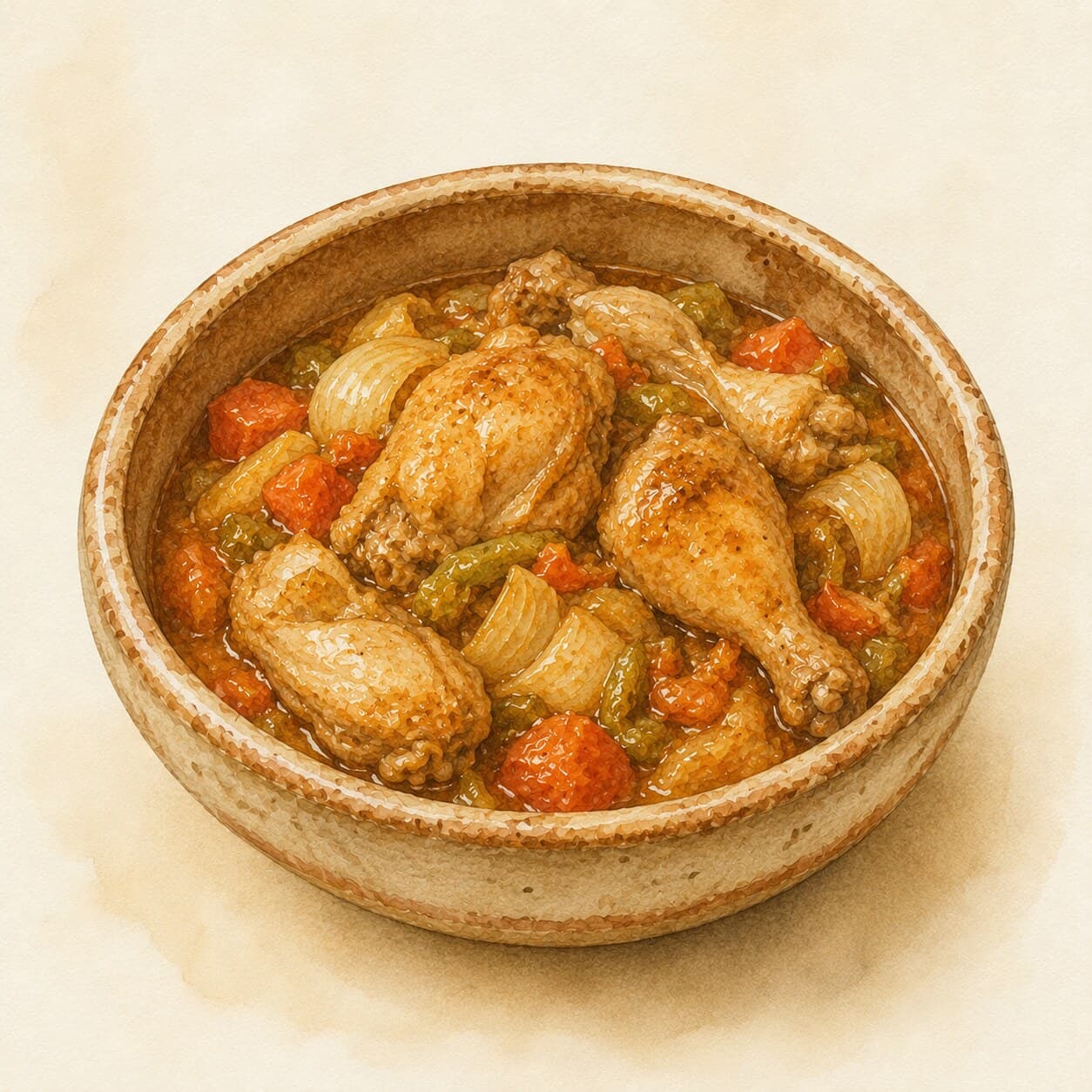
Kedjenou is a flavorful Ivorian slow-cooked chicken dish, simmered in its own juices with vegetables for a rich sauce.
Contents (5 sections)▾
Ingredients
- 1 kg chicken, cut into pieces
- 3 medium tomatoes, chopped
- 2 medium onions, sliced
- 1 piece (5 cm) fresh ginger, grated
- 4 cloves garlic, minced
- 1-2 scotch bonnet peppers, whole
- 1 tbsp vegetable oil
- Salt, to taste
- 2 cups attieke (cassava couscous), for serving
Steps
In a large canari (sealed pot), add the chicken, tomatoes, onions, ginger, garlic, and scotch bonnet. Season with salt and drizzle with vegetable oil.
Cover the pot tightly and place it on medium heat. Allow it to cook for about 15 minutes without adding any liquid. The chicken will release its juices.
After cooking, check if the chicken is tender and the sauce has thickened. If it seems too dry, add a tablespoon of water and cover again for another 5 minutes.
Once done, serve the Kedjenou hot with attieke on the side.
Why this works
The magic of Kedjenou lies in the slow-cooking technique using a canari, a sealed pot that traps moisture. By cooking the chicken with no added liquid, the meat releases its own juices, which combine with the flavors of the tomatoes, onions, ginger, and garlic to create a rich sauce. This method ensures that the dish retains its natural flavors and the ingredients meld beautifully. If the sauce seems too thin, it's essential to let it cook a bit longer to reduce and concentrate the flavors. Alternatively, if it appears too thick before serving, adding a small amount of water can help achieve the desired consistency without losing flavor. This careful balance is key to producing a succulent and aromatic dish that showcases the essence of Ivorian cuisine.
Common mistakes
Lifting the lid to check on it.
Target: Keep the pot — traditionally a canari, a sealed earthenware pot — covered and undisturbed through the first cooking stage.
Why it matters: Kedjenou's method relies on trapping the chicken's and vegetables' own released steam and juices inside a sealed pot; every time the lid comes off, that steam escapes and the pot has to build the heat and moisture back up again, which stretches the real cooking time well beyond what a recipe states.
What to do: Resist checking early — trust the timer, and only lift the lid at the point the recipe tells you to check.
Assuming the stated time is enough without checking the chicken itself.
Target: Treat the recipe's timing as a starting point, and confirm the chicken is actually cooked through before serving rather than just checking that the sauce looks thickened.
Why it matters: Bone-in chicken pieces vary in size, and a sealed pot over stovetop heat doesn't cook as predictably as an oven; a thickened sauce tells you about the vegetables and reduction, not necessarily that the thickest chicken pieces have reached a safe temperature.
What to do: Cut into the largest piece near the bone, or use an instant-read thermometer, before serving; if there's any pink or the juices aren't clear, reseal the pot and give it more time rather than serving on the clock alone.
Using chicken pieces of very different sizes in the same pot.
Target: Cut the chicken into similarly sized pieces before it goes into the pot.
Why it matters: Smaller or thinner pieces cook through well before large, bone-in thigh or leg pieces; if the sizes vary too much, you're left choosing between overcooked small pieces and undercooked large ones.
What to do: Trim the chicken into comparably sized pieces, and if a few are notably larger or bone-in versus boneless, check those specifically for doneness before serving the batch.
Piercing or cutting the scotch bonnet peppers when the recipe wants them whole.
Target: Keep the scotch bonnet peppers whole and unbroken as they cook in the pot, and lift them out before serving.
Why it matters: Scotch bonnets are extremely hot; left whole, they perfume the sauce with fruity heat and aroma without releasing their fiery interior, but a torn or pierced pepper can quickly make the whole dish too hot to eat.
What to do: Add the peppers whole, without cutting or piercing them, and remove them once the dish is done — taste the sauce partway through, and only pierce a pepper deliberately if you want more heat.
What to look for
- An internal temperature of at least 74 °C (165 °F) at the thickest part of the largest piece, near the bone. Because this method cooks covered on stovetop heat rather than in a calibrated oven, timing alone isn't a reliable guide — a probe is the surest check, especially on the largest bone-in pieces.
- Juices that run clear, not pink or cloudy-red, when a thick piece is pierced to the bone. Any rosy juice means it needs more time sealed in the pot, regardless of how thick the sauce has become.
- Flesh that is opaque throughout, with no translucent or pink color near the bone. If a piece still looks glassy or raw close to the bone, reseal the pot and continue cooking.
- A sauce that has reduced into a thick, clinging coating rather than a thin liquid. The tomatoes, onions, and the chicken's own juices should cook down to just coat the pieces; a thin, watery sauce usually means it needs more time, which also gives the chicken more time to finish cooking through.
A note on history
Kedjenou originates with the Baoulé people of Côte d'Ivoire, part of the wider Akan cultural family, and has since spread to become a dish eaten across the country and among Ivorian communities abroad. What sets it apart is the cooking vessel itself: a canari, a sealed clay pot that traditionally sits over a low wood fire so the chicken and vegetables cook in nothing but the moisture they release on their own.
Because opening the lid lets that trapped steam escape, cooks traditionally shake the covered pot from time to time instead of lifting the lid to stir — some accounts connect the dish's name to this shaking motion, though the exact linguistic origin is harder to pin down with certainty. The dish is most often served alongside attieke, a side made from fermented, grated cassava that is itself a staple with deep roots in West African cooking.
Get the essays in your inbox — free
Weekly notes on flavor, fermentation, and food history — the writing behind the Atlas of Flavor. No spam; unsubscribe anytime.