
Katsudon
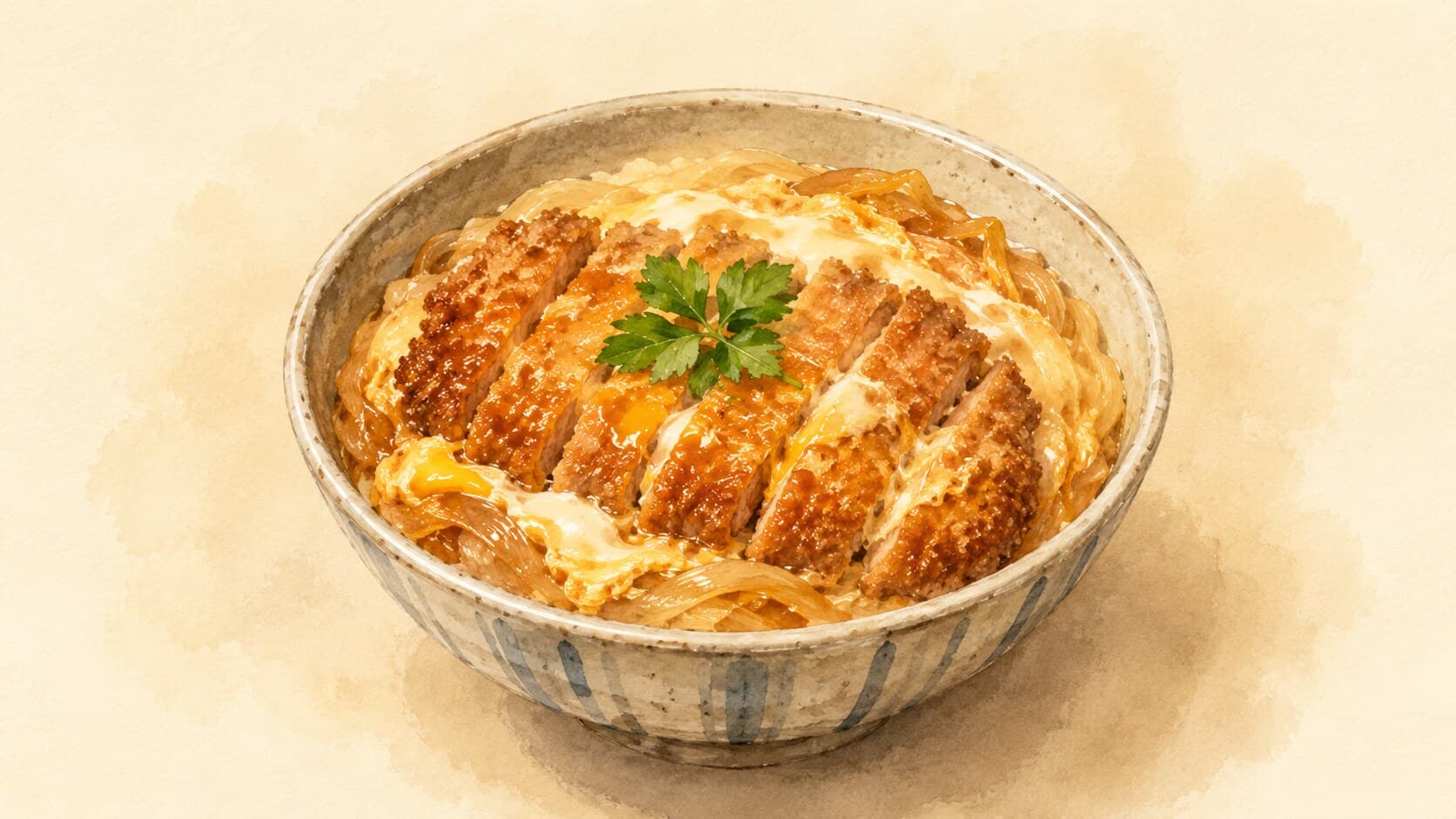
Transform leftover tonkatsu into a comforting katsudon, featuring tender pork cutlet over rice with a silky egg finish.
Contents (5 sections)▾
Ingredients
- 2 pieces of leftover tonkatsu (about 200g each)
- 2 cups cooked rice
- 1 medium onion, thinly sliced
- 200 ml dashi stock
- 50 ml soy sauce
- 50 ml mirin
- 2 large eggs
- 2 green onions, finely sliced
- salt to taste
- black pepper to taste
Steps
In a medium saucepan over medium heat, combine dashi stock, soy sauce, mirin, and sliced onion. Bring to a gentle simmer for about 5 minutes until the onion softens.
While the broth simmers, slice the leftover tonkatsu into strips. This helps the flavors absorb and the cutlet warms evenly. If the cutlet is too thick, it won't soak up the dashi properly.
Add the sliced tonkatsu to the simmering broth. Cook for an additional 2-3 minutes to heat through.
In a bowl, lightly beat the eggs, then pour them over the tonkatsu and onions. For ordinary (non-pasteurized) eggs, cover and cook until the egg is fully set, no longer runny. For the traditional softly-set, slightly-runny egg, use eggs pasteurized in the shell (through to the contents) — for everyone, not only high-risk diners; the rice's residual heat is texture, not a Salmonella kill step.
Serve the pork cutlet and egg mixture over hot cooked rice in donburi bowls. Garnish with finely sliced green onions and season with salt and black pepper if desired.
Tools you'll want
Why this works
Katsudon (a Japanese rice bowl that simmers a breaded fried pork cutlet in dashi and finishes it with a barely-set egg) is a great way to revitalize leftover tonkatsu by transforming it into a hearty meal. The technique of simmering the sliced pork cutlet in a dashi-soy-mirin broth infuses the meat with flavor while the onions contribute sweetness and depth. The barely-set beaten eggs create a rich, creamy layer that complements the crispy texture of the cutlet, making every bite satisfying. If the eggs break or overcook, resulting in a rubbery texture, simply reduce the heat and stir gently to salvage the dish and maintain a soft consistency. The rice acts as a perfect base, soaking up the delicious juices, providing balance to the dish. Additionally, garnishing with green onions adds a touch of freshness and enhances the overall presentation, making it visually appealing. This comforting meal comes together quickly and demonstrates how to maximize flavors while minimizing food waste, perfect for a busy weeknight dinner.
Safety note. Katsudon's classic finish is a barely-set egg over the breaded cutlet — that's the dish. A just-set look, the clock, and the pan's residual heat are not by themselves proof the egg is safe: this soft finish has no validated Salmonella kill step. Because the egg is beaten, you can keep the soft set with pasteurized egg — pasteurized in the shell, or a pasteurized liquid egg product; ordinary freshness, or a "raw-eating" (生食用) label, is not the same as pasteurized. For high-risk diners (pregnancy, immunocompromised, very young or old), use pasteurized egg or continue cooking the egg through to fully set before serving. The texture changes; the safety doesn't.
Common mistakes
Slicing into a tonkatsu that wasn't cooked through.
Target: Pork at the center fully opaque, no pink, ideally tested at 63–70°C (145–158°F) before it ever reached the dashi.
Why it matters: Katsudon's poach in dashi is short — 2–3 minutes is for warming and flavor absorption, not for cooking raw pork. If the original tonkatsu (panko-breaded fried pork cutlet) was undercooked, the simmer won't safely fix it because the breading insulates the center.
What to do: Use leftover tonkatsu that was clearly cooked through — golden crust, no pink at the cut, juices clear. If you're frying fresh for this dish, cut a test piece open before assembly. When in doubt, simmer the sliced pork an extra minute in the dashi.
Pouring all the egg in one pool.
Target: Beaten egg dribbled around the pan in two stages — about two-thirds first, the rest 30–40 seconds later.
Why it matters: A single pour sets unevenly — the top stays loose while the bottom hits the hot pan and turns into a rubbery sheet. Two-stage pouring gives you a fully set bottom layer married to a softer, fully-cooked top — set whites, just-set yolks, no raw run.
What to do: Beat the eggs only lightly (a few strokes — streaks of white still visible). Pour the first wave in a slow circle. Wait until it just sets at the edge, then drift the second wave over.
Reducing the dashi mixture to a glaze.
Target: About 200 ml of dashi (Japanese kelp-and-bonito stock) plus 50 ml each soy and mirin, per two portions — enough liquid to half-submerge the onions and cutlet during simmer.
Why it matters: Katsudon broth has to soak into both the breading and the rice — too thin and the dish tastes empty, too thick and it salts out the egg and dries the rice. The seasoned dashi is the dish's seasoning system, not a glaze.
What to do: Simmer onions in the broth 4–5 minutes until soft and lightly sweet, then slide cutlet in. Don't reduce hard. There should be visible liquid pooling under the rice when served.
Tipping the bowl together while the pan is still hot.
Target: Slide pan contents onto rice the moment the egg sets — then off, no further heat.
Why it matters: Residual heat keeps cooking the egg even after plating. Wait too long over the burner and the just-set yolks tighten and weep; the silky texture vanishes. Letting the rice catch a little of the broth (not all of it) is the trade you want.
What to do: Have hot rice already mounded in the donburi. The pan goes from heat to bowl in one motion. Don't scrape every drop — leave a spoonful of broth in the pan; the rice already has enough.
What to look for
- Onions before the cutlet goes in: translucent and limp, no white core, sweet smell rising from the pan. They've given up their water and started absorbing dashi.
- The dashi during the simmer: steady small bubbles around the edge of the pan, no rolling boil. A hard boil clouds the broth and toughens the egg.
- Egg moments before plating: whites fully opaque and set; yolks just set with no raw, unpoured center — soft but fully cooked through, not glossy-raw. No translucent jelly anywhere on the surface.
- The finished bowl: a glossy egg blanket covering pork and onion, broth visibly seasoning the top layer of rice. Steam carries soy-mirin sweetness.
A note on history
Katsudon emerged in Tokyo in the early Taishō period and several origin stories compete. The Sanchoan story dates a leftover-cutlet improvisation to around 1918 near Waseda University, while the better-attested Nakanishi story credits Keiniro Nakanishi, an 18-year-old Waseda Senior High student, with adapting the dish in February 1921; it spread to Ginza and Nihonbashi restaurants by that April (Waseda Weekly — Origin Story #1; Origin Story #2). Yo-roppaken in Fukui claims an even earlier dashi-and-egg variant from 1913 (Origin Story #3). What is consistent across the accounts: katsudon was born as a way to extend already-fried tonkatsu into a hot, rice-based meal — a frugality move that became a canon dish.
Get the essays in your inbox — free
Weekly notes on flavor, fermentation, and food history — the writing behind the Atlas of Flavor. No spam; unsubscribe anytime.