
Kaisen-don
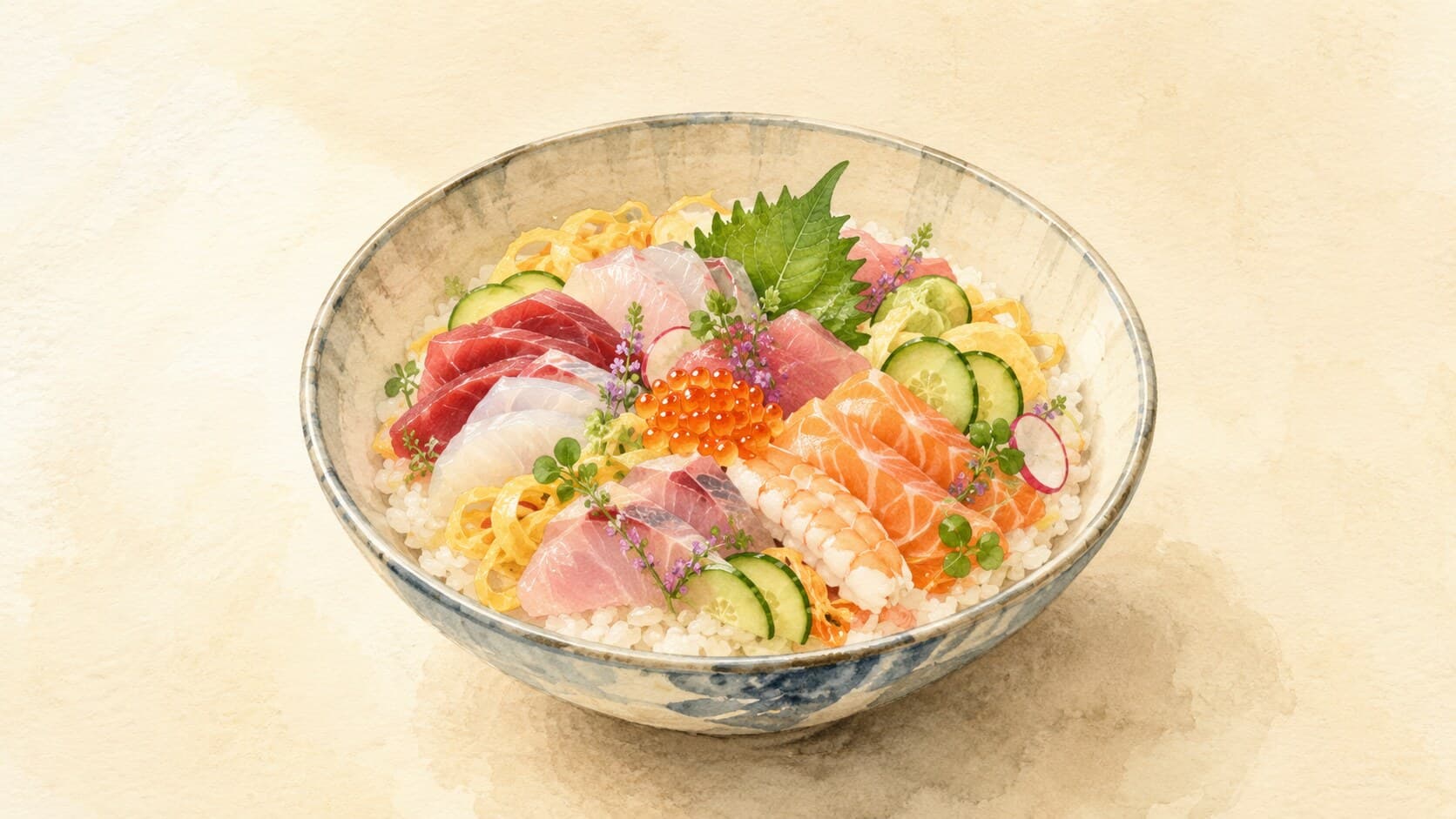
Kaisen-don is a vibrant Japanese rice bowl featuring an exquisite arrangement of fresh sashimi over seasoned rice.
Contents (5 sections)▾
Ingredients
- 300g sushi rice
- 360ml water
- 60ml rice vinegar
- 30g sugar
- 10g salt
- 150g sashimi-grade tuna, sliced
- 150g sashimi-grade salmon, sliced
- 100g sashimi-grade scallops, sliced
- 50g ikura (salmon roe)
- 50g uni (sea urchin)
- 2 shiso leaves, for garnish
- wasabi, to taste
- grated ginger, to taste
- 30ml soy sauce
- 15ml mirin
- 100ml dashi stock
Steps
Rinse sushi rice under cold water until the water runs clear, then soak it for 30 minutes. This helps remove excess starch, ensuring a better texture.
In a pot, combine rinsed rice and 360ml of water. Bring to a boil over medium heat, then reduce to low, cover, and cook for 15 minutes. This step allows for proper steaming.
While the rice is cooking, prepare the vinegared mixture by combining rice vinegar, sugar, and salt in a small saucepan over low heat. Stir until dissolved, then cool.
Once the rice is done, let it sit covered for 10 minutes. Then transfer it to a bowl and slowly mix in the cooled vinegar mixture, fanning it to cool the rice further.
In a separate bowl, combine soy sauce, mirin, and dashi stock to create the nikiri sauce.
To serve, place a generous portion of vinegared rice in a donburi bowl. Artfully arrange slices of tuna, salmon, scallops, ikura, and uni on top.
Drizzle nikiri sauce over the seafood and garnish with shiso leaves, wasabi, and grated ginger. This enhances the flavors and adds freshness.
Why this works
Kaisen-don (a Japanese rice bowl topped with sliced raw seafood — literally "seafood bowl") is a showcase of fresh, high-quality ingredients that rely heavily on the technique of preparing sushi rice and selecting sashimi-grade seafood. The rice is seasoned with a balance of vinegar, sugar, and salt, which enhances its flavor and complements the richness of the seafood. Each type of fish brings its unique texture and flavor, making the arrangement both visually appealing and delicious. If the fish seems too dry or has a tough texture, ensure you're sourcing sashimi-grade seafood that is fresh; proper handling and storage are critical. Additionally, if the rice is too sticky, it may have been overcooked or not rinsed properly; in such cases, adjusting the water-to-rice ratio next time or allowing the rice to cool and dry slightly before serving can help. Kaisen-don balances various flavors and textures, making it a special-occasion dish that highlights the beauty of Japanese cuisine.
Safety note. Kaisen-don uses sashimi-grade raw seafood — the dish is defined by it. Source from a fishmonger who labels their fish sashimi-grade or sushi-grade; freezing-to-spec at -20 °C for at least 7 days is the standard safety step home cooks usually outsource to that label. For high-risk diners (pregnancy, immunocompromised, very young or old), do not serve kaisen-don — fully-cooked alternatives like tekka-don made with seared tuna or kaisen-yaki-don made with grilled white fish preserve the spirit of the bowl while moving the protein into the safe range.
Common mistakes
Using non-sashimi-grade fish.
Target: Only fish explicitly labeled sashimi-grade or sushi-grade (fish handled and labeled specifically for raw consumption). For parasite risk in wild fish — especially salmon, mackerel, herring, where Anisakis is common — the fish must have been previously frozen at −20 °C (−4 °F) for at least 7 days, or −35 °C (−31 °F) for at least 15 hours. Farmed Atlantic salmon raised on parasite-free feed is the standard exception, but only when explicitly so labeled.
Why it matters: "Fresh from the supermarket fish counter" is not a substitute. Most retail fresh fish is not handled or stored to raw-consumption standard, and live parasites in wild fish cause anisakiasis — a serious gastrointestinal illness. Keep fish at ≤4 °C (≤39 °F) at all times, and consume the day you slice it. Vulnerable groups — pregnant, immune-compromised, young children, elderly — should avoid raw fish entirely.
What to do: Buy from a fishmonger who can name the species, the source, and the freeze treatment. If they can't, walk away. Transport in a cooler with ice. Slice and eat within hours.
Hot rice on cold fish.
Target: Vinegared rice cooled to human body temperature (~36–37 °C / 97–99 °F) before plating; sashimi added just before serving.
Why it matters: Rice straight from the cooker (above 70 °C) will partially cook the fish surface — the proteins denature (the heat unfolds and tightens the protein strands), turning the translucent sheen opaque and dull and ruining the texture sashimi was sliced for. It also raises the protein into the temperature danger zone for any minutes-long delay.
What to do: Fan the vinegared rice as you fold in the sushi-zu (vinegar-sugar-salt mix) — the wide-bowl fanning step is what gets the rice to body temperature in a few minutes. Plate the fish only when the rice no longer feels warm to the back of your hand.
Slicing across the grain or with a dull knife.
Target: A single long pull-cut with a sharp knife (a yanagiba or a long thin-bladed slicer), perpendicular to the muscle-fiber lines visible on the fillet.
Why it matters: A sashimi slice is judged by its surface — a clean cut leaves a glossy, slightly damp sheen; a sawing or dull cut tears the protein fibers and leaches moisture, leaving the slice dry and matte. Cutting with the grain leaves chewy strings; cutting across the grain shortens fibers into a tender bite.
What to do: Sharpen the knife before you start. One long stroke per slice, no sawing. Keep the blade at a slight angle so each slice has surface area, not a thick square.
Over-saucing.
Target: A light brush or drizzle of nikiri (soy sauce simmered briefly with mirin and dashi to soften the salt edge) — just enough to gloss each slice, not pool in the bowl.
Why it matters: Sashimi-grade fish is paid for by texture and clean flavor. A puddle of soy sauce salts the rice and overwhelms the fish — at which point any cooked-fish bowl would have done the job. Nikiri exists precisely to be applied lightly without over-salting.
What to do: Pour the nikiri into a small dish on the side. Brush each slice with a fingertip or a small spoon. Diners can add more if they want.
What to look for
- Vinegared rice ready to plate: glossy, separate grains that hold a loose shape; warm but not hot to the back of the hand. If it steams visibly, it's still too hot for the fish.
- A good sashimi slice: a wet, glassy sheen on the cut surface; the slice holds a clean edge without fraying. Dull or matte means the knife was dull or the fish has lost moisture.
- Tuna red, salmon coral, scallop pearl-white: each protein keeps its own color and translucency. If anything looks grey at the edge, oxidation has begun — it should have been sliced and eaten sooner.
- Nikiri on the slice: a thin gloss, not a pool. The soy should darken the slice slightly, not flood the rice underneath.
A note on history
The donburi (rice-bowl) format itself dates to Edo-period (19th-century) Tokyo, where fishermen and market workers turned unsold catch into quick one-bowl meals over rice. Kaisen-don in its modern form is comparatively recent and is widely traced to the seafood-rich northern regions of Japan — particularly Hokkaido and Tōhoku — where the abundance of fresh catch made a "scattered seafood over rice" bowl a natural local specialty. It is closely related to chirashi-zushi (scattered sushi), with the main practical distinction being that chirashi traditionally uses vinegared sushi rice, while many kaisen-don shops serve plain rice and let the fish carry the bowl (Food in Japan, The Chef Dojo).
Get the essays in your inbox — free
Weekly notes on flavor, fermentation, and food history — the writing behind the Atlas of Flavor. No spam; unsubscribe anytime.