
Jeyuk Bokkeum
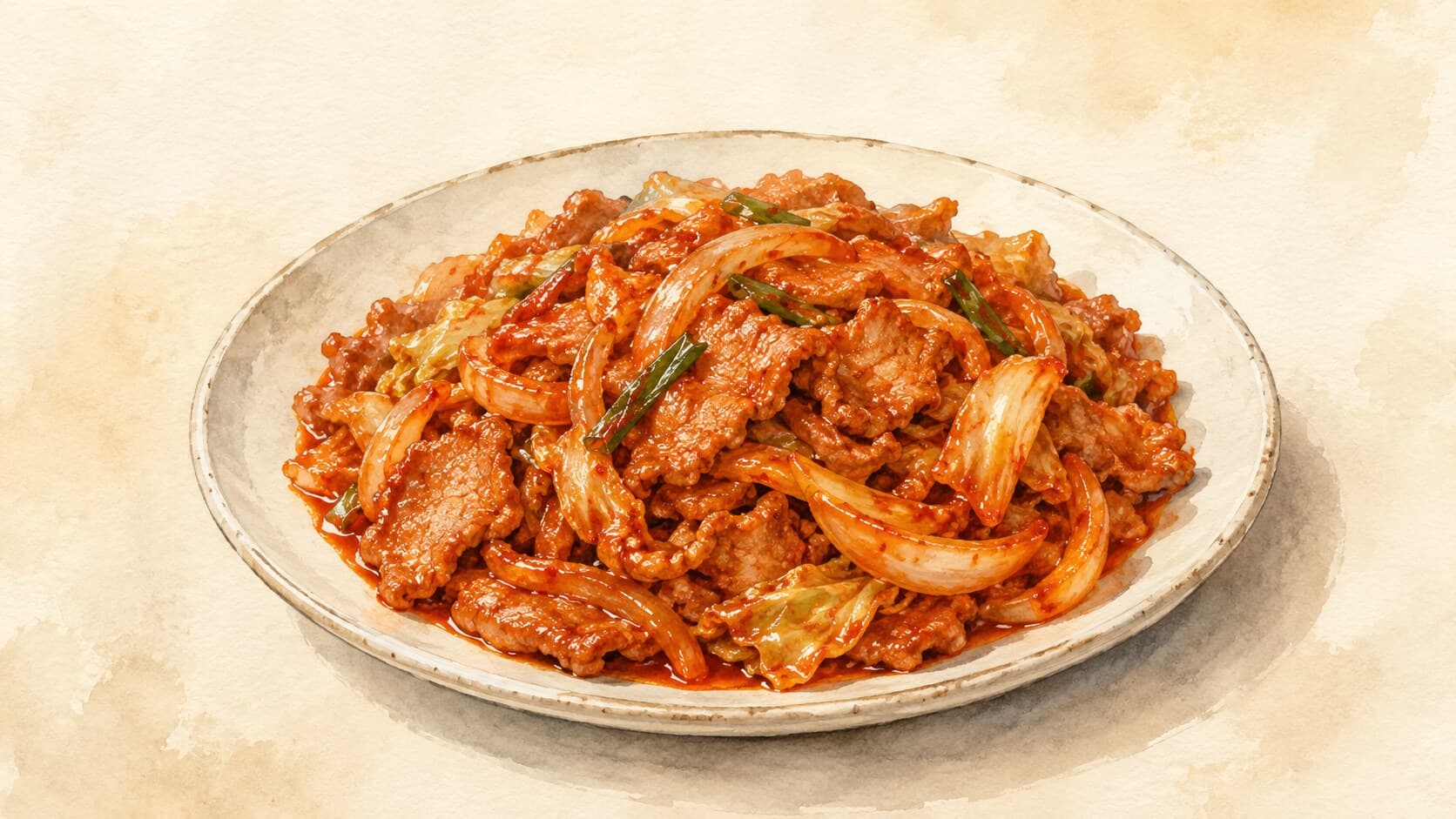
Jeyuk Bokkeum is a vibrant Korean stir-fry of marinated pork, onion, and scallion, perfect for a quick weeknight meal.
Contents (5 sections)▾
Ingredients
- 300 g thinly sliced pork belly
- 2 tbsp gochujang
- 1 tbsp gochugaru
- 1 tbsp soy sauce
- 1 tbsp sesame oil
- 1 tbsp sugar
- 1 medium onion, sliced
- 2 scallions, cut into 2-inch pieces
- 2 tbsp vegetable oil
- to taste salt and pepper
Steps
In a bowl, mix gochujang, gochugaru, soy sauce, sesame oil, and sugar to create a marinade. Add the pork and let it marinate for at least 15 minutes, enhancing flavor absorption.
Heat a large skillet or wok over high heat and add vegetable oil. Once the oil shimmers, add the marinated pork and cook for 5-7 minutes, stirring occasionally, until the edges caramelize.
Add the sliced onion and cook for another 3 minutes until they become translucent and slightly charred. Stir in the scallions and sauté for an additional 1-2 minutes.
Season with salt and pepper to taste, ensuring that the dish balances the spiciness and sweetness from the marinade.
Why this works
The technique of marinating thinly sliced pork in a gochujang-and-gochugaru paste is crucial for imparting deep flavor and tenderness. Gochujang adds a complex sweetness and umami, while gochugaru contributes heat and smokiness. Stir-frying over high heat ensures quick cooking, which caramelizes the meat's edges, enhancing the dish's overall flavor. If your pork seems too dry during cooking, add a splash of water or broth to create steam, which will help maintain moisture and prevent overcooking. This method preserves the meat's juiciness and allows the flavors to meld beautifully. The quick cooking time is perfect for a weeknight meal, making Jeyuk Bokkeum both delicious and practical.
Common mistakes
Pork not fully cooked through — pink remaining in the centre.
Target: Pork must be fully cooked — opaque all the way through, no pink, internal temperature 71°C (160°F) for ground/sliced pork. The marinade hides color, so judge by cut not by surface.
Why it matters: Jeyuk bokkeum (Korean spicy stir-fried pork in a gochujang-gochugaru marinade) uses thinly sliced pork specifically because it cooks fast — but the deep-red gochujang sauce masks the meat's internal color. Pink centres on pork carry parasitic and bacterial risk (Salmonella, Yersinia). Thin slices should reach safe temperature in 5-7 minutes, but if your slices are uneven or your pan is overcrowded, parts can stay raw.
What to do: Cut a thick piece in half after the initial 5-7 minute sear. If any pink remains, push the cooked pieces to the side, give the raw side another minute on direct heat, and re-check. Better to slightly overcook than to under-cook pork.
Wok or skillet not hot enough — pork stews instead of stir-frying.
Target: Pan ripping hot — oil shimmering, almost smoking. Pork added in a single layer with audible sizzle and visible steam release.
Why it matters: Stir-frying depends on the Maillard reaction (the dry-heat browning that creates savoury crust and aroma) at the meat surface. A cool pan can't drive Maillard fast enough, so the pork releases liquid first and ends up boiling in its own juices — pale, grey, and floppy. The caramelized edges that define jeyuk bokkeum come from violent, brief contact with hot metal.
What to do: Preheat the pan dry for 30 seconds, then add oil. Wait for shimmer. Work in batches if your pan is small — overcrowding drops the temperature and you end up stewing again.
Too much gochujang — bitter, claggy paste-bombed sauce.
Target: Gochujang carries serious salt and sugar; the 2 tbsp in the recipe is calibrated to 300 g pork. Gochujang dominates if you overdose it.
Why it matters: Gochujang (Korean fermented red chili paste — fermented soybeans, glutinous rice, salt, and chili powder) is concentrated. More than the recipe calls for makes the sauce thick and pasty, the flavor one-note salt-sweet-spicy, and the dish loses the layering you get from soy, sesame, and aromatics. Trying to fix "not spicy enough" by adding more gochujang is the wrong lever — use gochugaru (Korean chili flakes — coarsely ground sun-dried chiles with a smoky, fruity, less-fermented heat) to add heat without piling on more paste.
What to do: Trust the recipe ratio. If you want more heat, add gochugaru by the half-teaspoon. If you want more depth, add a pinch of sugar and a splash of soy — not more gochujang.
Adding everything at once — onions go limp before pork browns.
Target: Pork first to sear and brown the edges; onions next; scallions last and barely cooked.
Why it matters: Each ingredient needs different heat-time. The pork needs concentrated direct heat to caramelize. Onions need 2-3 minutes to soften and pick up colour. Scallions need 30-60 seconds — any longer and they collapse into mush, losing the bite and fresh aroma that brightens the dish. Dumping it all in at once means pork stews under wet onions while scallions disintegrate.
What to do: Stage your ingredients within arm's reach. Pork goes in first and gets undisturbed contact for 90 seconds. Stir, push to one side, add onions. After 2-3 minutes, add scallions and toss for under a minute, then off heat.
What to look for
- Marinated pork before cooking: deep red-mahogany, evenly coated, no dry patches; surface glossy with oil and gochujang paste. Patchy marinade = patchy flavor.
- First 90 seconds in the hot pan: audible sizzle, steam rising, edges of the pork turning glossy mahogany-brown. Quiet pan = pan not hot enough — turn up the heat.
- Onions joining the pork: softening at the edges, translucent in spots, picking up faint char marks; sauce reducing and clinging to everything. Watery, pale onions = overcrowded pan.
- At plate-up: glossy, deep mahogany sauce coating each piece; pork fully opaque inside with caramelized edges; scallions still bright green and slightly crisp. Pale or pink interior on pork = not done; return to the heat.
A note on history
Jeyuk bokkeum has roots in Korea's Joseon dynasty (1392-1910), where pork stir-fries appeared in cookbooks — though the dish recorded in the 1934 Joseon Yorije Beop was not spicy. The signature gochujang-and-gochugaru spicy version is a comparatively recent evolution; the dish gained mainstream popularity in the 1970s as Korea's postwar economy expanded meat consumption. It is closely associated with Korea's Gyeongsang region. (Number Analytics: Jeyuk Bokkeum History)
Get the essays in your inbox — free
Weekly notes on flavor, fermentation, and food history — the writing behind the Atlas of Flavor. No spam; unsubscribe anytime.