
Iced Café Latte
A refreshing Iced Café Latte that brings café-style indulgence right to your home.
Contents (5 sections)▾
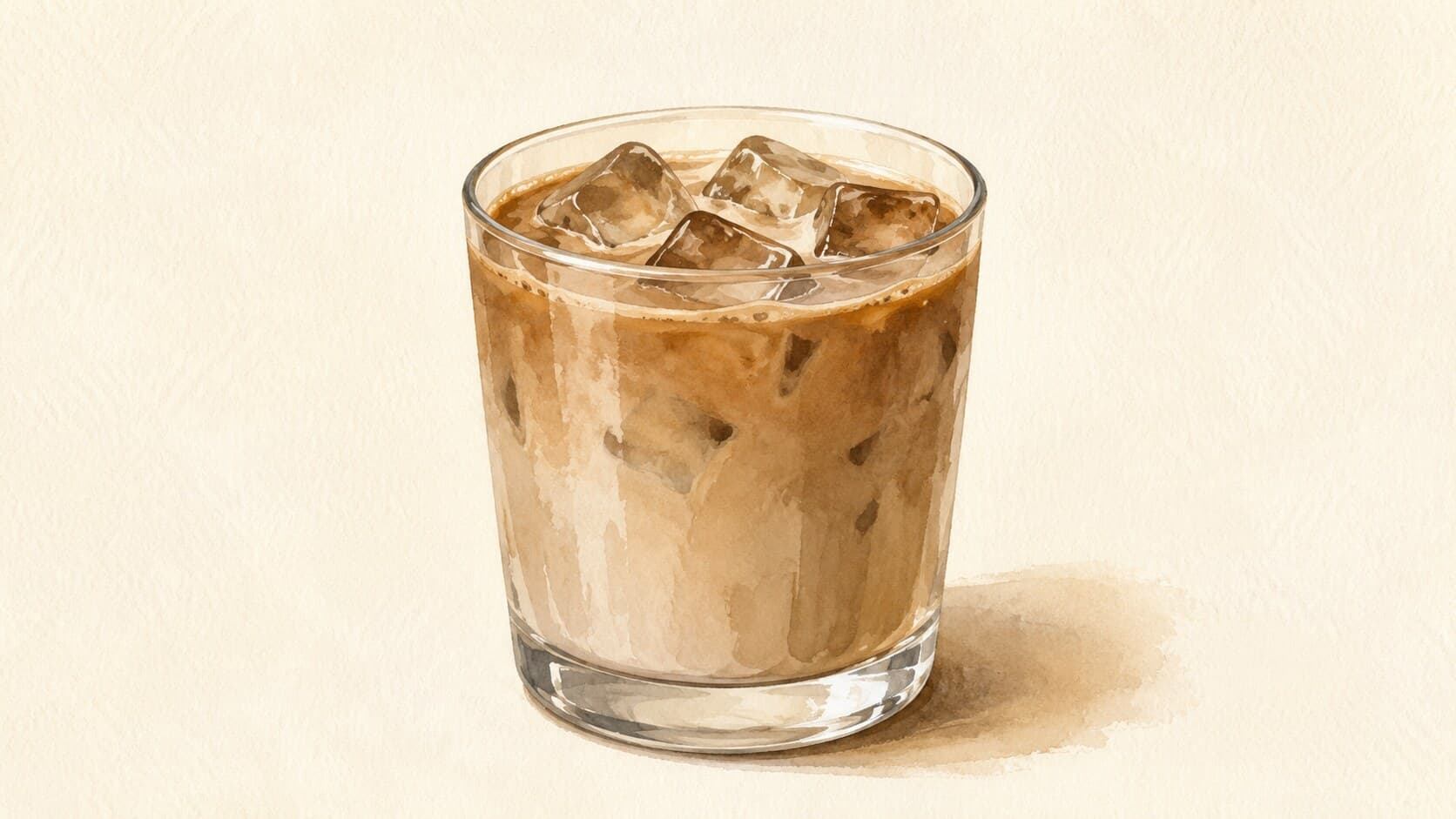
Ingredients
- 200 ml brewed espresso
- 300 ml cold milk
- Ice cubes to fill the glass
- 1 tablespoon sugar (optional)
- Cocoa powder for dusting (optional)
Steps
Brew 200 ml of espresso using your preferred method at a temperature of around 90-96 °C; this will provide the strong coffee base for your latte.
While the espresso is brewing, fill two tall glasses halfway with about 8 ice cubes each (chilled to 0 °C); this keeps the latte cold for approximately 10 minutes before dilution becomes noticeable.
Once brewed, allow the espresso to cool slightly for exactly 5 minutes, then pour evenly over the ice-filled glasses.
Slowly pour 300 ml of cold milk (ideally at 4 °C) over the espresso in each glass; this layering technique creates a visually appealing drink.
If desired, stir in 1 tablespoon of sugar for sweetness, then dust the top with cocoa powder for added flavor before serving.
Why this works
The Iced Café Latte expertly balances the rich, bold flavors of espresso with the creamy texture of cold milk, resulting in a satisfying beverage. The layering technique enhances visual appeal and allows for a gradual blending of flavors as you sip. Using freshly brewed espresso is crucial for depth; if the espresso is too hot when poured over ice, it can melt the ice too quickly, resulting in a diluted drink. To avoid this, always let the espresso cool for at least 5 minutes before pouring. If you find your latte too watery, consider reducing the amount of ice or adjusting the cooling time of the espresso to maintain the ideal balance. The choice of milk also affects creaminess; whole milk yields a richer taste, while skim milk offers a lighter profile. This combination of ice, espresso, and milk makes this drink a classic favorite, perfect for hot days or a cozy café experience at home. Ultimately, precision in temperature and timing plays a vital role in achieving the perfect Iced Café Latte.
Common mistakes
Pouring espresso over ice while it is still scorching hot.
Target: Let the espresso rest 3–5 minutes before it touches the ice; aim for around 60–65 °C.
Why it matters: Hot espresso melts the ice almost instantly, which both dilutes the drink and washes the aromatic top layer (the crema — the fine espresso foam that carries volatile coffee aromas) straight off. You lose body and aroma in one move.
What to do: Brew, then pause. Use the pause to fill the glass with ice and chill the milk further. Pour from a small jug, not directly from the portafilter (the handled basket that holds the espresso grounds on the machine).
Skipping fresh extraction and using stale leftover coffee.
Target: Espresso pulled within 10 minutes of serving; ideally less.
Why it matters: Coffee oxidizes fast once exposed to air — the bright, sweet top notes fade and a flat, slightly sour base remains. Over ice, that flatness becomes even more obvious because cold mutes flavor.
What to do: Pull the shot last, after the glass and milk are ready. If you must brew ahead, store in a sealed container in the fridge and use within an hour.
Pouring cold milk too aggressively and collapsing the layered look.
Target: A slow, steady stream poured over the back of a spoon held just above the espresso surface.
Why it matters: Cold milk is denser than warm espresso, so it naturally sinks if added gently — which is what creates the visible layer. Splashing it in mixes everything immediately.
What to do: Tilt the glass slightly. Pour milk in a thin line down the inside wall. The layer forms on its own.
Using too much ice and ending with a watery drink.
Target: Roughly half the glass volume in ice, in large cubes — not crushed.
Why it matters: Crushed ice has enormous surface area and melts within minutes; large cubes melt slowly and keep the drink cold without diluting it. More ice does not equal colder for longer — it equals faster dilution.
What to do: Use solid 2–3 cm cubes. If you serve at home often, freeze cubes from filtered water so they melt without off-flavors.
What to look for
- Espresso just before pouring: glossy dark surface with a thin hazel crema, no longer steaming. That is the cue that it has cooled enough to meet the ice without shocking it.
- The moment milk meets espresso: a clean horizontal boundary, brown above, white below. If colors swirl immediately, you poured too fast.
- Ice after 2 minutes in the glass: cubes still mostly solid, edges only slightly rounded. Heavily melted ice means the espresso went in too hot.
- First sip: cold, sweet milk first, then the bitter-aromatic coffee pulls through. That sequence is the whole point of leaving the layers unstirred at the start.
A note on history
The hot latte itself is Italian — the term caffè e latte appears in mid-19th-century writing, and the modern milk-and-espresso drink belongs to Italian café culture. The iced version, however, is not Italian: in Italy the closest equivalent is caffè shakerato, espresso shaken hard with ice and sugar in a cocktail shaker. The iced café latte as we know it — espresso poured over ice, then cold milk — is a North American adaptation that gained popularity in the 1990s through Seattle's coffee scene and chains like Starbucks and Seattle's Best (Tasting Table, Wikipedia: Latte, Wikipedia: Caffè shakerato). If you make it at home and aren't drinking it right away, refrigerate the cold milk before use and consume the finished drink the same day — dairy at room temperature is a short window.
Get the essays in your inbox — free
Weekly notes on flavor, fermentation, and food history — the writing behind the Atlas of Flavor. No spam; unsubscribe anytime.