
Harissa-Roasted Chicken
This harissa-roasted chicken features tender thighs marinated in spicy harissa, yielding a crispy, caramelized skin.
Contents (5 sections)▾
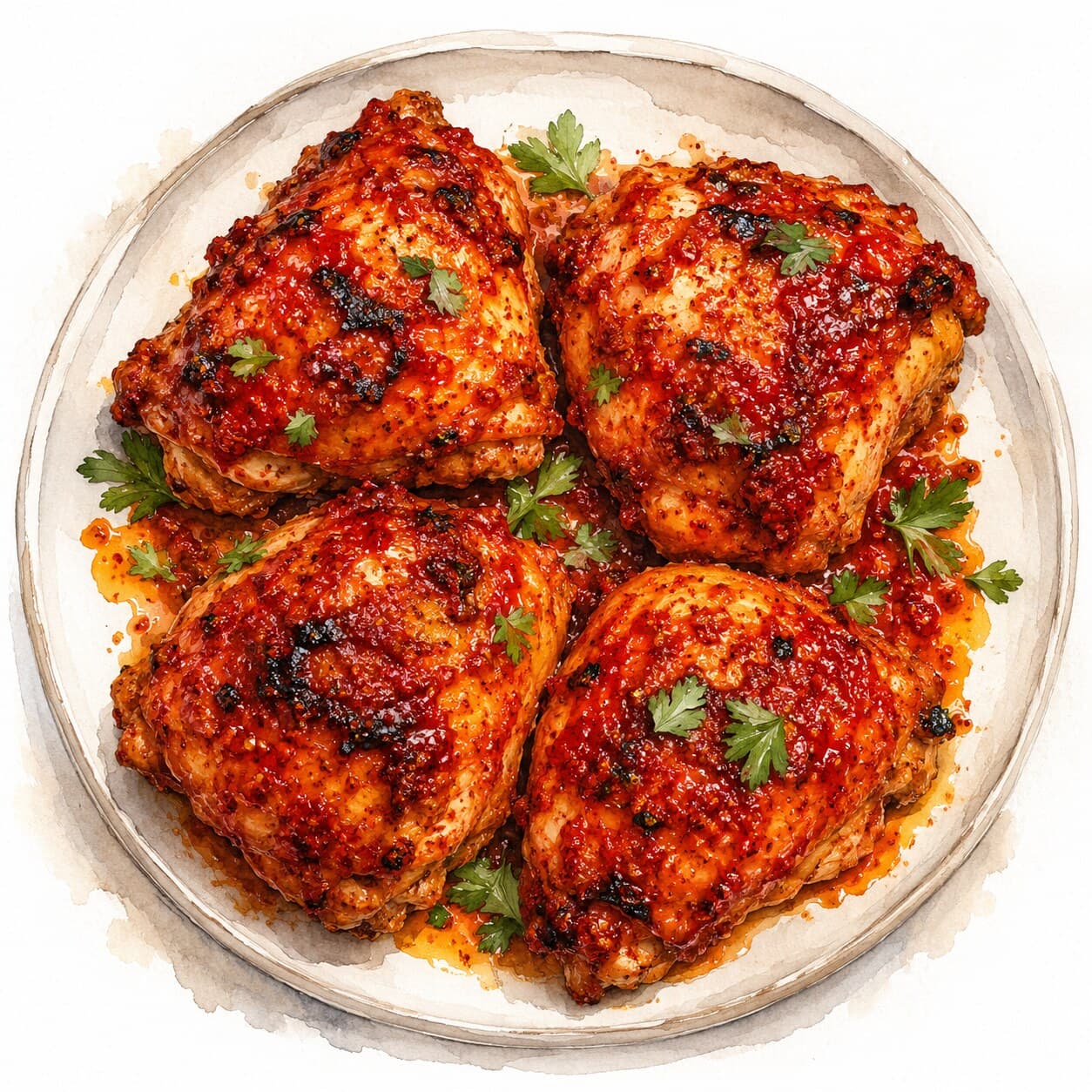
Ingredients
- 4 chicken thighs (approximately 800g)
- 3 tbsp harissa paste
- 2 tbsp olive oil
- 1 lemon (juiced)
- 4 garlic cloves (minced)
- 1 tsp ground cumin
- 1 tsp ground coriander
- Salt to taste
- Pepper to taste
Steps
In a bowl, combine harissa paste, olive oil, lemon juice, minced garlic, ground cumin, and ground coriander. Mix well to create a marinade.
Add the chicken thighs to the marinade, ensuring they are thoroughly coated. Cover and refrigerate for at least 20 minutes, allowing the flavors to penetrate the meat.
Preheat your oven to 220°C (425°F) to prepare for high-heat roasting, which helps achieve crispy skin.
Place the marinated chicken thighs on a baking tray lined with parchment paper. Season with salt and pepper.
Roast in the preheated oven for about 15 minutes. The harissa's sugar and oil darken the skin fast, so golden, crispy skin is not proof the meat is cooked — confirm doneness with an instant-read thermometer at the thickest part of the thigh near the bone: it must reach 74 °C / 165 °F with no pink. If the skin colours before the inside is done, lower the oven for the last few minutes rather than pulling it early. If the chicken seems too dry, baste with the leftover marinade halfway through cooking.
Once it has reached 74 °C / 165 °F, remove the chicken from the oven and let it rest for 5 minutes before serving so the juices settle and it is not carved at its hottest. The rest is a texture step — do not rely on carryover heat to bring undercooked chicken up to a safe temperature; reach 74 °C in the oven first.
Why this works
Marinating the chicken thighs in harissa paste infuses them with a robust flavor, while the high-heat roasting method ensures the skin becomes beautifully crispy. The combination of olive oil and harissa aids in caramelization (sugars browning under heat into deeper color and flavor), creating a rich, savory crust. High temperatures are crucial as they enhance the texture of the skin and contribute to the Maillard reaction (the savory browning that happens when food meets high, dry heat), further deepening the flavor. If the chicken appears too dry during cooking, basting (spooning liquid back over the meat as it cooks) with the leftover marinade can help retain moisture, ensuring a juicy bite. Proper resting time after roasting lets the meat come off its peak heat, so it spills less juice onto the board when cut.
Safety: Chicken thighs (bone-in, skin-on) must reach 74 °C (165 °F) internal at the thickest part near the bone — probe-check before serving. Don't trust the color of the skin alone; harissa caramelization can darken the surface before the meat is cooked through. Bone-in cuts need an extra 5–7 minutes vs. boneless. If the skin browns too fast before the meat is done, drop the oven to 190 °C for the final phase.
Common mistakes
Skipping the marinade time because it's "just a quick roast."
Target: Give the harissa marinade the full 20 minutes minimum in the fridge — longer if you have it — rather than roasting right after mixing.
Why it matters: Harissa's chili oil and the lemon's acidity need time to work past the surface of the meat; a rushed marinade sits on the outside only, so the flavor stays superficial and the acid has little chance to tenderize the meat.
What to do: Coat the chicken in the marinade first, then use the waiting time to preheat the oven and prep anything else — don't shortcut straight to roasting.
Judging doneness by the color of the skin alone.
Target: Confirm doneness with an instant-read thermometer at the thickest part near the bone, not by how dark or crisp the skin looks.
Why it matters: Harissa contains sugar and oil that caramelize and darken quickly under high heat, so the skin can look deeply browned — even close to burnt — well before the meat itself has finished cooking through near the bone.
What to do: Probe the thickest part of the thigh near the bone; if the skin is browning faster than the inside is cooking, lower the oven for the final few minutes rather than pulling the chicken early.
Crowding the tray.
Target: Space the marinated thighs out on the tray with room between each piece, skin side up.
Why it matters: Thighs packed close together trap steam between them, which softens the skin instead of letting it crisp, and the pieces also cook unevenly since they shield each other from direct oven heat.
What to do: Use a tray large enough that the pieces don't touch, or roast in two batches if the tray is small.
Cutting into the chicken straight out of the oven.
Target: Let the roasted thighs rest for the full 5 minutes off the heat before slicing or serving.
Why it matters: Straight out of a hot oven the chicken is at its peak temperature; carving it immediately spills more juice onto the board. A short rest lets it cool off that peak, so less runs out when you carve.
What to do: Tent the tray loosely with foil and let it sit untouched for the full resting time, resisting the urge to serve it straight from the oven.
What to look for
- An internal temperature of at least 74 °C (165 °F) at the thickest part of the thigh, near the bone. This is the one check that doesn't rely on appearance — harissa's caramelized surface can look done well before the meat actually is, so a probe is worth more than a glance at the skin.
- Juices that run clear, not pink, when the thickest part is pierced. Any rosy or cloudy juice means it needs more time, regardless of how dark the skin has become.
- Skin that is deeply colored and firm, not soft or flabby. Properly rendered (its fat melted out under the heat), crisped skin should feel dry and slightly rigid to the touch, not slick with unrendered fat.
- Flesh that looks opaque and firm throughout when checked at the thickest point, not translucent or pink. If the meat still looks glassy or rosy near the bone, it needs more time regardless of how done the surface looks.
A note on history
Harissa is a North African chili paste most closely associated with Tunisia, where it functions almost like a national condiment, though related chili pastes appear across Algeria, Libya, and the wider Maghreb, each with its own regional blend of dried chilies, garlic, olive oil, and spices such as caraway or coriander. Chili peppers are New World crops, and they only reached North Africa after trade contact with the Americas opened up in the early modern period — so harissa, as central as it now feels to Tunisian cooking, is a comparatively recent layer on top of a much older tradition of spice-forward North African cooking.
Pairing harissa with roasted or grilled chicken is a natural, everyday combination across Tunisian and wider Maghrebi home cooking rather than a single named dish with one fixed origin; harissa is more often treated as a flexible base condiment — stirred into stews, spread on bread, thinned into a dip — and roasting chicken with it is just one of its many common uses.
Get the essays in your inbox — free
Weekly notes on flavor, fermentation, and food history — the writing behind the Atlas of Flavor. No spam; unsubscribe anytime.