
Griot (Haitian Fried Pork)
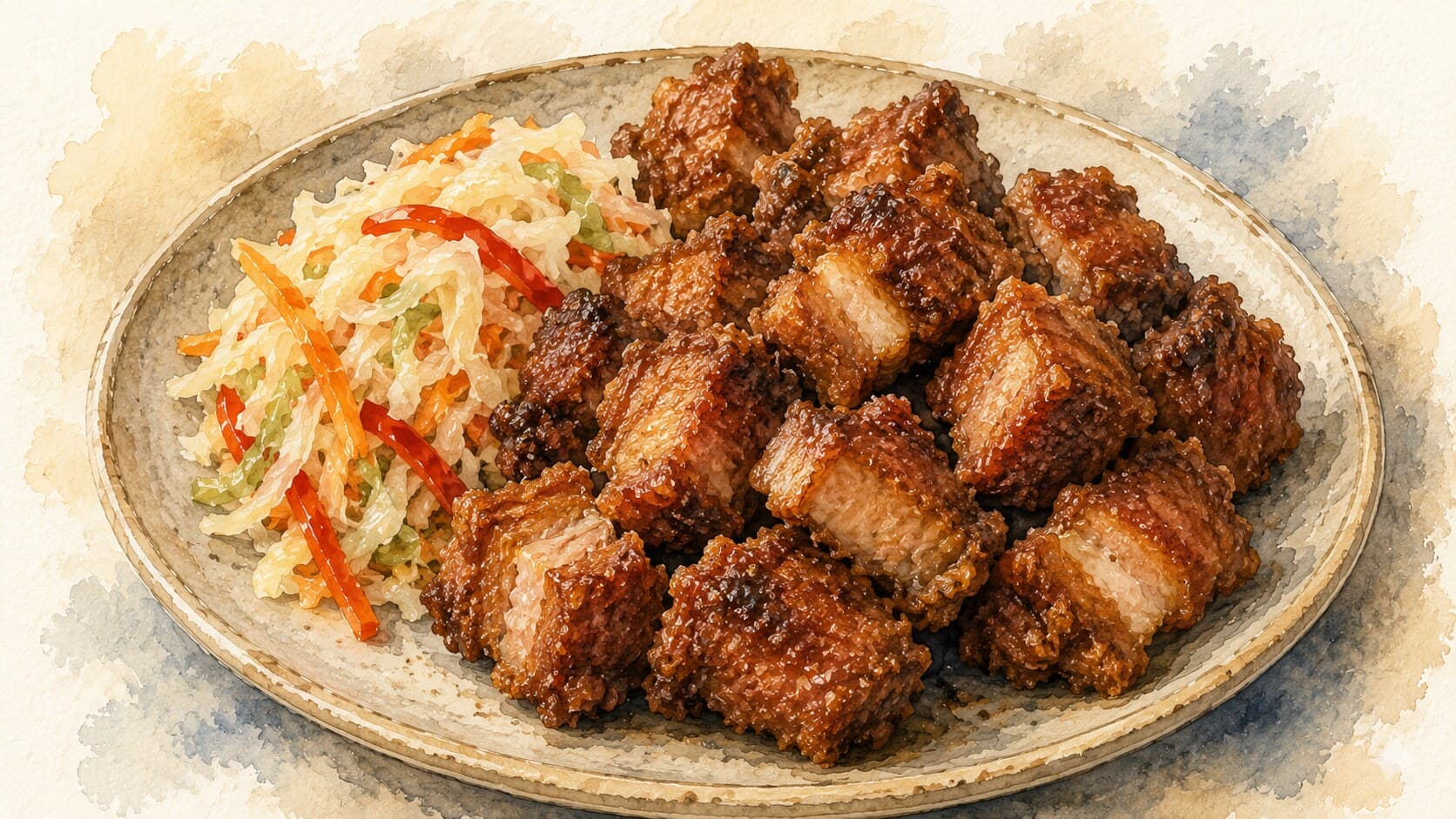
Delight in the bold flavors of Griot, a classic Haitian dish of marinated and fried pork shoulder served with zesty pikliz.
Contents (5 sections)▾
Ingredients
- 1 kg pork shoulder, cut into 5 cm cubes
- 1/2 cup sour orange juice
- 1/4 cup lime juice
- 1/4 cup epis (Haitian seasoning blend)
- 3 cloves garlic, minced
- 1 onion, chopped
- 1 teaspoon black pepper
- 1 teaspoon salt
- 1/2 cup vegetable oil for frying
- 1 cup pikliz (Haitian pickled slaw) for serving
Steps
In a large bowl, combine pork cubes with sour orange juice, lime juice, epis, garlic, onion, black pepper, and salt. Marinate for at least 2 hours, or overnight for optimal flavor.
After marinating, place the pork and marinade in a pot. Add enough water to cover the meat and bring to a boil over medium heat. Once boiling, reduce heat and simmer for about 1.5 hours, or until the pork is fork-tender.
Remove the pork from the pot and let it cool slightly. Heat the vegetable oil in a deep frying pan over medium-high heat. Carefully add the pork pieces in batches and fry until golden brown and crispy, about 3-5 minutes per batch.
Drain the fried pork on paper towels and serve hot with pikliz on the side.
Tools you'll want
Why this works
The magic of Griot lies in its two-step cooking process, which ensures that the pork is both tender and crispy. Marinating the pork in citrus juices and epis (a Haitian green seasoning paste of herbs, garlic, and peppers) infuses it with vibrant flavors and helps tenderize the meat through the acidic properties of the citrus. The subsequent braising allows the meat to become incredibly tender as it cooks slowly in its marinade, breaking down tough fibers. Finally, frying the pork creates a crunchy exterior while keeping the inside juicy. If the pork seems too tough after braising, ensure that it simmers gently; an aggressive boil can lead to tougher meat. Also, if overcooked while frying, the pork can become dry; fry until just golden to retain moisture. This delicious transformation captures the essence of Haitian culinary tradition, celebrating both flavor and texture.
Common mistakes
Skipping the citrus marinade or shortening it. Target: At least 2 hours, ideally overnight, with sour orange and lime juice in contact with the meat. Why it matters: The acid in citrus partially denatures (unfolds and loosens) surface proteins on the pork, which lets the salt and epis aromatics travel deeper into the meat. A 20-minute marinade only flavors the very outside. What to do: Marinate covered in the refrigerator. Turn the cubes once partway through so every face contacts the acid.
Boiling the braise hard instead of simmering. Target: Bare simmer — a slow lazy bubble, not a rolling boil. Why it matters: Pork shoulder is full of collagen (the connective tissue that holds muscle fibers together). At a gentle simmer it slowly melts into gelatin and the meat goes tender; at a hard boil the muscle fibers squeeze out their water faster than collagen can melt, and you end up with stringy, dry pork even though it sat in liquid. What to do: Bring to a boil, then drop the heat until the surface just murmurs. Lid partly off so the liquid reduces and concentrates.
Frying wet pork in not-hot-enough oil. Target: Pork drained and patted dry; oil at about 180°C / 350°F before the first piece goes in. Why it matters: Wet pork in cool oil steams instead of browning — no Maillard reaction (the browning that builds savory, roasted flavor when proteins and sugars meet high heat), and the oil temperature crashes further, so the crust never sets. Pork dropped into properly hot oil seals quickly and browns instead of going greasy. What to do: Drain the braised pork on a rack, blot the surface dry, and fry in small batches so the oil stays hot. Wear long sleeves and keep a lid nearby for the fry stage — citrus-marinated meat will spit.
Cutting the pork too small. Target: Roughly 5 cm (2 inch) cubes — large enough to stay juicy through both braise and fry. Why it matters: Small cubes have more surface area, so they over-brown and dry out by the time the inside is fully cooked through. Larger cubes hold their juice and give you the signature crisp-outside, tender-inside contrast. What to do: Trim only the largest pieces of hard sinew; leave most of the fat cap on — that's where the flavor lives during the fry.
What to look for
- End of marinade: the meat smells brightly citrus-aromatic, the surface looks slightly dulled and matte. That dull surface is the acid having done its work on the outer proteins.
- End of braise: a fork slides into a cube with mild resistance, not falling apart. You want tender, not shredded — the cubes need to hold their shape for the fry.
- Just before frying: the surface is dry to the touch, no visible water beads. Wet pork = steam, not crust.
- Finished griot: deep mahogany-brown crust, a clear crackle when pressed with tongs, juices that run clear (not pink) when one is cut open. That clarity is the doneness check for pork.
A note on history
Griot's roots are traced to West African culinary practice — particularly the tradition of marinating meat — carried to Hispaniola by enslaved Africans during the French colonial period of the 17th and 18th centuries (Travel Noire, Wikipedia). The dish takes its name from the griot, the revered West African storyteller-musician; in early Haitian society the dish was associated with higher-status households before becoming widely familiar (Travel Noire). Today griot, served with diri ak pwa (rice and beans) and pikliz, is treated by many Haitians as the country's national dish (Whetstone Magazine).
Get the essays in your inbox — free
Weekly notes on flavor, fermentation, and food history — the writing behind the Atlas of Flavor. No spam; unsubscribe anytime.