
Gyeran-jjim
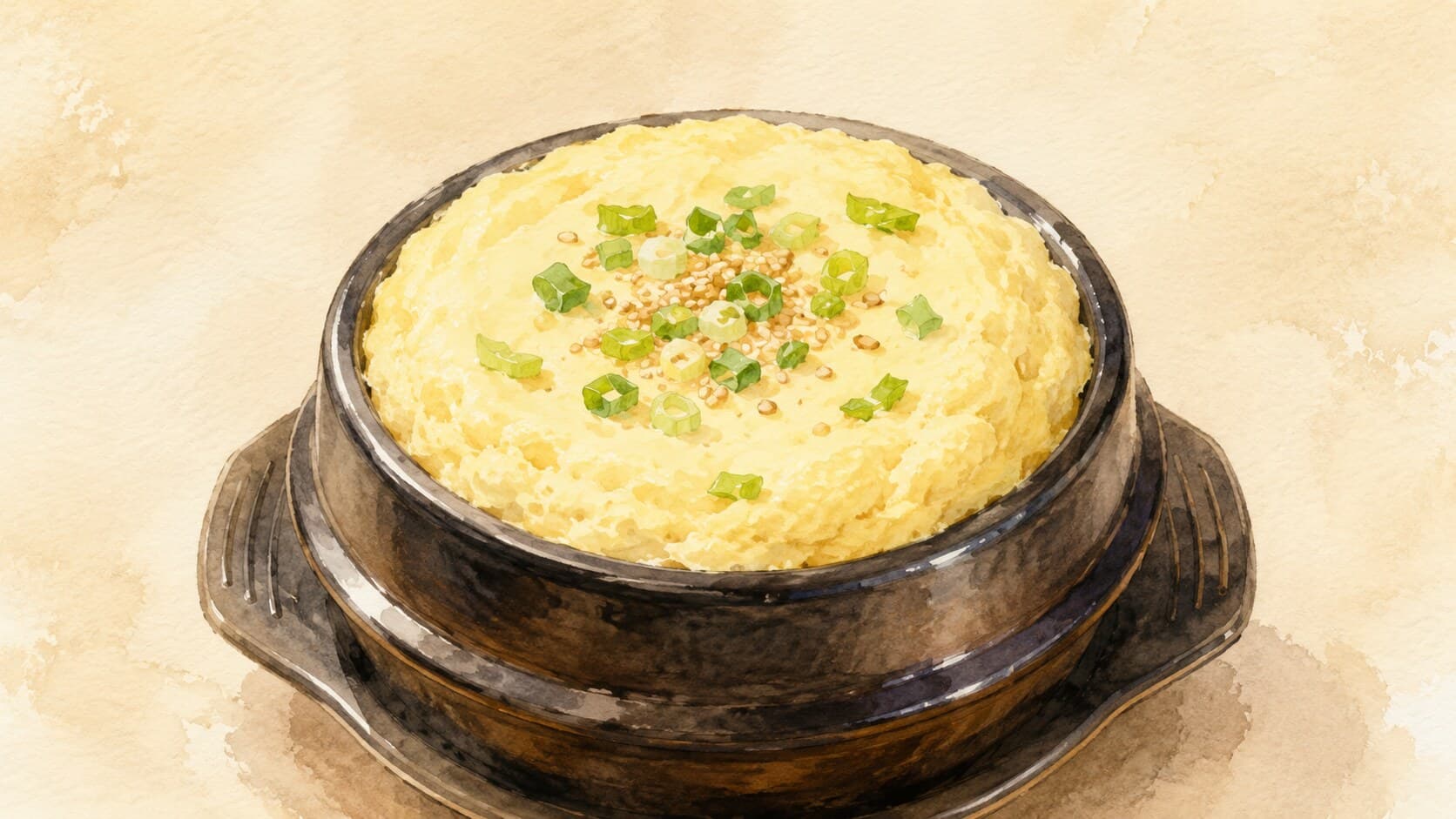
Gyeran-jjim is a delightful Korean steamed egg dish, soft and custardy, perfect as a side for rice.
Contents (5 sections)▾
Ingredients
- 4 large eggs
- 200 ml anchovy or shrimp stock
- 1/2 tsp salt
- 1 tbsp finely chopped scallions
- 1 tsp sesame seeds
Steps
In a bowl, whisk the eggs with the stock and salt until well combined, ensuring no bubbles form, about 1-2 minutes.
Pour the egg mixture into a heatproof bowl or earthenware dish, then cover it with foil to prevent water from dripping in.
Set up a steamer or a pot with a steaming rack and bring the water to a gentle boil over medium heat, approximately 10 minutes.
Place the covered bowl in the steamer, cover with a lid, and steam for 12-15 minutes, or until the custard is firm and no longer jiggles.
Remove the bowl from the steamer, uncover, and sprinkle with scallions and sesame seeds before serving warm.
Tools you'll want
Why this works
Gyeran-jjim relies on the gentle coagulation of egg proteins, which occurs at a lower temperature compared to traditional frying methods. By whisking the eggs with flavorful stock and a touch of salt, we enhance the taste while ensuring a light texture. The key to achieving that soft, pillowy custard lies in the steaming technique, which allows for even heat distribution, preventing overcooking. If the custard seems too runny after the suggested steaming time, return it to the steamer for an additional 2-3 minutes. The foil cover is crucial for maintaining moisture and preventing water droplets from forming on the custard's surface, which could lead to a watery texture. Thus, correct temperature control and careful timing are essential for success.
Common mistakes
Steam too aggressive. Target: A gentle, steady steam — water at a soft rolling simmer, not a hard boil. Why it matters: Egg proteins set (coagulate — go from liquid to solid) cleanly around 70–80°C. A hard boil drives the custard well past that and the proteins squeeze water out, leaving the surface pocked with holes and the texture rubbery. Custard requires gentle heat, not maximum heat. What to do: Bring the steamer to a boil, then turn down to medium-low before the bowl goes in. You want lazy bubbles, not a thrashing pot. Lift the lid briefly halfway through if you see violent puffing.
Skipping the strain. Target: Pour the whisked egg through a fine-mesh strainer into the steaming bowl. Why it matters: Whisking inevitably traps chalazae (the white stringy bits anchoring the yolk) and air pockets. Untrained, these set as visible threads and small dry craters — the custard looks lumpy instead of mirror-smooth. What to do: One pass through a fine sieve is enough. If foam still sits on top, drag a spoon across the surface to skim it before steaming.
Pulling the bowl too early. Target: Steam 12–15 minutes; the surface should look set, with no liquid sloshing under a gentle tilt. The custard must be fully cooked through — no raw runny center. Why it matters: Korean steamed egg is a fully cooked custard, not a soft-set Japanese chawanmushi. An undercooked center is both texturally wrong and a food-safety risk with raw eggs. What to do: Tilt the bowl gently after 12 minutes. If the centre still ripples like liquid under the skin, give it 2–3 more minutes covered. A skewer inserted into the center should come out clean.
Stock too salty or too cold. Target: Stock seasoned lightly — about 1% salt — and at room temperature when whisked in. Why it matters: The custard concentrates during steaming, so a stock that tastes "perfect" cold ends up oversalted. Cold stock also drags the egg temperature down and lengthens the steam time unevenly. What to do: Taste the stock — it should taste a touch under-seasoned. Let it sit out 10 minutes before whisking with eggs.
What to look for
- Whisked egg mixture before steaming: uniformly pale yellow, no streaks of white, no foam on top. Streaks mean under-mixed; foam means over-whisked.
- Surface after 10 minutes: just set around the edge, still slightly wobbly in the centre. Almost there — give it another 2–5 minutes.
- Finished custard: smooth surface, no large bubbles, gives a soft tremble when the bowl is nudged but doesn't slosh. Cooked through, tender, not rubbery.
- A skewer test: comes out clean. Confirms the center is fully cooked — not raw, not runny.
A note on history
Gyeran-jjim's exact origin date is uncertain, but jjim (steamed dishes) and various egg preparations were already established in 18th-century royal Korean court records. The dish is traditionally prepared and served in a ttukbaegi (an unglazed earthenware pot), a vessel form that dates back to the Joseon Dynasty and that holds heat well enough to keep the custard bubbling at the table (Wikipedia, Mashed).
Get the essays in your inbox — free
Weekly notes on flavor, fermentation, and food history — the writing behind the Atlas of Flavor. No spam; unsubscribe anytime.