
Freekeh
Experience the unique smoky flavor of freekeh in this delightful Levantine pilaf dish.
Contents (5 sections)▾
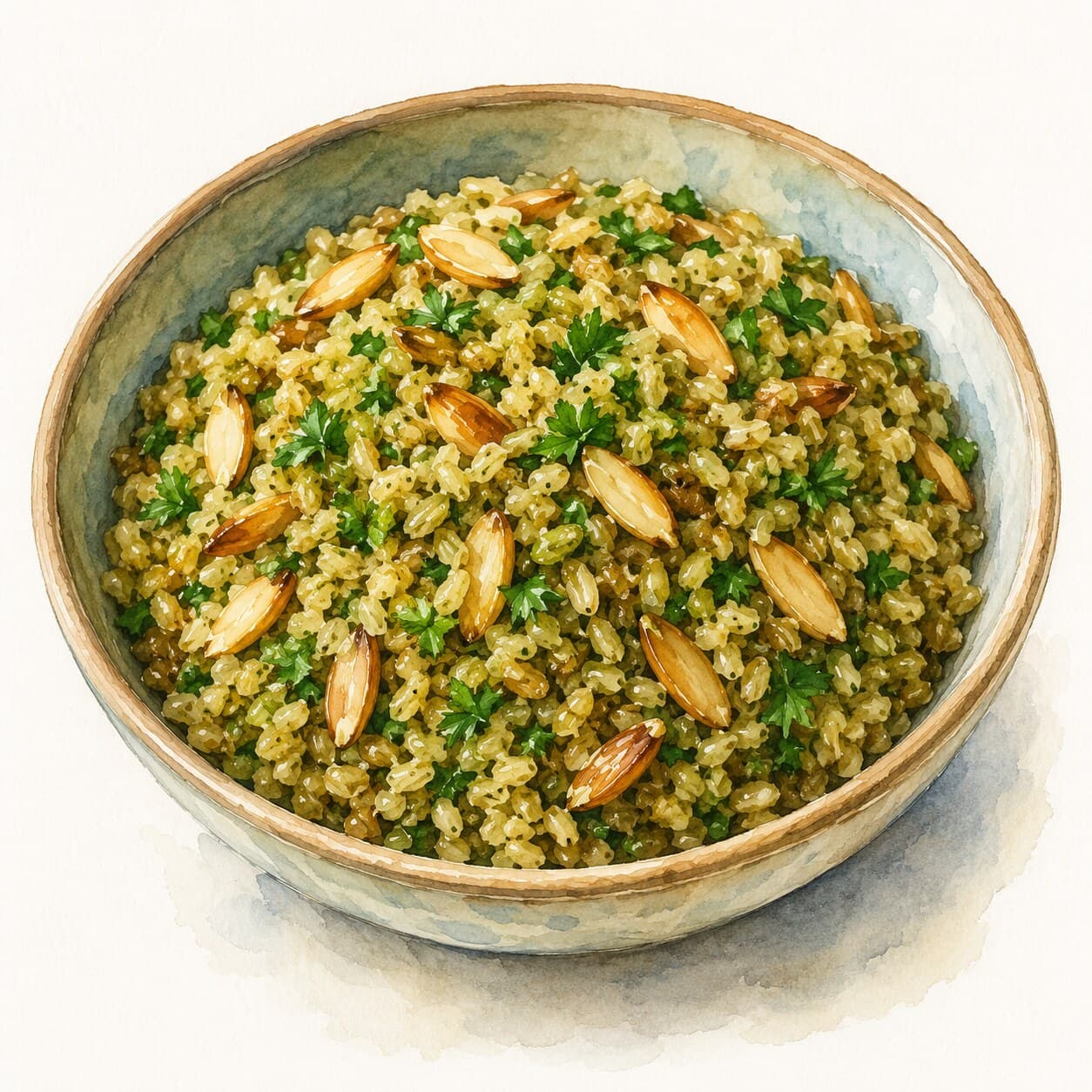
Ingredients
- 200 g freekeh (roasted green wheat)
- 500 ml chicken broth
- 1 medium onion, diced
- 1 tsp ground cumin
- 50 g sliced almonds
- a handful of fresh parsley, chopped
- 2 tbsp olive oil
- salt to taste
- pepper to taste
Steps
Heat olive oil in a medium saucepan over medium heat. Add the diced onion and sauté for about 5 minutes until translucent.
Stir in the ground cumin and cook for another minute to release its aroma.
Add the freekeh to the saucepan and toast it for 2-3 minutes, stirring frequently to prevent burning.
Pour in the chicken broth and bring the mixture to a boil. Season with salt and pepper.
Once boiling, reduce the heat to low, cover, and simmer for about 15 minutes, or until the freekeh is tender and the liquid is absorbed.
Remove from heat and let it sit covered for 5 minutes. Fluff with a fork before serving.
Top with sliced almonds and chopped parsley before serving.
Why this works
Freekeh, made from green wheat that's harvested early and roasted, offers a unique nutty and smoky flavor that distinguishes it from other grains. By toasting the freekeh in olive oil with onions and cumin, you enhance its natural flavors while creating a rich aroma. Cooking it in chicken broth further infuses the dish with depth and richness. If the freekeh seems too dry after cooking, add a splash of water and cover to allow the steam to help hydrate it. This dish balances textures and flavors beautifully, with crunchy almonds contrasting the tender grains, while the fresh parsley adds a pop of color and brightness.
Common mistakes
Adding the broth before the freekeh has actually toasted.
Target: Toast the freekeh in the oil with the onion and cumin for the full 2-3 minutes, stirring often, until it smells distinctly nutty.
Why it matters: Freekeh (green durum wheat that's harvested young and fire-roasted in the field) already carries a smoky flavor, but a second toast in fat blooms its aroma further and lightly seals the bran layer, which helps the grains cook up separate rather than gluey.
What to do: Keep the grains moving in the pan and wait for a toasty smell before pouring in the broth — a rushed 30-second stir isn't enough.
Lifting the lid or stirring while the freekeh simmers.
Target: Cover tightly once it reaches a boil, reduce to low, and leave it undisturbed for the full simmer time.
Why it matters: This dish cooks by absorption (the grains steam in a sealed pot and gradually draw up the surrounding liquid); lifting the lid lets steam escape and liquid evaporate unevenly, leaving some grains underdone and others dried out.
What to do: Set a timer instead of checking by eye, and resist stirring — only remove the lid at the very end to test doneness.
Fluffing or stirring it the moment it comes off the heat.
Target: Let the covered pot rest off the heat for about 5 minutes before touching it, then fluff gently with a fork.
Why it matters: Resting allows the last of the steam to finish distributing through the grains; digging in immediately, or stirring hard with a spoon instead of a fork, mashes the grains and releases their starch, turning the pilaf gluey instead of light and separate.
What to do: Wait out the rest, then lift and turn the grains with fork tines rather than pressing or stirring.
Skipping a rinse and guessing at the liquid ratio.
Target: Rinse the freekeh briefly in a sieve before cooking, and check the package to see whether it's whole or cracked, since cracked freekeh cooks faster and drinks up liquid sooner.
Why it matters: Because freekeh is roasted over an open flame while still green, the grains can carry bits of surface chaff and soot that a quick rinse removes; and using a whole-grain cooking time on cracked freekeh, or the reverse, throws off the liquid ratio, leaving the dish either soupy or undercooked.
What to do: Rinse, check what form you have, and adjust the simmer time down a little if you're working with cracked freekeh.
What to look for
- Grains that are tender but still distinctly separate and a little chewy, not mashed into a paste. Each grain should still be visible on the fork.
- All the broth absorbed, with small steam holes visible across the surface when you lift the lid. That pockmarked surface is the classic sign a pilaf-style grain has finished cooking through.
- A toasty, faintly smoky aroma rather than a raw, grassy one. That's the toasting step and the freekeh's natural roast doing their job together.
- Almonds that are golden and crisp against the tender chew of the grains. Pale almonds mean they need another minute in a dry pan or the oven before topping the dish.
A note on history
Freekeh's name comes from the Arabic "faraka," meaning "to rub," describing the step where the roasted grain is rubbed to separate the kernel from its charred husk. Its origin is often told as legend rather than settled history: a village's still-green wheat field was set alight — accidentally in some versions, deliberately to save it from raiders in others — and the surviving grain, once salvaged and eaten, tasted good enough that people began making it that way on purpose. Whatever the truth behind that story, the underlying technique — harvesting durum wheat while still young and green, then roasting it in the field to char off the husk without burning the moisture-rich grain inside — is old, and has long been part of farming traditions across the Levant and the wider Eastern Mediterranean.
Get the essays in your inbox — free
Weekly notes on flavor, fermentation, and food history — the writing behind the Atlas of Flavor. No spam; unsubscribe anytime.