
Fatteh
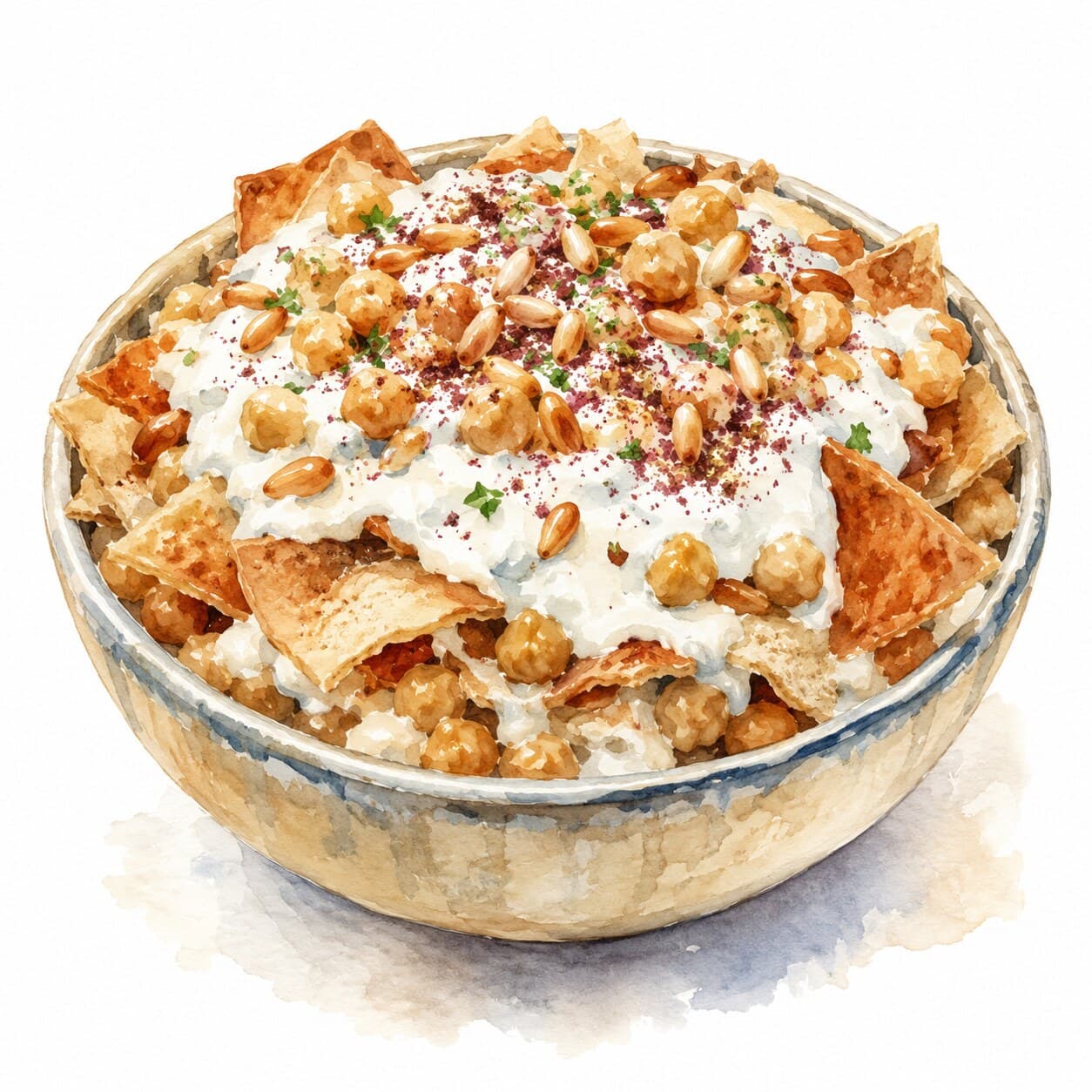
Fatteh is a delightful Levantine dish featuring layers of toasted pita, chickpeas, and a creamy garlic-yogurt sauce.
Contents (5 sections)▾
Ingredients
- 4 stale pita breads, torn into pieces
- 400 g canned chickpeas, drained and rinsed
- 250 g plain yogurt
- 3 tbsp tahini
- 2 cloves garlic, minced
- 2 tbsp pine nuts, toasted
- 1 tsp sumac
- Salt, to taste
- Olive oil, for drizzling
Steps
Preheat your oven to 180°C (350°F). Spread the torn pita pieces on a baking sheet and toast for about 10 minutes, or until golden and crispy. This adds crunch to the Fatteh.
In a bowl, combine the yogurt, tahini, minced garlic, and salt. Mix well until smooth. This sauce brings creaminess and flavor to the dish, balancing the textures.
In a serving dish, layer the toasted pita pieces, followed by a layer of chickpeas. Drizzle a portion of the garlic-yogurt sauce over the chickpeas.
Repeat the layering process with remaining pita, chickpeas, and sauce. Finish with a sprinkle of toasted pine nuts and a dusting of sumac for a tangy touch.
Serve immediately to maintain the pita's crunch. Drizzle with olive oil just before serving for extra richness.
Why this works
The success of Fatteh lies in its layered structure, which combines contrasting textures and flavors. The toasted pita provides a satisfying crunch that contrasts with the creamy garlic-yogurt sauce and tender chickpeas. By assembling the dish just before serving, the bread remains crisp, preventing it from becoming soggy. If the yogurt sauce seems too thick, you can thin it with a little water or additional olive oil to achieve your desired consistency. Conversely, if the chickpeas are salty, balancing them with a dash of lemon juice can enhance the overall flavor. This dish's versatility allows for variations, such as adding sautéed vegetables or different nuts, ensuring it can be tailored to your taste preferences while maintaining its essence.
Common mistakes
Letting the toasted pita sit around before assembling, or building the layers too early.
Target: Toast the pita until deeply golden, then layer and serve within minutes, timed so the sauce and chickpeas are ready at the same moment.
Why it matters: Pita is mostly starch, and starch reabsorbs moisture readily; once it's near the warm chickpeas and yogurt sauce, it starts pulling in steam and turns chewy rather than staying crisp, even if it looked deeply golden and crisp straight out of the oven.
What to do: Get everything else ready first — chickpeas warmed, sauce mixed, nuts toasted — so the pita goes from oven to plate with as little standing time as possible.
Spooning on cold, stiff yogurt sauce straight from the fridge.
Target: Stir the yogurt-tahini-garlic sauce vigorously, adding a splash of water if needed, until it loosens into a pourable, ribbon-like consistency before serving.
Why it matters: Cold yogurt mixed with tahini firms up and clumps; dolloped on straight from the fridge, it sits in unevenly thick pools instead of draping over the chickpeas, so some bites end up dry and others oversauced.
What to do: Whisk the sauce well and check that it falls off the spoon in a slow, even ribbon; loosen it further with a little water if it resists.
Layering unseasoned chickpeas and relying on the sauce to flavor the whole dish.
Target: Warm the drained, rinsed chickpeas with a pinch of salt, and a little olive oil, before building the layers.
Why it matters: Chickpeas straight from the can taste flat; if the yogurt sauce is the only seasoned component, the inside of each bite — mostly pita and chickpeas — tastes underseasoned even though the top layer is well balanced.
What to do: Season and warm the chickpeas as their own step, tasting before they go into the dish, rather than treating them as a neutral filler.
Toasting the pine nuts over high heat without watching them.
Target: Toast pine nuts in a dry pan over low-to-medium heat, stirring or shaking constantly, and pull them off as soon as they turn golden.
Why it matters: Pine nuts are small and high in fat, so they can go from raw to burnt in the time it takes to look away; scorched nuts turn bitter, and that bitterness stands out against the mild sauce.
What to do: Stay at the stove the whole time they're toasting, and remember they'll keep darkening slightly from residual heat after you take the pan off the burner.
What to look for
- Pita that crackles and shatters slightly under a spoon rather than bending. A soft or leathery texture means it toasted too little, sat too long before serving, or both.
- Sauce that drapes over the chickpeas in an even, ribbon-like layer rather than sitting in a stiff dollop or running off thin and watery. That consistency is what lets every bite get some sauce.
- Pine nuts that are golden brown all over, not just at the tips, and smell toasty rather than raw or waxy. Uneven color usually means they weren't kept moving in the pan.
- A dish served and eaten within minutes of assembly, with the bottom layer still audibly crisp when you dig in. If it's been sitting for a while, expect the base layer to have softened.
A note on history
Fatteh takes its name from the Arabic root for "to crumble" or "to break into pieces," a reference to its founding technique: turning bread that has gone stale into the base of a dish rather than discarding it. Versions built on chickpeas, on shredded chicken, or on eggplant are found across the Levant — Syria, Lebanon, Jordan, and Palestine — and as with a number of dishes shared across that region, no single country is its sole origin; each place has its own household version. What unites them is the same practical logic: day-old pita, layered with a hot topping, becomes a full dish rather than a waste product.
Get the essays in your inbox — free
Weekly notes on flavor, fermentation, and food history — the writing behind the Atlas of Flavor. No spam; unsubscribe anytime.