
Fish and Chips
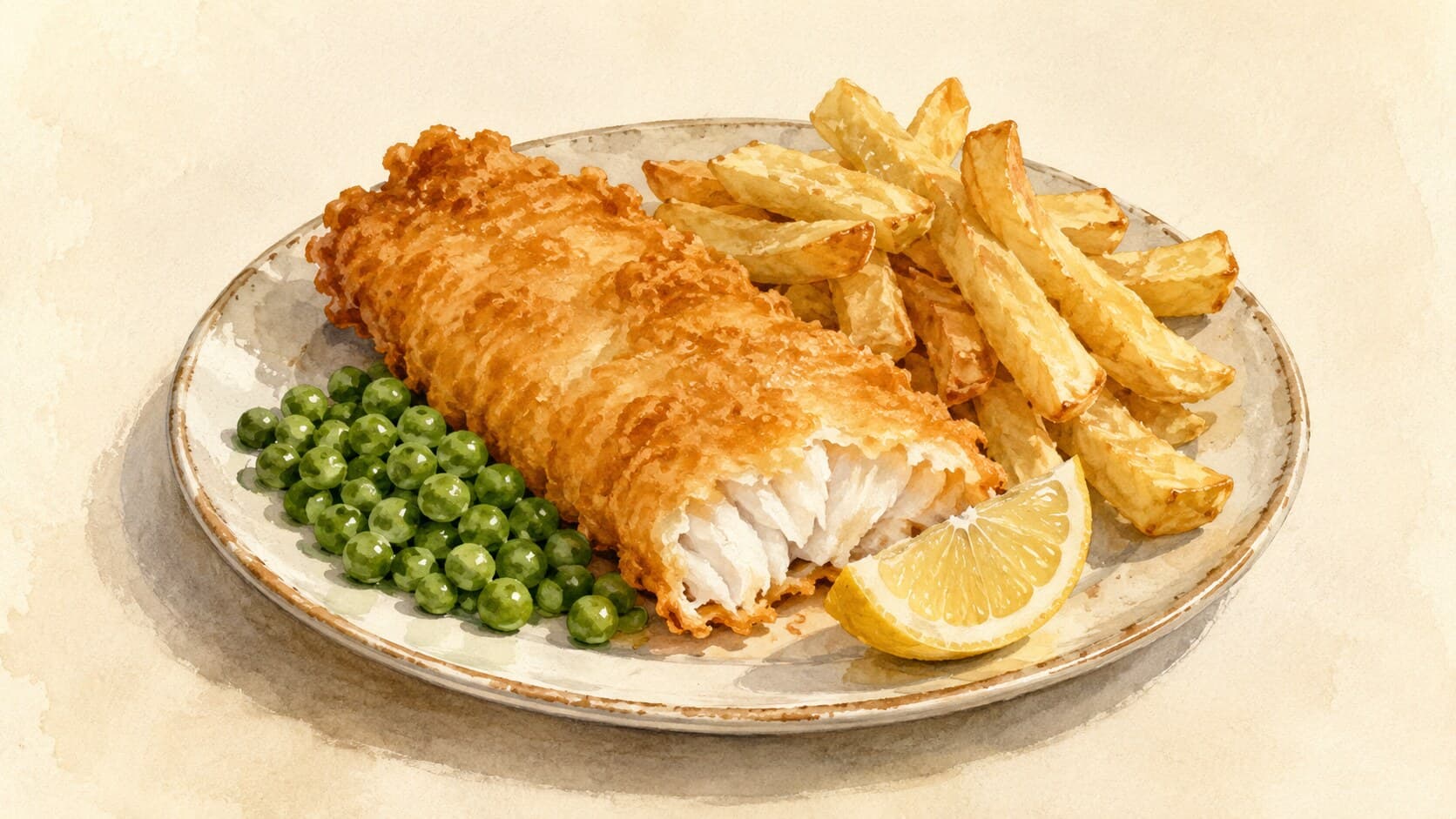
Classic British Fish and Chips featuring crispy battered fish and thick-cut chips.
Contents (5 sections)▾
Ingredients
- 300 g white fish fillets (such as cod or haddock)
- 150 g all-purpose flour, plus extra for dusting
- 1 tsp baking powder
- 250 ml cold sparkling water
- 1 tsp salt
- 1/2 tsp black pepper
- 4 large potatoes, peeled and cut into thick chips
- Vegetable oil for frying
- Mushy peas, for serving
- Lemon wedges, for serving
Steps
Preheat your oil in a deep fryer or a large saucepan to 180°C (350°F). This temperature is crucial for achieving a crispy batter.
While the oil is heating, prepare the chips by boiling them in salted water for about 5 minutes, then drain and pat dry. This helps to create a fluffy interior.
Dust the fish fillets lightly with flour to help the batter adhere better. Mix the remaining flour, baking powder, salt, and pepper, then gradually whisk in the cold sparkling water until smooth.
Carefully dip each fish fillet into the batter, allowing excess to drip off, and gently lower them into the hot oil. Fry for about 6-8 minutes until golden brown and cooked through.
In the same oil, add the chips and fry for about 6-8 minutes until golden and crispy. Remove both the fish and chips and drain on paper towels before serving.
Serve the fish and chips with mushy peas and lemon wedges on the side for a classic presentation.
Why this works
The success of Fish and Chips lies in the technique of double-frying the chips (a lower-heat first fry to cook the inside, then a hotter second fry to crisp the outside), which creates an ideal texture: crispy on the outside and tender within. The initial boiling softens the potatoes, while the final frying at a high temperature ensures a golden crust. The batter (a thin flour-and-liquid coating that fries into a crisp shell), made with cold sparkling water, introduces air bubbles, yielding a light, crunchy exterior. If your batter seems too thick, add a little more sparkling water until it reaches a pourable consistency; if it breaks during frying, make sure the oil is hot enough for a quick seal. Timing is key: overcooking the fish can lead to dryness, while undercooked chips will be soggy. Properly prepared, this dish showcases the perfect harmony of flavors and textures, making it a classic.
Common mistakes
Frying in oil that is too cool.
Target: 180°C (350°F), checked with a thermometer and allowed to recover between batches.
Why it matters: Below temperature, the batter soaks up oil before it can seal and crisp, giving you a greasy, pale, heavy crust. Hot oil flash-sets the batter and drives moisture out as steam, which is what makes it light. Crowding the pan is the usual cause — each cold fillet drops the oil temperature sharply.
What to do: Fry one or two pieces at a time, let the oil climb back to 180°C before the next batch, and keep the thermometer in the pot.
Treating golden color as the only sign of doneness.
Target: Fish cooked through — opaque and flaking to the center, 6–8 minutes for a thick fillet.
Why it matters: A thick cod or haddock fillet can brown on the outside while the center is still translucent and underdone. Battered fish is fully cooked only when the flesh is opaque and pulls apart in clean flakes. Underdone fish is both unpleasant and unsafe.
What to do: For thick pieces, cut into the thickest part to check, or use an instant-read thermometer (the flesh should reach about 63°C / 145°F). Color tells you the crust is ready, not the inside.
Whisking the batter early and letting it stand.
Target: Mix the batter at the last moment, keep it cold, and use it straight away.
Why it matters: The lift comes from carbon-dioxide bubbles (from the baking powder) and from the gas in the cold sparkling water. Both escape over time, and resting also develops gluten (the wheat-protein network that turns batter chewy and tough). A standing batter fries dense and bready.
What to do: Have the fish floured and the oil at temperature before you mix the batter, then combine and fry immediately while it is still bubbly.
Skipping the dry-off on the chips.
Target: Par-boiled chips drained and patted thoroughly dry before they meet the oil.
Why it matters: Surface water turns to steam violently in hot oil — it spits dangerously and stops the chips from crisping, because the surface stays wet rather than browning. Dry surfaces fry to a crust; wet ones stew.
What to do: Pat the chips dry with a towel and let them steam-dry a minute in the colander. Lower them into the oil gently, away from you, to keep splashing down.
What to look for
- The oil at temperature: a cube of bread browns in about 60 seconds, and the surface shimmers without smoking. Smoking oil is too hot; still, silent oil is too cool.
- The battered fish as it fries: the batter puffs and sets pale gold, crackled and crisp, floating up as it lightens. A fillet that sinks and stays smooth means the oil is too cool.
- The fish at the center: opaque white flesh that flakes cleanly, no translucent jelly-like core. This is the doneness cue that matters most.
- The chips when done: deep gold with a hard, blistered surface that sounds crisp when tapped together. Soft, bendy chips need more time or hotter oil.
A note on history
Frying fish in batter is generally traced to Sephardic Jewish cooks who settled in England, whose pescado frito — fish fried to be eaten cold on the Sabbath — predates the modern dish; Thomas Jefferson recorded eating fish "in the Jewish fashion" in London (Jewish Telegraphic Agency; International Rescue Committee). Charles Dickens mentions a "fried fish warehouse" in Oliver Twist (1838), before fish and chips were paired (Wikipedia). The pairing itself dates to around 1860: Joseph Malin is often credited with London's first fish-and-chip shop, while a rival claim places the first northern shop in Lancashire around 1863 (International Rescue Committee; Wikipedia).
Get the essays in your inbox — free
Weekly notes on flavor, fermentation, and food history — the writing behind the Atlas of Flavor. No spam; unsubscribe anytime.