
Ensaladilla Rusa
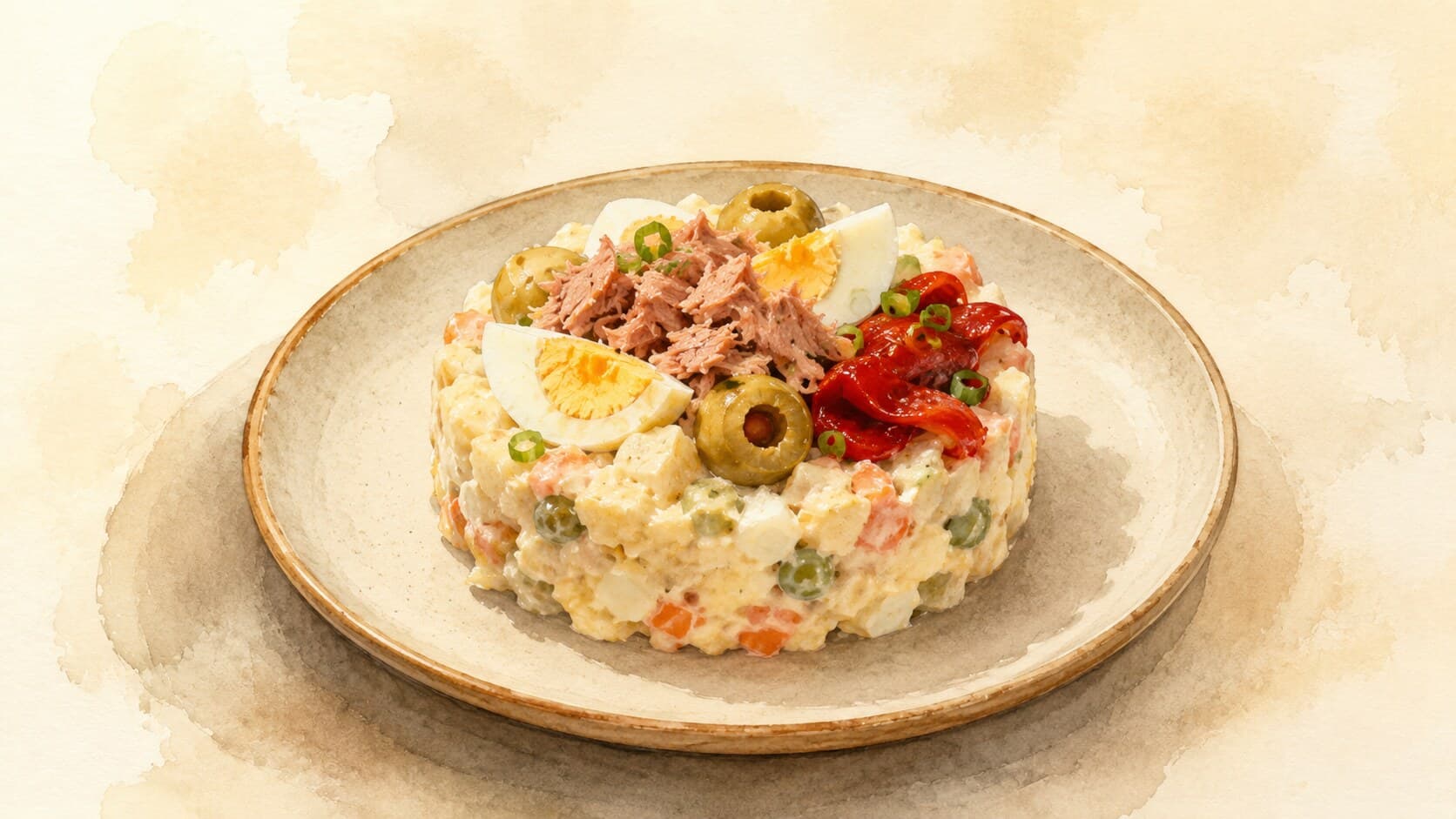
A classic Spanish ensaladilla rusa, perfect as a make-ahead cold tapa featuring potatoes, peas, and tuna in a homemade mayo.
Contents (5 sections)▾
Ingredients
- 500 g potatoes
- 150 g frozen peas
- 100 g carrots, diced
- 200 g canned tuna, drained
- 3 large eggs
- 200 ml mayonnaise — commercial, or homemade with pasteurized egg (see safety note)
- 50 g olives, pitted and sliced
- 100 g roasted red peppers, sliced
- Salt to taste
- Black pepper to taste
Steps
Boil the potatoes in salted water for about 15 minutes or until tender. Allow them to cool completely before peeling and cubing.
In the last 5 minutes of cooking the potatoes, add the diced carrots and frozen peas to the pot. Drain and cool everything thoroughly.
While the vegetables are cooling, hard-boil the eggs for about 10 minutes. Once cooked, cool them under cold running water, peel, and slice.
In a large mixing bowl, combine the cubed potatoes, peas, carrots, and drained tuna. Gently fold in the mayonnaise until well coated.
Season the mixture with salt and black pepper to taste. Transfer to a serving dish and top with sliced hard-boiled eggs, olives, and roasted red pepper strips.
Why this works
The key to a successful ensaladilla rusa lies in the cooling of the ingredients before combining them with mayonnaise. This technique ensures that the salad maintains its texture and flavor balance. If the potatoes or vegetables are warm, they can cause the mayonnaise to break, leading to a soupy consistency instead of a creamy one. By allowing everything to cool, you create a stable emulsion (a smooth blend of oil and egg that stays together rather than separating), keeping the dressing intact. This dish can be made ahead of time; just store it in the refrigerator. If your mayo breaks, you can whisk in a little boiling water to restore its emulsion. Flavors meld beautifully when allowed to chill, enhancing the overall taste of this delightful Spanish tapa.
Safety — raw egg in the mayonnaise: Homemade mayonnaise is uncooked, and this is a cold, make-ahead dish. If you make your own, use egg confirmed pasteurized through to the contents — a shell egg pasteurized in the shell, or a pasteurized egg product. If you use shop-bought mayonnaise, choose one whose label, the maker's information, or your local food-safety guidance shows the egg or process makes it suitable for eating uncooked — don't assume every product qualifies. Freshness, a "raw-eating" (生食用) label, or shell washing/disinfection are not the same as content pasteurization. Keep the finished salad refrigerated.
Common mistakes
Dressing the potatoes while they're still warm.
Target: Potatoes, carrots, and peas fully cooled to room temperature or fridge-cold before any mayonnaise goes in.
Why it matters: Warm potato gives off steam and melts the fat in the mayonnaise, breaking the emulsion (the stable mix of oil and egg that would otherwise separate). The result is an oily, soupy salad instead of a creamy one. Cooling first keeps the dressing intact — the single rule this dish is built on.
What to do: Spread the cooked vegetables out to cool quickly, or chill them, and only fold in the mayonnaise once everything is cold.
Mushy, waterlogged potatoes.
Target: Potatoes boiled just until a knife slides in with slight resistance, then drained well and cooled.
Why it matters: Overcooked potato falls apart when folded with mayonnaise, turning the salad into paste; potato that sits in its cooking water keeps absorbing it and goes soggy. You want tender cubes that hold their shape.
What to do: Test early and often, drain the moment they're done, and let the steam escape before dressing.
Undercooked eggs, or eggs left out warm.
Target: Eggs hard-boiled through (about 10 minutes), cooled under cold water, and the finished salad kept chilled until served.
Why it matters: This is a cold dish made with egg-based mayonnaise and often tuna and boiled egg — exactly the kind of mixture that turns risky if it sits warm. Soft-set yolks and time at room temperature both work against food safety here.
What to do: Boil the eggs through, cool them, refrigerate the assembled salad, and don't leave it standing out at the table for long.
Watery tuna or vegetables thinning the dressing.
Target: Canned tuna well drained, and peas and carrots dried after cooling, before they meet the mayonnaise.
Why it matters: Liquid clinging to the tuna or vegetables dilutes the mayonnaise and loosens the salad, so it weeps on the plate. A dry base is what lets the dressing stay thick and cling.
What to do: Press the tuna to squeeze out its liquid and pat the cooled vegetables dry before folding everything together.
What to look for
- The potatoes at the right doneness: a knife meets slight resistance, then slides through; the cube still holds its edges. Past that point they crumble into the dressing.
- Everything before it's dressed: the vegetables and tuna feel cold to the touch and look dry, no liquid pooling in the bowl. Warm or wet ingredients are what break and thin the mayonnaise.
- A properly folded salad: creamy and cohesive, each cube coated, the dressing thick rather than runny. If it looks oily or loose, something went in warm or wet.
- After chilling: set and sliceable, the flavours rounded and melded. A rest in the fridge is when this salad comes together.
A note on history
Despite the Spanish name ensaladilla rusa ("little Russian salad"), the dish traces to a salad created around 1860 by Lucien Olivier, a chef at the Hermitage restaurant in Moscow (Wikipedia: Olivier salad). Olivier's original was an elaborate composed salad whose exact dressing he kept secret; over time it was simplified into the potato-based version now eaten across many countries (Wikipedia: Olivier salad; TasteAtlas: Olivier salad). In Spain it became an everyday tapa built on potato, carrot, peas, tuna, egg, and mayonnaise — a fixture of bars and home kitchens alike (Wikipedia: Olivier salad).
Get the essays in your inbox — free
Weekly notes on flavor, fermentation, and food history — the writing behind the Atlas of Flavor. No spam; unsubscribe anytime.