
Ebi Mayo
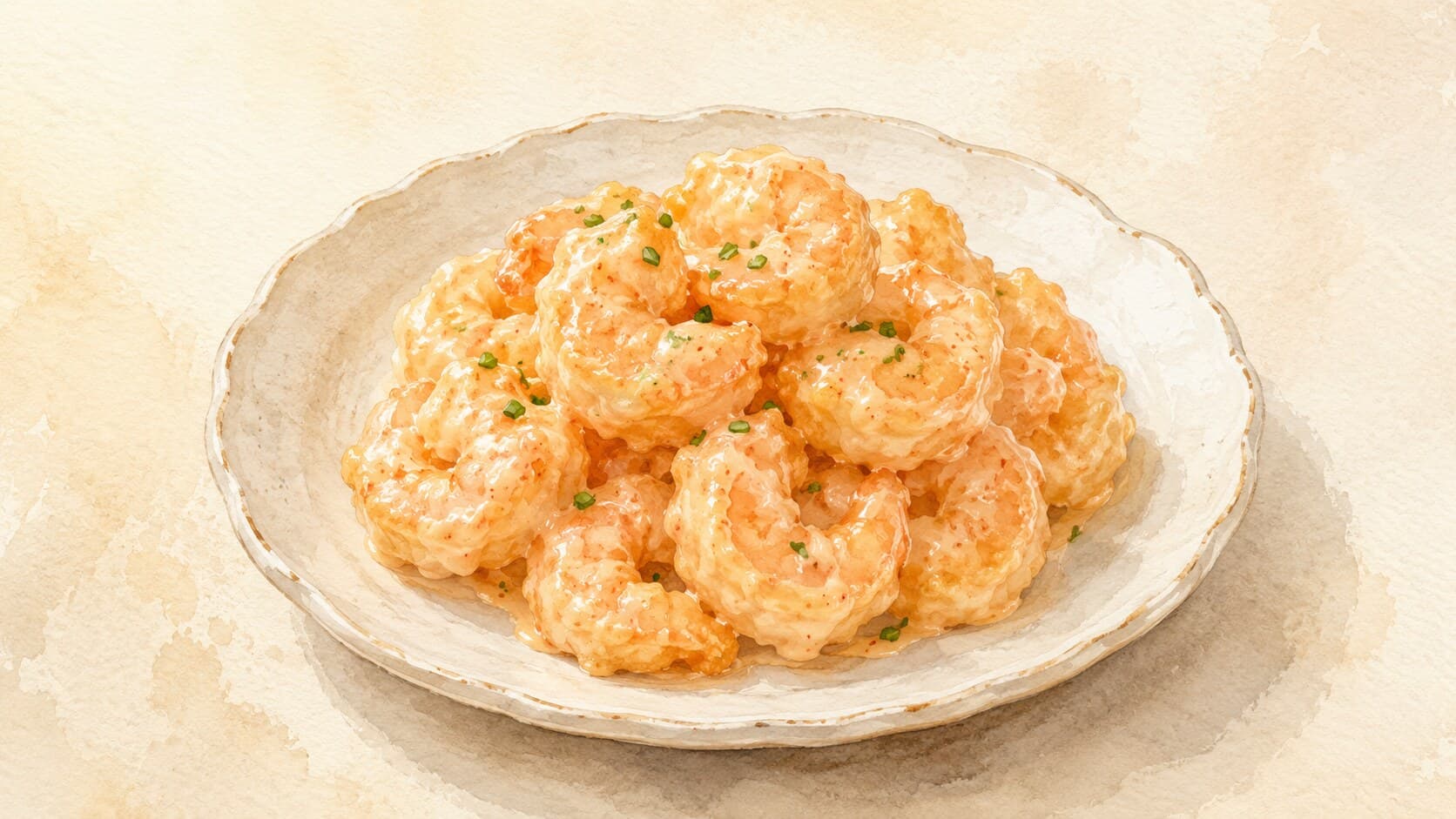
Ebi Mayo features crispy battered shrimp enveloped in a sweet-tangy mayo sauce, perfect for any gathering.
Contents (5 sections)▾
Ingredients
- 500 g large shrimp, peeled and deveined
- 1 cup all-purpose flour
- 1/2 cup cornstarch
- 1 tsp baking powder
- 1/2 tsp salt
- 1/2 cup cold water
- 1/4 cup Japanese mayonnaise
- 2 tbsp condensed milk
- 1 tbsp lemon juice
- 1 tbsp ketchup
- oil for frying
- finely chopped green onion for garnish
Steps
In a bowl, mix the flour, cornstarch, baking powder, and salt. Gradually add cold water until the batter is smooth and slightly thick.
Heat oil in a deep pan over medium heat (around 180°C/350°F). Test the oil by dropping a small amount of batter; it should sizzle and rise.
Dip each shrimp into the batter, ensuring it is fully coated, then carefully lower them into the hot oil. Fry for 3-4 minutes until golden brown.
Remove the shrimp and drain on paper towels to absorb excess oil.
In a separate bowl, whisk together Japanese mayonnaise, condensed milk, lemon juice, and ketchup until well combined.
Toss the fried shrimp in the sauce until evenly coated. Serve warm, garnished with chopped green onion.
Tools you'll want
Why this works
The key to mastering Ebi Mayo lies in the technique of wet-batter frying, which creates a light, crispy exterior that contrasts beautifully with the tender shrimp inside. The batter, made from flour and cornstarch, is combined with cold water to achieve a perfect consistency; this cold temperature helps the batter stay light and puffy during frying. The emulsified sauce, blending Japanese mayonnaise, condensed milk, lemon juice, and ketchup, strikes a balance between sweet and tangy that complements the savory shrimp. If the batter seems too thick, add a little more cold water to achieve a pourable consistency. Conversely, if it becomes too thin, add a touch more cornstarch to regain thickness. This dish is not just about flavor; the contrasting textures and colors make it visually appealing, ensuring it is a hit at any gathering.
Common mistakes
Wet shrimp that spits in the oil and won't crisp.
Target: Shrimp patted thoroughly dry before they go into the batter.
Why it matters: Surface water turns to steam violently in hot oil — that's what makes oil spit and splatter (a burn risk), and the steam also keeps the coating from crisping. Dry shrimp let the batter seal and brown cleanly.
What to do: Blot the peeled, deveined shrimp with paper towels until the surface looks matte. A light dusting of cornstarch before the batter gives it something to grip.
Oil too cool, so the batter drinks up grease.
Target: 170–180°C / 340–350°F, held steady; a little batter dropped in sizzles up briskly rather than sinking.
Why it matters: Below temperature, the coating absorbs oil instead of crisping, and you get heavy, greasy shrimp. Too hot and the outside browns before the shrimp inside is cooked. Frying in small batches keeps the temperature from crashing when cold shrimp hit the pot.
What to do: Use a thermometer if you can, fry a few pieces at a time, and let the oil recover back to temperature between batches.
Under-cooked shrimp (a real safety point).
Target: Shrimp cooked through — the flesh turns from translucent grey to opaque white-and-pink, firm, curled into a loose "C" (an over-tight "O" means overdone).
Why it matters: Shrimp can carry harmful bacteria and must be cooked through; raw or barely-cooked shrimp is a food-safety risk. The thin batter cooks fast, so at the right oil temperature 2–4 minutes usually brings small-to-medium shrimp fully through.
What to do: Judge doneness by the opaque color and firm texture, not just the golden coating. Cut into the thickest piece the first time to confirm it's no longer glassy in the center.
Saucing too early, so the crust goes soggy.
Target: Toss in the mayo sauce at the very last moment, just before serving.
Why it matters: The whole appeal is the crisp coating against the creamy sauce. Mayonnaise is an emulsion (oil and water-based liquid held together into a smooth, stable cream) that's mostly water — left to sit on the fried shrimp it softens the crust quickly.
What to do: Have the sauce whisked and ready, drain the shrimp well, and combine only when you're about to plate. Keep the sauce off the heat so the mayo doesn't split (separate back into oil and liquid).
What to look for
- Batter consistency: it coats a spoon and drips off in a slow ribbon, not a thin stream or a heavy blob. Thin enough to fry light, thick enough to cling to the shrimp.
- Oil at temperature: a drop of batter sinks briefly, then bobs up surrounded by lively, steady bubbles — not sluggish, not violent. That brisk sizzle is the sign it's ready.
- Shrimp done: the coating is pale gold and crisp, the shrimp opaque and firm, curled into a loose C. Cooked through but still juicy.
- Finished dish: the sauce clings in a glossy pale-pink coat and the crust is still audibly crisp at the first bite. Sauced just in time, not soaking.
A note on history
Ebi mayo (海老マヨ, "shrimp mayonnaise") is a modern dish from the chūka tradition — Chinese cooking adapted to Japanese tastes — generally dated to the 1980s rather than to classical Chinese or Japanese cuisine (Sudachi Recipes: Ebi Mayo). It is widely credited to chef Shu Tomitoku (周富徳), who is said to have been inspired by a mayonnaise-dressed shrimp dish he encountered in the United States and then refined with Cantonese frying technique, after which it spread through Chinese restaurants in Japan and into home kitchens (Chopstick Chronicles: Ebi Mayo).
Get the essays in your inbox — free
Weekly notes on flavor, fermentation, and food history — the writing behind the Atlas of Flavor. No spam; unsubscribe anytime.