
Stamppot (Dutch Mash with Greens)
Experience the warmth of Dutch winter with this hearty Stamppot, featuring creamy mashed potatoes and kale topped with savory sausage.
Contents (5 sections)▾
Ingredients
- 1 kg potatoes, peeled and cubed
- 300 g kale, chopped
- 100 ml milk
- 100 g butter
- 4 smoked sausages
- Salt to taste
- Pepper to taste
Steps
Boil the potatoes in salted water for about 15 minutes or until tender. This ensures they mash smoothly.
In a separate pot, cook the kale in boiling water for 5 minutes until wilted. Drain and set aside.
Drain the potatoes and return them to the pot. Add milk, butter, and season with salt and pepper. Mash until smooth.
Stir the cooked kale into the mashed potatoes until evenly combined.
In a skillet, cook the smoked sausages over medium heat for about 10 minutes, turning occasionally until browned. Reserve the juices.
Make a well in the center of the mashed potato mixture and place the sausages inside, pouring their juices into the well.
Why this works
This dish captures the essence of Dutch comfort food by expertly combining starchy potatoes with nutrient-rich greens like kale. The technique of mashing the potatoes with kale adds flavor and ensures a creamy texture that is essential for a satisfying dish. The well created in the mash is a clever way to hold the sausage and its flavorful juices, allowing the flavors to meld beautifully. If the mash seems too dry, add a bit more milk to achieve the desired creaminess. Alternatively, if it's too runny, you can adjust by adding more mashed potatoes to thicken it up, ensuring a balanced consistency. The use of smoked sausage imparts a rich, savory depth, making the dish a hearty meal perfect for cold winter days.
Common mistakes
Watery mash from undrained potatoes.
Target: Potatoes thoroughly drained, then briefly returned to the hot pot to steam off surface water before mashing.
Why it matters: Boiled potatoes hold a lot of water on and just under the surface. Mash them wet and the result is loose and gluey, and it dilutes the butter and milk so the flavor falls flat. Dry potatoes absorb the dairy and turn fluffy.
What to do: Drain well, return to the empty pot over low heat for a minute, and let the steam rise off before adding milk and butter.
Over-mashing into glue.
Target: Mash just until smooth with a hand masher — no more.
Why it matters: Potatoes are full of starch. Working them too hard (especially in a food processor or blender) ruptures the starch granules and releases gluey starch, turning the mash sticky and elastic instead of light. This is a texture problem you cannot reverse.
What to do: Use a potato masher or ricer and stop as soon as it's smooth. Stir the greens in gently by hand.
Cold milk and butter seizing the mash.
Target: Warm milk; butter at room temperature or melted into the warm milk.
Why it matters: Pouring cold dairy into hot potatoes drops the temperature and can make the mash stiff and pasty rather than creamy. Warm dairy blends in smoothly and keeps everything hot for serving.
What to do: Heat the milk gently (with the butter, if you like) before stirring it into the drained potatoes.
Under-heating the sausage.
Target: Smoked sausage heated through to steaming hot all the way to the center (about 74°C / 165°F if you check).
Why it matters: Smoked sausages are usually pre-cooked, but "warm outside, cool inside" is unpleasant and not properly heated. A thick sausage needs a few minutes to come up to temperature throughout.
What to do: Heat gently in the skillet, turning, until piping hot in the middle; cut a thick one to check the first time. Pour the rendered juices into the well in the mash.
What to look for
- Potatoes ready to mash: a fork slides in with no resistance, and the drained potatoes look dry and matte, with steam rising. That dryness is what lets them turn fluffy.
- Mash texture: smooth and soft but still holding a peak — it mounds on the spoon rather than running off. Light, not gluey or soupy.
- Greens folded in: evenly streaked through the white mash, still vivid green, wilted but not mushy. Cooked enough to be tender, not so much they go drab.
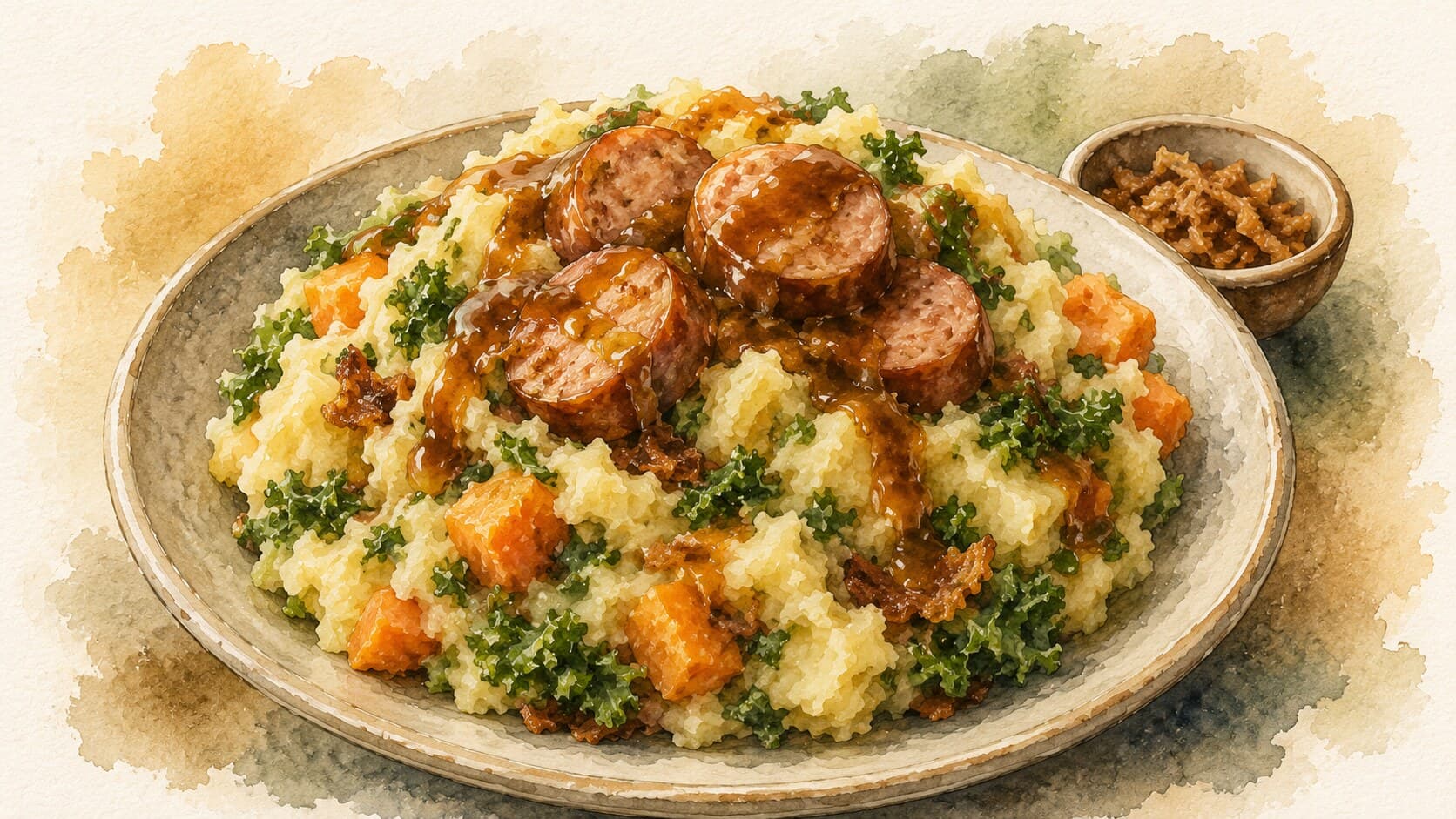
- Sausage and well: the crater holds a glossy pool of juices, and the sausage is steaming hot when cut. The contrast of creamy mash and savory juices is the point of the dish.
A note on history
Stamppot is a traditional Dutch dish whose name translates roughly to "mash pot," describing exactly how it is made: potatoes mashed together with one or more vegetables (Wikipedia: Stamppot). The kale version, boerenkoolstamppot, is often considered the most traditional. A close relative, hutspot (mashed with carrots and onions), is tied by legend to the 1574 Siege of Leiden during the Eighty Years' War, when the relieved city is said to have found a pot of stew left behind by the departing Spanish army (DutchReview: the history of stamppot).
Get the essays in your inbox — free
Weekly notes on flavor, fermentation, and food history — the writing behind the Atlas of Flavor. No spam; unsubscribe anytime.