
Ajiaco (Colombian Chicken & Potato Soup)
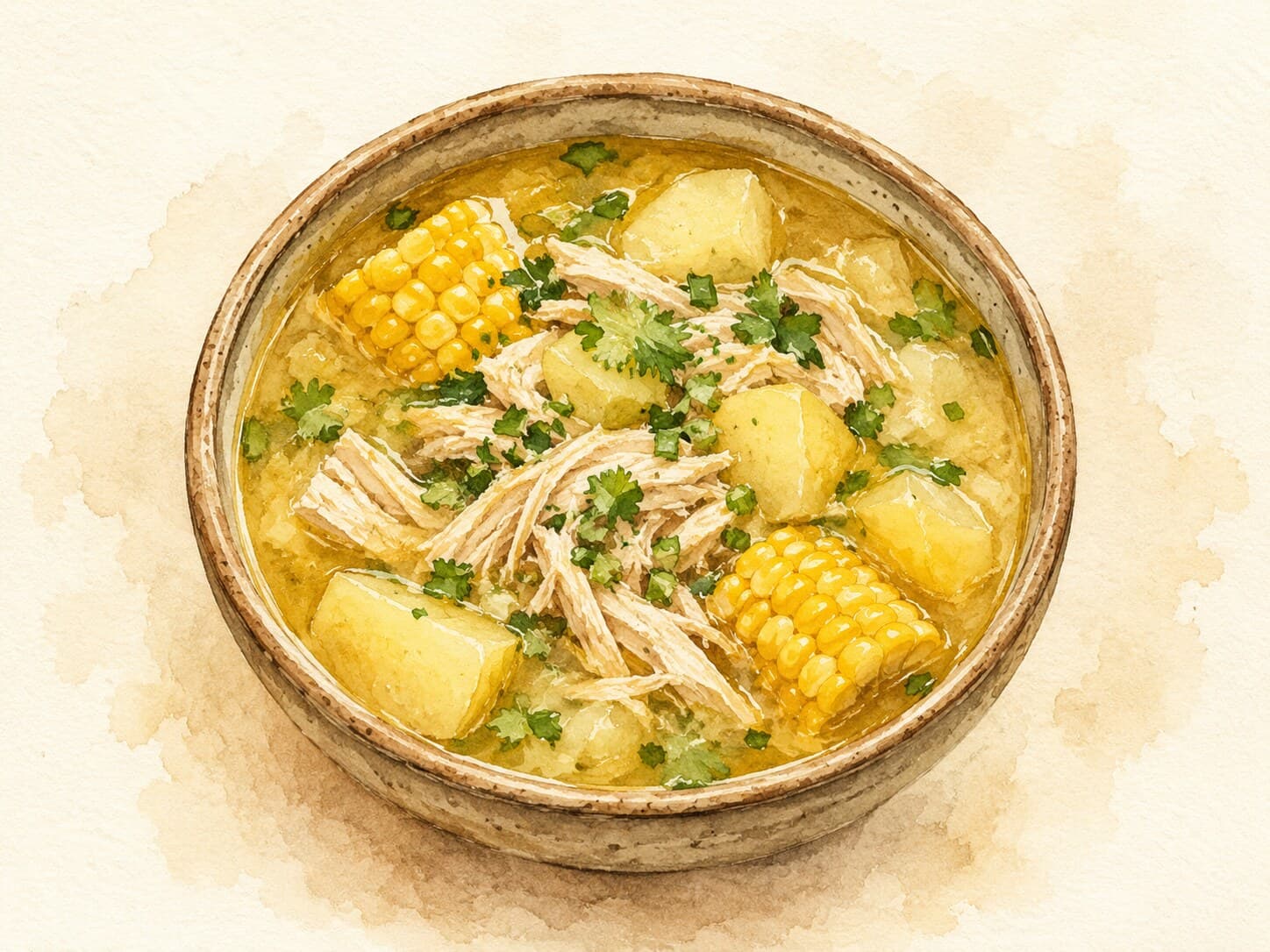
Ajiaco is a traditional Colombian chicken and potato soup, showcasing a blend of flavors and textures.
Contents (5 sections)▾
Ingredients
- 1 kg chicken (preferably thigh and drumsticks)
- 300 g yellow potatoes, peeled and cubed
- 300 g white potatoes, peeled and cubed
- 300 g red potatoes, peeled and cubed
- 1 onion, chopped
- 2 garlic cloves, minced
- 2 liters water
- 2 tbsp guascas (dried herb)
- 100 g capers, drained
- 200 ml heavy cream
- 200 g corn (fresh or canned)
- Salt to taste
- Pepper to taste
- Fresh cilantro for garnish
Steps
In a large pot, combine the chicken, water, onion, garlic, salt, and pepper. Bring to a boil over medium-high heat.
Once boiling, reduce the heat to medium-low. Add the yellow, white, and red potatoes to the pot. Simmer for about 30 minutes, or until the chicken is cooked through and one type of potato has dissolved to thicken the soup.
Remove the chicken, shred it, and return it to the pot. Stir in the guascas, corn, and simmer for an additional 10 minutes.
Serve hot, garnished with heavy cream, capers, and fresh cilantro.
Why this works
Ajiaco's unique combination of three different potatoes serves a distinct purpose in achieving the desired texture. The yellow potato dissolves, creating a rich and creamy base for the soup, while the red potato maintains its shape, providing texture, and the white potato offers a firm bite. This balance ensures that each spoonful delivers a harmonious blend of flavors. The addition of guascas (a fragrant Andean herb central to this soup) introduces a distinctive herbal note that is characteristic of this dish. If the soup seems too thin, allow it to simmer longer; the dissolved potato will help thicken it, enhancing its consistency. Conversely, if you prefer a thinner soup, you can add more water gradually while cooking, adjusting to your desired texture. This adaptability is crucial for achieving the perfect ajiaco experience.
Common mistakes
Treating the three potatoes as interchangeable. Target: One waxy potato that holds its shape, one starchy potato that partly dissolves to thicken, and the soft yellow potato (papa criolla) that melts away almost completely. Why it matters: Each potato plays a structural role. The starchy ones break down because their cells release starch as they cook, which thickens the broth into something creamy without any cream; the waxy ones stay intact and give you something to bite. Use all one type and you get either a watery soup with loose chunks or a uniform mush. What to do: Cube the potatoes and add them together; let the soft ones cook long enough to fall apart while the waxy ones just reach tenderness. The dissolving potato is your thickener — let it do that job.
Not cooking the chicken through. Target: Chicken pieces simmered until fully cooked — the thickest piece reads 74°C / 165°F on a food thermometer — before shredding. Opaque flesh and clear juices are cues, not the safety test. Why it matters: The chicken poaches (cooks gently in barely-simmering liquid) in the broth, which is gentler than a hard boil. Bone-in thighs and drumsticks need real time to cook through near the bone. Undercooked chicken is a food-safety risk, and meat pulled too early shreds raggedly and stays tough. What to do: Simmer about 30 minutes, then check the largest piece at the bone with a food thermometer for 74°C / 165°F before removing it to shred. If it reads lower, return it to the pot for a few more minutes.
Boiling hard instead of simmering. Target: A gentle simmer (small bubbles breaking the surface), not a rolling boil. Why it matters: A violent boil tears the chicken into stringy shreds, clouds the broth, and can make it greasy by emulsifying the fat into the liquid. A gentle simmer keeps the broth clean and lets the potatoes break down evenly. Heat control, not high heat, is what builds a clear, savory soup. What to do: Bring it up to a boil, then drop the heat so the surface just shivers. Skim off any foam that rises in the first few minutes for a cleaner broth.
Boiling the cream and guascas instead of finishing gently. Target: Guascas stirred in near the end; cream added off the heat or at a bare simmer, just before serving. Why it matters: Guascas (the signature Andean herb) is delicate — long boiling cooks off its grassy aroma, which is the whole point of using it. Heavy cream can split (curdle into grainy curds and separated fat) if boiled hard. Both belong at the finish, not the start. What to do: Add the guascas in the last 10 minutes, then take the pot off the boil before swirling in the cream so it stays smooth.
What to look for
- The potatoes at doneness: the broth has turned creamy and pale from one type dissolving, while firmer cubes still hold their shape. That contrast of melted and intact is the texture you are building.
- The chicken before shredding: opaque all the way to the bone, with clear (not pink) juices. These are cues, not the safety check — confirm the largest piece reaches 74°C / 165°F on a thermometer.
- The broth's clarity: savory and lightly thickened, not greasy or violently churning. A clean, gently simmering surface means your heat is right.
- The finished bowl: creamy body, tender shredded chicken, and the bright herbal lift of guascas, balanced by sharp capers and a swirl of cream. The contrast of rich and tangy is the dish at its best.
A note on history
Ajiaco's roots run to pre-Columbian times in the Andean highlands around Bogotá, where the indigenous Muisca (Chibcha) people prepared early versions from native potatoes and local herbs long before the Spanish arrived (Wikipedia, The Culture Trip). The Spanish later added chicken and cream, shaping the ajiaco bogotano most associated with the city today (Amigofoods). Bogotá's cool, mountainous climate and potato-friendly soil make it the dish's natural home, though several countries — including Cuba and Peru — also lay claim to versions of the name (Fork in the Road).
Get the essays in your inbox — free
Weekly notes on flavor, fermentation, and food history — the writing behind the Atlas of Flavor. No spam; unsubscribe anytime.