
Calamares Fritos
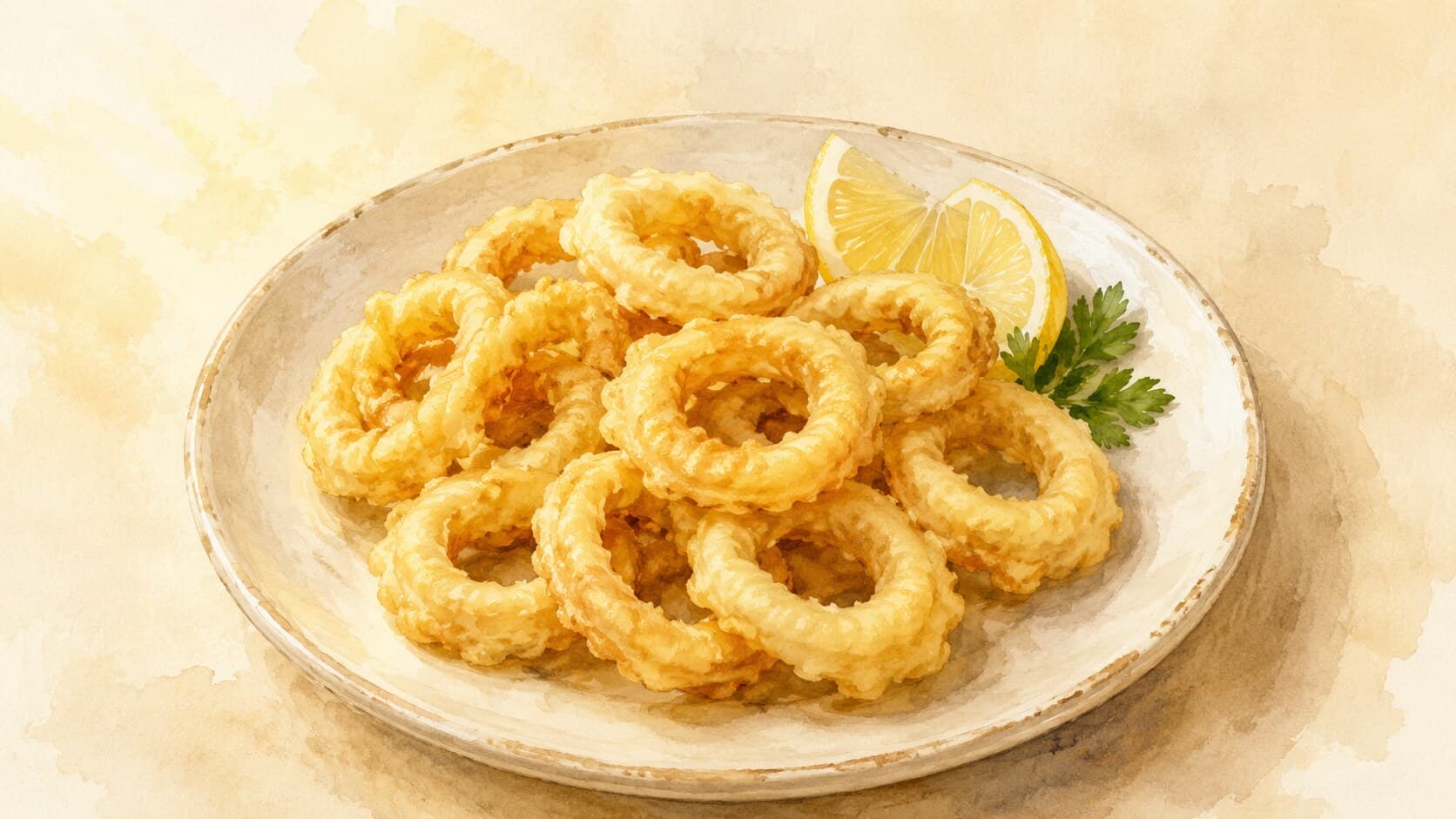
Calamares Fritos are deep-fried squid rings, coated in seasoned batter, commonly served as a tapa in Spanish cuisine.
Contents (5 sections)▾
Ingredients
- 500 g fresh squid, cleaned and sliced into rings
- 250 ml buttermilk
- 150 g all-purpose flour
- 1 tsp paprika
- 1 tsp garlic powder
- 1 tsp salt
- 1/2 tsp black pepper
- 500 ml vegetable oil for frying
- lemon wedges for serving
- fresh parsley for garnish
Steps
Soak the sliced squid in buttermilk for at least 30 minutes to tenderize and add flavor.
In a mixing bowl, combine the flour, paprika, garlic powder, salt, and black pepper.
Heat the vegetable oil in a deep fryer or heavy pot to 180°C (350°F).
Remove the squid from the buttermilk, letting the excess drip off, then dredge in the seasoned flour mixture.
Fry the squid in batches for about 1 minute, just until golden brown and crispy — squid turns rubbery if fried longer, so lift the rings the moment they color. Avoid overcrowding the pan.
Remove the fried squid with a slotted spoon and drain on paper towels. Serve immediately with lemon wedges and parsley.
Why this works
The success of Calamares Fritos lies in the soaking of squid in buttermilk (the tangy, slightly acidic liquid left after churning butter — sold in cartons), which tenderizes the meat and adds moisture, ensuring a contrast between the crispy exterior and juicy interior. The seasoned flour coating creates a flavorful crust that enhances the taste while providing texture. When frying, maintaining the oil temperature at 180°C (350°F) is crucial; too low and the squid will absorb oil, becoming greasy, while too high can lead to burnt outsides and raw insides. If the squid seems too greasy or not crispy enough, ensure the oil is hot enough, and consider frying in smaller batches to maintain the temperature. For best results, serve immediately to enjoy the crunch and freshness.
Common mistakes
Oil too cool — the single most common reason fried squid disappoints.
Target: 180°C (350°F), allowed to recover between batches.
Why it matters: This is a flour-dredge fry, not a heavy batter. The thin coating has to set and crisp fast. Hot oil flash-dries the floured surface and pushes water out as steam, and that outward steam is what blocks oil from soaking in. Below about 160°C the crust sets too slowly, oil seeps through, and you get pale, greasy, soft rings instead of crisp ones.
What to do: Use a thermometer, or test with a pinch of flour — it should sizzle briskly on contact. Fry in small batches and wait for the oil to climb back to 180°C each time.
Frying long because the rings look pale, and overcooking the squid.
Target: Just long enough to set a golden crust — pull them as soon as they color, not minutes later.
Why it matters: Squid is mostly muscle bound in collagen (the connective protein). Cooked briefly it stays tender; pushed past that window the proteins seize and wring out moisture, turning the squid to rubber. With a flour dredge the crust colors quickly, so it doubles as your doneness timer — chasing a deeper brown overcooks the squid inside.
What to do: Watch the color, not the clock. The instant the coating is golden, lift the rings. If they are browning before they feel cooked, your oil is too hot; if too slowly, too cool.
Overcrowding the pot.
Target: A loose single layer — a handful of rings per batch.
Why it matters: Each cold, buttermilk-damp ring chills the oil and releases steam. Crowd the pot and the temperature crashes, the vigorous bubbling stops, and the coating soaks oil instead of crisping. Touching rings also fuse into clumps.
What to do: Fry several small batches, letting the oil recover to 180°C between them. Keep finished rings warm and uncovered (a cover traps steam and softens the crust) while the rest fry.
Dredging soaking-wet squid, or skipping the drip.
Target: Lift the squid from the buttermilk and let the excess run off before it hits the flour.
Why it matters: The buttermilk soak is doing real work — its mild acidity gently loosens the squid's proteins so the meat fries up tender, and its tackiness glues the flour on. But dripping-wet rings turn the dredge to paste, make hot oil spit dangerously, and give a thick gummy coat instead of a thin crisp one.
What to do: Let each ring drip a couple of seconds, then dredge in the seasoned flour, press lightly, and shake off the surplus. Lower them into the oil away from you to keep spitting down.
What to look for
- The oil before frying: shimmering, with a pinch of flour sizzling on contact. That brisk reaction means it is near 180°C — hot enough to crisp, not soak.
- The rings as they fry: a steady, vigorous curtain of bubbles around each piece. Those bubbles are water leaving as steam; when they slow sharply, the oil has cooled too far.
- Ready to lift: even golden, the coating set and dry-looking. Squid needs only moments — color is your cue to pull, before it tightens into rubber.
- The drained rings: crisp, light, barely oily, with a delicate (not thick) crust. A flour dredge should give a thin, shattering coat; a heavy greasy shell means the oil ran cool or the squid went in too wet.
A note on history
In Spain, fried squid comes in two recognized styles, and the difference is the coating. Calamares fritos, often called a la andaluza (Andalusian style), are simply dredged in flour, which gives a thin, light, crisp crust (Pequeocio). This flour-only approach is traditionally tied to working-class home cooking and frugality — eggs were not always used in everyday fritters (Lecturas). The contrast is a la romana, whose egg-and-flour batter puffs into a thicker, spongier shell (El Nacional). Both are classic tapas, but the lighter floured version is the everyday one along Spain's southern coast.
Get the essays in your inbox — free
Weekly notes on flavor, fermentation, and food history — the writing behind the Atlas of Flavor. No spam; unsubscribe anytime.