
B'stilla
B'stilla is a Moroccan pastry made with spiced shredded chicken, layered with phyllo dough and almonds, often served during special occasions.
Contents (5 sections)▾
Ingredients
- 500 g chicken thighs
- 1 onion, finely chopped
- 3 cloves garlic, minced
- 2 tbsp olive oil
- 1 tsp ras-el-hanout
- 1/2 tsp ground cinnamon
- 1/4 tsp ground ginger
- 1/4 tsp saffron threads, soaked in 2 tbsp warm water
- 100 g almonds, toasted and chopped
- 4 sheets phyllo pastry
- 100 g melted butter
- 50 g powdered sugar
- 1 tsp ground cinnamon, for dusting
- salt and pepper, to taste
Steps
In a large pot, heat olive oil over medium heat. Add onions and garlic; sauté until soft, about 5 minutes.
Add chicken thighs, ras-el-hanout, ground cinnamon, ground ginger, saffron with water, salt, and pepper. Cook for 20 minutes, stirring occasionally.
Remove chicken, shred it with two forks, and return it to the pot. Stir in toasted almonds and cook for an additional 5 minutes.
Preheat the oven to 190°C (375°F).
Layer two sheets of phyllo pastry in a greased round baking dish, brushing each sheet with melted butter. Leave edges overhanging.
Add the chicken filling onto the phyllo, then fold overhanging edges. Layer two more sheets on top, again brushing with butter.
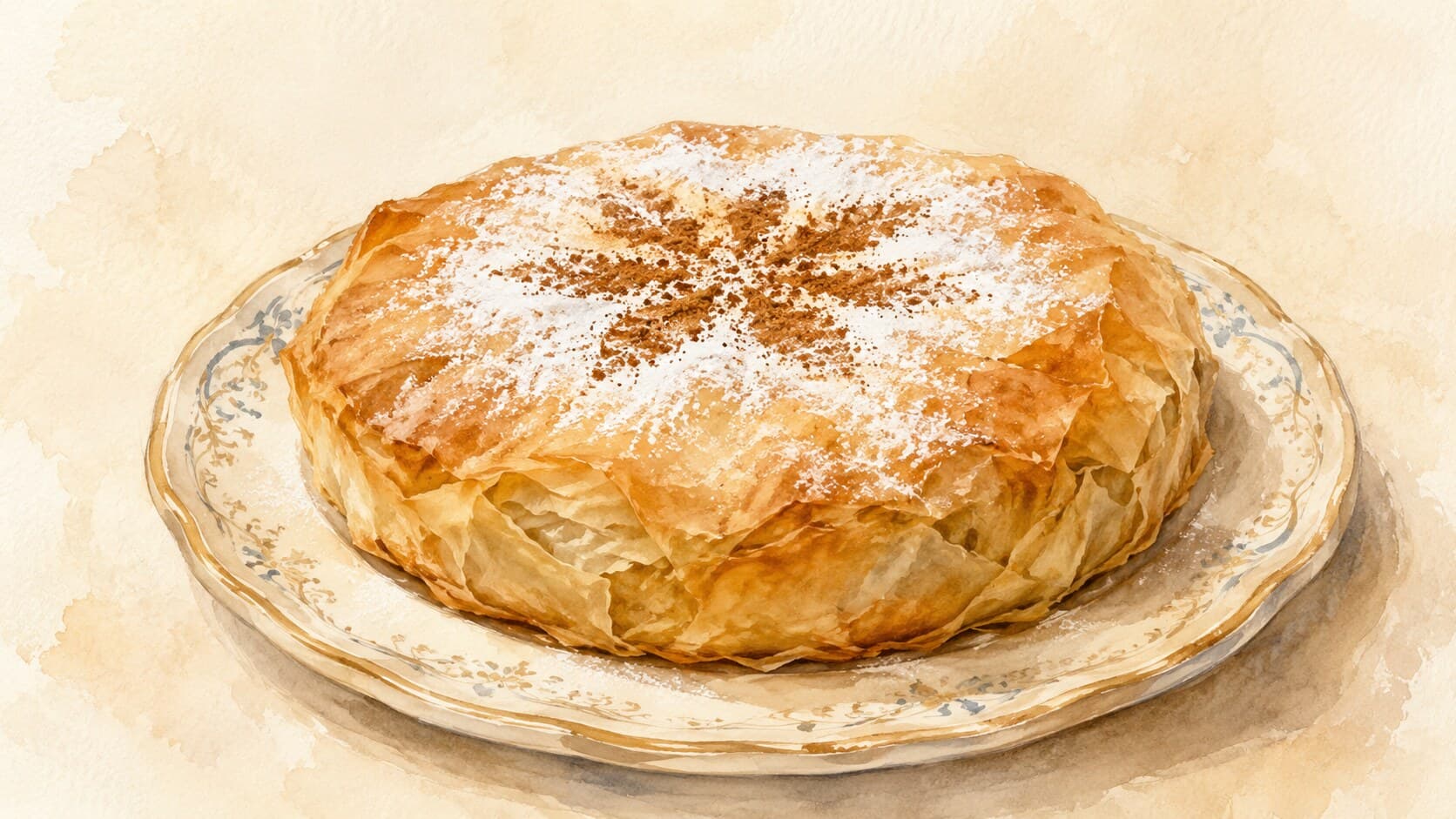
Bake for 25-30 minutes until golden and crisp. Let cool for 10 minutes before dusting with powdered sugar and cinnamon.
Why this works
B'stilla features layers of tender spiced chicken and crispy phyllo pastry (paper-thin sheets of dough that bake up shatteringly crisp), creating a contrast in textures. The ras-el-hanout spice blend adds depth, while the cinnamon-sugar topping introduces a sweet element. Layering ensures a balance of flavors in each bite. If phyllo sheets break, patch them with additional pieces and brush with butter to adhere. This dish requires careful handling and can be a rewarding project for home cooks.
Common mistakes
A wet filling that steams the pastry instead of letting it crisp.
Target: The shredded chicken should be moist but not soupy — no liquid pooling when you tilt the bowl. Reduce the braising liquid until it just coats the meat.
Why it matters: Phyllo crisps because the fat between its layers fries the dough as the water in it flashes off. A wet filling keeps releasing steam (water vapor) into the bottom sheets, so they stay soft and gummy no matter how golden the top looks. The contrast between shattering crust and tender filling is the whole point of the dish.
What to do: After shredding the chicken back into the pot, simmer it uncovered until the liquid is nearly gone and the mixture looks glossy rather than wet. Let it cool before it touches the pastry.
Brushing butter on too thinly — or skipping sheets.
Target: A thin but complete film of melted butter on every sheet, edge to edge.
Why it matters: Each buttered layer is what keeps the sheets from fusing into one thick, bready slab. The fat conducts heat into the dough and renders (melts the fat slowly through) each leaf so it bakes into a separate crisp flake. A dry patch bakes pale and leathery; a missed sheet collapses the layering.
What to do: Keep the unused phyllo under a barely-damp towel so it doesn't dry and crack, and brush each sheet fully — corners included — before laying down the next.
Pulling it from the oven while the inside is still underdone.
Target: Chicken cooked through before it ever goes in the pastry — 74°C / 165°F at the thickest point — and a final bake until the top is deep gold and crackling.
Why it matters: Because the filling is wrapped in insulating pastry, oven heat reaches the meat slowly. A top that browns fast can fool you into thinking the whole pie is done while the centre is barely warm. Poultry must reach a safe internal temperature; the pastry's job is texture, not a reason to shortcut the cook.
What to do: Cook and shred the chicken fully on the stovetop first, so the bake only needs to crisp the shell and heat the assembled pie through.
Dusting with sugar and cinnamon while it's piping hot.
Target: Rest 10 minutes, then dust just before serving.
Why it matters: On a screaming-hot surface the powdered sugar melts and dissolves into a damp, blotchy glaze instead of sitting as a dry snowfall. The brief rest also lets the layers set so the first cut doesn't crush them.
What to do: Let the pie settle, then sift sugar over the top and finish with fine lines of cinnamon.
What to look for
- Filling before it meets the pastry: glossy and mounding, not pooling. If liquid runs to the side of the bowl, simmer it down further — that water is the enemy of crisp phyllo.
- The top as it bakes: deep gold and visibly blistered, with the layers lifting at the edges. Pale and flat means the butter hasn't crisped the leaves yet; give it more time.
- The sound when you tap it: a dry, hollow crackle. A dull, soft thud means steam is still trapped underneath and the base hasn't set.
- The first cut: the crust shatters into flakes while the filling holds together. Shards on the knife, not a soggy fold, tell you the moisture balance was right.
A note on history
B'stilla (also written pastilla or bastilla) is most associated with the city of Fez, and its layered sweet-and-savory form is widely traced to Andalusian cooks — Muslims and Jews who left Spain and settled in Morocco, carrying their pastry traditions with them (Pastilla, Wikipedia). Traditionally it was made with pigeon and wrapped in warqa, a tissue-thin pastry, with a hidden layer of cinnamon-scented sweetened almonds beneath the meat; chicken is now the common substitute as pigeon has grown scarce (TasteAtlas). The dusting of sugar over a savory pie — unusual in much of the world — is the signature that marks the dish.
Get the essays in your inbox — free
Weekly notes on flavor, fermentation, and food history — the writing behind the Atlas of Flavor. No spam; unsubscribe anytime.