
Tartar Sauce
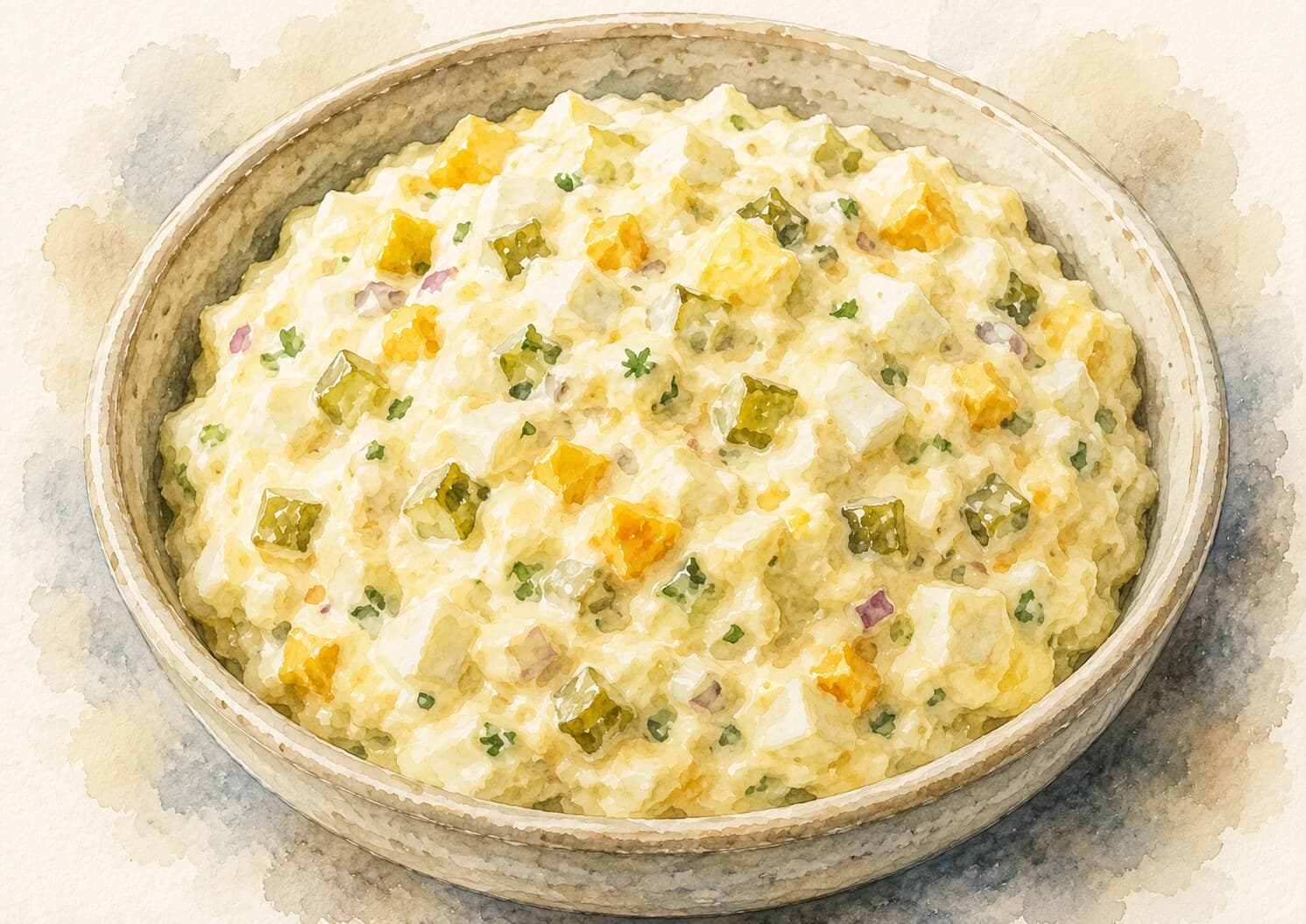
This homemade tartar sauce combines fresh ingredients for a delicious accompaniment to seafood.
Contents (5 sections)▾
Ingredients
- 200 g mayonnaise
- 50 g pickles, finely chopped
- 30 g capers, rinsed and chopped
- 1 tbsp fresh dill, chopped
- 1 tbsp fresh parsley, chopped
- 1 tbsp lemon juice
- Salt, to taste
- Pepper, to taste
Steps
In a mixing bowl, combine 200 g of mayonnaise with 50 g of finely chopped pickles and 30 g of rinsed and chopped capers. This will serve as the base for your tartar sauce.
Add 1 tbsp each of chopped fresh dill and parsley, along with 1 tbsp of lemon juice. This adds freshness and acidity which balances the richness of the mayonnaise.
Season the mixture with salt and pepper to taste, ensuring the flavors are well blended. Mix thoroughly using a spatula for about 2-3 minutes until all ingredients are evenly distributed.
For best results, refrigerate the tartar sauce for at least 30 minutes and up to 1 hour before serving. This allows the flavors to meld together beautifully. Keep it refrigerated and use within about 3 days.
Why this works
Building tartar sauce on a mayonnaise base is effective because mayonnaise acts as a creamy, stable emulsion (oil and water beaten into one smooth, unified cream that does not separate) that can hold various flavor components without breaking. The balance of tangy pickles and capers adds a delightful acidity that cuts through the richness of the mayonnaise. Fresh herbs like dill and parsley contribute aromatic notes, enhancing the overall flavor. If the sauce seems too thick, you can thin it out by adding a teaspoon of water or extra lemon juice until the desired consistency is reached. Conversely, if it turns out too runny, you can incorporate additional mayonnaise to restore thickness. This method ensures that your tartar sauce is both flavorful and texturally pleasing, making it a perfect match for seafood and fried dishes. Allowing the sauce to chill for at least 30 minutes helps the flavors meld and improves the overall texture, making it more cohesive and enjoyable when served.
Common mistakes
Folding in the pickles and capers wet.
Target: Chopped pickles and capers squeezed or patted dry before they go in.
Why it matters: Both are packed in brine, and that loose liquid thins the mayonnaise into a runny, watery sauce that won't cling to fried fish. It also dilutes the flavor so the sauce tastes flat.
What to do: After chopping, press the pickles in a paper towel and drain the rinsed capers well. Add the lemon juice for brightness rather than relying on leftover brine.
Chopping everything too coarse.
Target: Pickles, capers, and herbs all finely and evenly minced.
Why it matters: Tartar sauce should carry pops of tang and herb in every spoonful. Big chunks make the texture clumsy on the fork and leave plain stretches of mayonnaise in between.
What to do: Take the time to mince everything fine and roughly even in size so each bite is balanced.
Seasoning before it has rested.
Target: Salt and acid adjusted after the chilling rest.
Why it matters: The pickles, capers, and lemon keep releasing salt and acidity as the sauce sits, so a mix that tastes balanced the moment you make it can turn sharp or salty after half an hour in the fridge.
What to do: Season lightly, chill, then taste and make the final salt and lemon adjustment just before serving.
Letting it sit out warm.
Target: Kept cold; refrigerated and used within about 3 days.
Why it matters: This is a mayonnaise-based sauce, so it belongs in the fridge — leaving it at room temperature is both a food-safety risk and a fast track to a broken, oily texture.
What to do: Return it to the refrigerator straight after serving, keep it covered, and finish it within a few days.
What to look for
- The drained mix-ins: moist but not dripping, with no puddle of brine left on the board.
- The finished sauce: thick enough to hold a soft peak on a spoon, flecked evenly with green herbs and pale pickle — not loose or weeping liquid.
- After chilling: cohesive and spoonable, the flavors melded rather than sitting separate and sharp.
- On the plate: clings to fried fish without sliding off, tangy and fresh against the richness.
A note on history
The name comes from the French sauce tartare, named after the Tatars (rendered Tartare in older French), though there is no real evidence the Tatars made anything like it. It appears in 19th-century French cookery as a mayonnaise enriched with sharp condiments and finely chopped aromatics, and by the early 20th century Auguste Escoffier was pairing it with fried fish and linking the name to steak tartare. The term tartare later came to describe finely chopped raw meat or fish as well, as in tartare de boeuf and tartare de saumon.
Get the essays in your inbox — free
Weekly notes on flavor, fermentation, and food history — the writing behind the Atlas of Flavor. No spam; unsubscribe anytime.