
Baklava
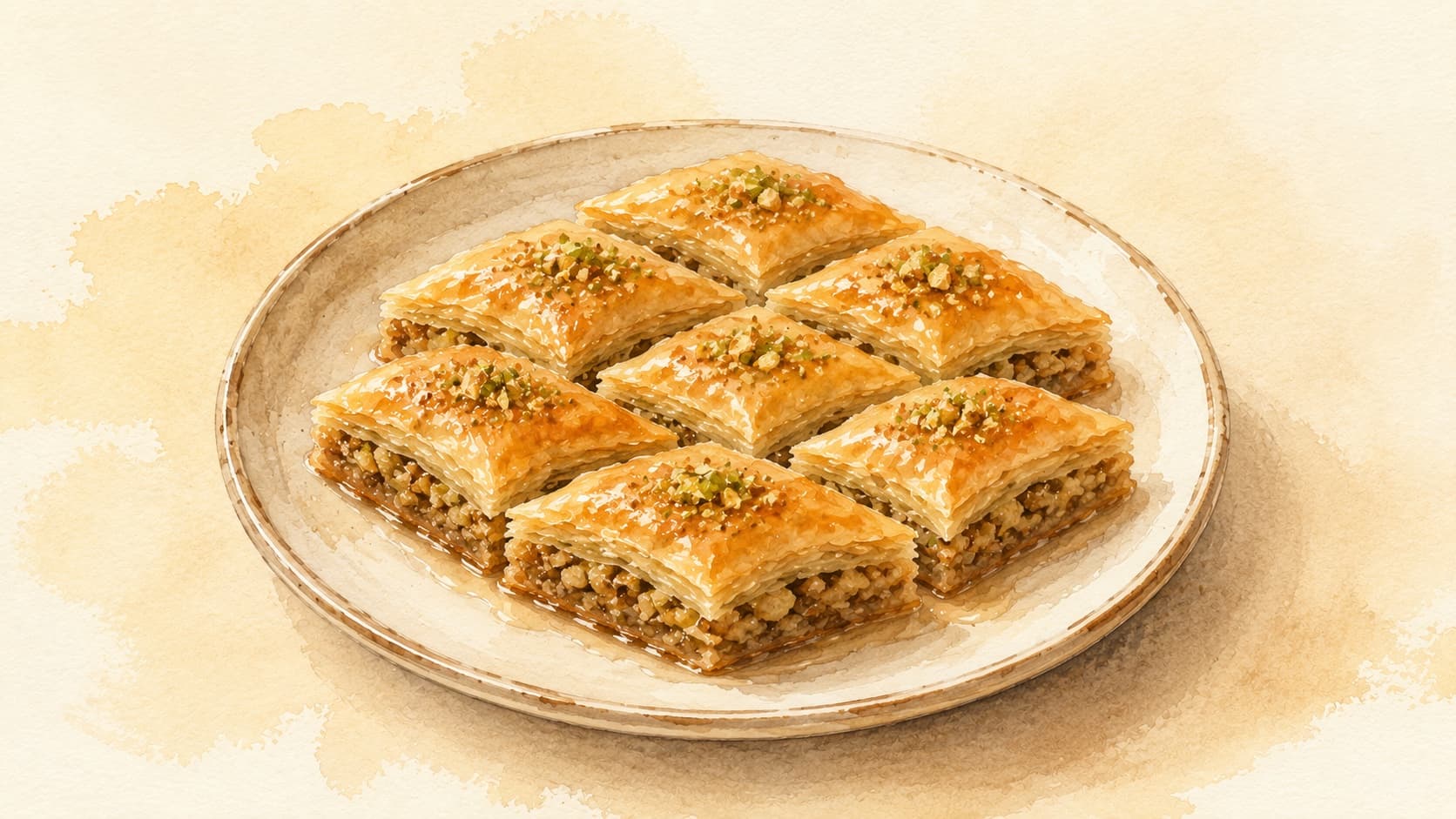
This baklava recipe combines layers of flaky phyllo dough with a rich blend of nuts and honey for a decadent Middle Eastern treat.
Contents (5 sections)▾
Ingredients
- 500 g phyllo dough
- 300 g unsalted butter, melted
- 200 g walnuts, finely chopped
- 200 g pistachios, finely chopped
- 150 g sugar
- 1 tsp ground cinnamon
- 300 ml water
- 200 g honey
- 1 tsp vanilla extract
- to taste ground cloves
Steps
Preheat your oven to 180°C (350°F). This temperature ensures that the baklava cooks evenly and achieves a perfect golden color.
In a bowl, mix the chopped walnuts and pistachios with sugar, ground cinnamon, and ground cloves. This blend of nuts and spices will provide the filling's rich flavor.
Lay one sheet of phyllo dough in a greased 9x13 inch baking dish, brushing it with melted butter. Repeat with 7 more sheets, creating a buttery base, essential for texture.
Spread a thin layer of the nut mixture over the phyllo. Continue layering phyllo and filling, finishing with 8 more buttered sheets on top. This method creates distinct layers.
Cut the assembled baklava into diamond shapes using a sharp knife before baking. This allows the syrup to soak in better and helps with serving.
Bake for 45 minutes, or until the baklava is golden brown and crisp. This ensures that the layers are properly cooked and crispy throughout.
While baking, prepare the syrup by combining water, honey, sugar, and vanilla in a saucepan. Bring to a boil, then simmer for 10 minutes. This syrup will sweeten and moisten the baklava.
Once the baklava is done, remove it from the oven and immediately pour the hot syrup over it. This step is crucial for achieving that signature gooey texture.
Allow the baklava to cool completely before serving to let the flavors meld and the syrup to soak in fully.
Why this works
The technique of layering phyllo dough (paper-thin sheets of pastry dough) is essential for achieving the characteristic flaky texture of baklava. Each layer of dough, brushed with melted butter, contributes to the overall crispness and lightness of the dessert. The combination of nuts and sugar in the filling provides a sweet contrast to the flaky layers, while the cinnamon and cloves add aromatic depth. If the baklava seems too dry, make sure to pour the syrup over it while it's still hot, as this allows it to absorb more moisture. Conversely, if it breaks during cutting, a gentle reassembly with some melted butter can help to hold it together. The baking time is also critical; underbaking can result in soggy layers, while overbaking can dry out the baklava. Achieving that perfect golden hue is a sign of success, ensuring both visual appeal and the right texture. Cooling the baklava after syruping allows the flavors to meld beautifully, making each piece a delightful balance of sweetness and crunch.
Common mistakes
Letting the phyllo dry out as you work.
Target: Pliable sheets that lay flat without shattering.
Why it matters: Phyllo is paper-thin and dries within minutes of being exposed to air, turning brittle and cracking the moment you lift a sheet. Cracked sheets make ragged, uneven layers.
What to do: Keep the stack you are not using covered with a clean, lightly damp towel. Work one sheet at a time and re-cover the rest. A few small tears in inner layers are harmless — just butter and stack over them.
Skimping on butter between layers.
Target: Every sheet brushed with melted butter before the next goes on.
Why it matters: The butter is what separates the layers and lets each one crisp; it is also where much of the flavor and the golden color come from. Dry, unbuttered patches steam together into a doughy, pale band instead of flaking apart.
What to do: Brush each sheet to the edges. Don't drench it — a thin even coat is enough. Pay attention to the corners, which dry first.
Cutting after baking instead of before.
Target: Cut all the way through into diamonds before it goes in the oven.
Why it matters: Baked baklava is crisp and brittle; trying to cut it after the syrup soak shatters the layers and crushes the pieces. Pre-cutting also opens channels so the syrup can reach every layer.
What to do: With a sharp knife, cut clean through to the bottom of the dish before baking.
Pouring hot syrup on hot baklava.
Target: Hot syrup onto cooled baklava (or cooled syrup onto hot baklava) — one hot, one cool.
Why it matters: This recipe's method is hot syrup straight onto the just-baked tray, which works because the syrup is absorbed fast; but if both are piping hot the layers go limp and soggy rather than staying crisp. The temperature gap is what lets the syrup soak in while the pastry holds its crunch.
What to do: Follow the order in the steps — pour the hot syrup over as soon as it comes out of the oven, then leave it completely undisturbed to cool and absorb. If you have to wait, let the baklava cool first and reheat the syrup.
What to look for
- Buttered phyllo base: each layer glistening, lying flat, no dry chalky patches.
- Baked, before syrup: deep even gold, crisp and firm, the top sheets visibly separated and flaky.
- Just after syruping: a faint sizzle as the syrup hits, then it visibly draws down into the cuts.
- Rested and ready: crisp top, syrup-soaked base, clean-cut diamonds that lift out holding their shape — not wet on top, not dry underneath.
A note on history
Baklava's layered-pastry idea is very old, with antecedents traced back through the eastern Mediterranean, but the version recognized today was refined in the kitchens of the Ottoman Topkapı Palace in Istanbul, where cooks perfected rolling yufka into paper-thin sheets; palace records note baklava being made there in the fifteenth century. Today the southeastern Turkish city of Gaziantep is especially renowned for its pistachio baklava, and both Greek and Turkish traditions claim the dessert as their own.
Get the essays in your inbox — free
Weekly notes on flavor, fermentation, and food history — the writing behind the Atlas of Flavor. No spam; unsubscribe anytime.