
Bacalao al Pil-Pil
Bacalao al Pil-Pil is a classic Basque dish featuring cod emulsified in a rich garlic-infused olive oil.
Contents (5 sections)▾
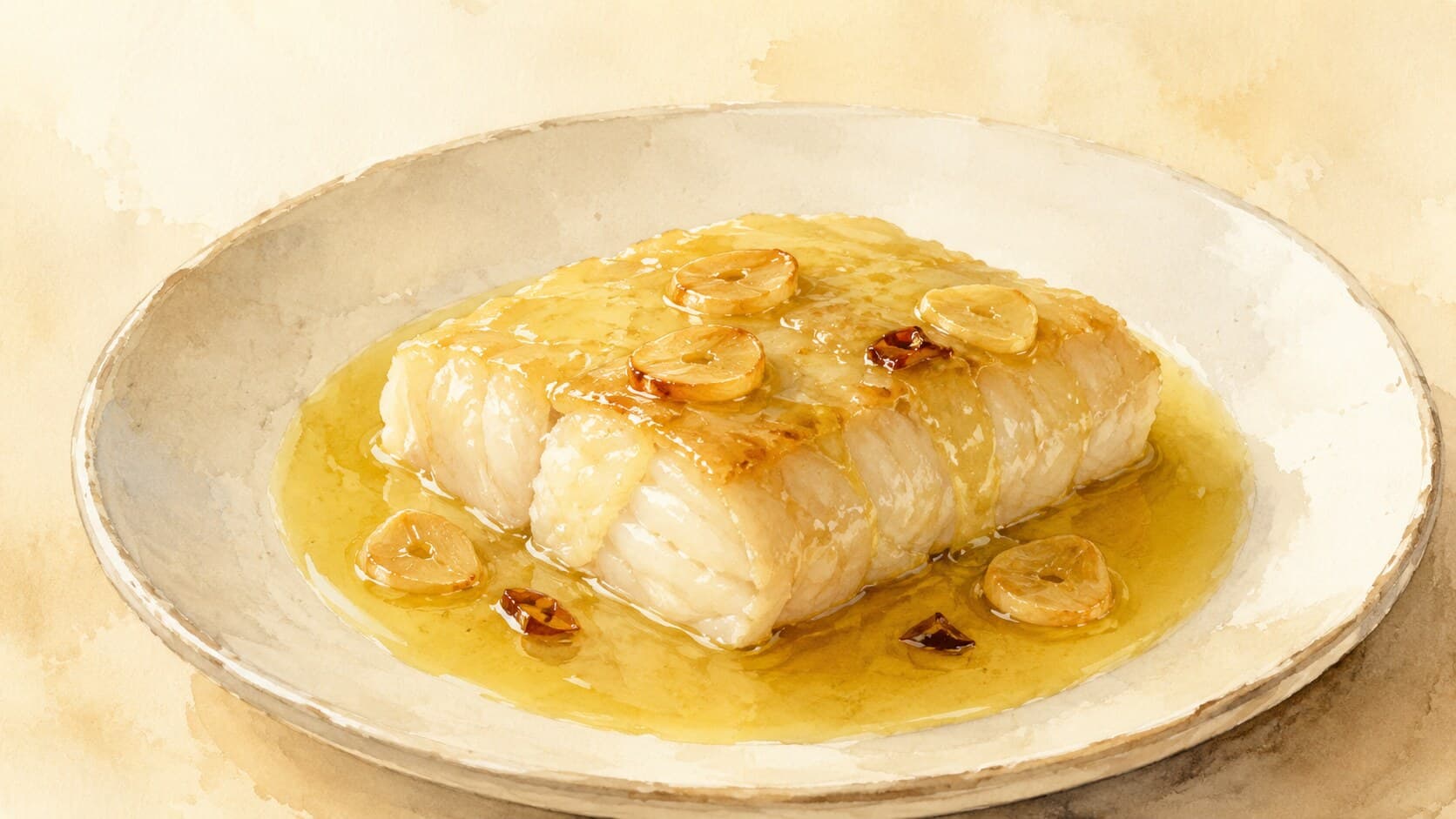
Ingredients
- 400 g salt cod, soaked and filleted
- 200 ml olive oil
- 4 cloves garlic, thinly sliced
- 1 sprig fresh parsley, chopped
- to taste salt
- to taste black pepper
Steps
Soak the salt cod in cold water for 24-48 hours, changing the water several times. This process removes excess salt and rehydrates the fish.
Heat the olive oil in a medium saucepan over low heat until it reaches approximately 60°C (140°F). This gentle temperature helps to infuse the oil with the flavor of garlic without burning.
Add the sliced garlic to the warmed oil and cook gently for about 5 minutes, until the garlic is golden but not browned. This creates a garlic confit that adds depth to the dish.
Place the soaked cod fillets in the oil and cook for about 8-10 minutes, gently shaking the pan to promote emulsification. The cod will release its gelatin, thickening the oil.
Once the cod is cooked through and the oil has emulsified into a creamy sauce, season with salt and pepper to taste. Remove from heat.
Serve the Bacalao al Pil-Pil immediately, drizzled with the garlic-infused emulsion and garnished with chopped parsley.
Why this works
The key to Bacalao al Pil-Pil lies in the gentle emulsification (coaxing oil and watery juices into one smooth, unified sauce) process. The olive oil, when warmed correctly, becomes a vehicle for the flavors of the garlic while allowing the cod to release its gelatin (the natural protein in the fish that, once dissolved, thickens the liquid). This creates a silky emulsion that clings to the fish, enhancing its natural flavors. If the emulsion seems too thin or separates, you can whisk in a few drops of cold water off the heat to help it stabilize. Additionally, maintaining a low temperature is crucial; if the oil gets too hot, it can burn the garlic and ruin the delicate balance of flavors. The dish exemplifies the art of emulsifying, showcasing the ability to blend oil and water-based elements into a harmonious sauce, which is a hallmark of many Basque recipes.
Common mistakes
Under-soaking the salt cod (cod preserved in salt, which must be soaked before cooking).
Target: 24–48 hours in cold water, changed several times, chilled.
Why it matters: Salt cod is preserved at high salt levels. Too short a soak leaves the fish punishingly salty and firm; the dish becomes inedible and no amount of sauce work fixes it. The soak both desalts and rehydrates the flesh.
What to do: Soak in the refrigerator, skin-side up, changing the water several times. Taste a tiny piece of the thickest part near the end — it should taste pleasantly seasoned, not aggressively salty.
Oil too hot — frying instead of confiting (cooking slowly and gently submerged in fat or oil).
Target: Around 60°C / 140°F — barely trembling, never bubbling hard.
Why it matters: This is a gentle poach (cooking submerged in barely-moving liquid that never boils). If the oil gets hot enough to fry, the garlic burns bitter and, more importantly, the cod's gelatin and juices are driven out as steam and spitting rather than released slowly into the oil — and gelatin is the emulsifier the whole sauce depends on.
What to do: Keep the heat low. If the garlic colors fast or the oil shimmers and ripples, pull the pan off the heat to cool before adding the cod.
Trying to emulsify while it's still too hot.
Target: Let the pan cool briefly, then swirl off the heat or over the lowest flame.
Why it matters: The pil-pil emulsion is built by agitating warm — not hot — oil with the gelatinous fish juices. Too much heat keeps the fat too thin to hold a suspension, and the sauce stays loose and oily.
What to do: Take the pan off the heat for a minute, then start the steady circular swirl (or whisk the oil and juices). The sauce turns pale, creamy and thick as the gelatin grabs the oil.
A broken, oily sauce.
Target: A glossy, pale, pourable emulsion that coats the cod.
Why it matters: Add the oil back too fast, or work it too warm, and the emulsion separates into a greasy slick — the gelatin can't hold that much fat at once.
What to do: This recipe gives you the classic rescue: off the heat, whisk in a few drops of cold water to re-tighten the emulsion. Going forward, swirl in the oil more gradually and keep the temperature gentle.
What to look for
- Soaked cod: plump, rehydrated flesh that flakes cleanly; a taste of the thick part is seasoned, not harsh.
- Garlic in the oil: pale gold and fragrant, never brown. Brown garlic means the oil ran too hot.
- Emulsion forming: the clear oil turns cloudy, then pale and creamy as you swirl, thickening visibly.
- Finished pil-pil: glossy, light-colored sauce that clings to the fish, with no pool of separated oil.
A note on history
Bacalao al pil-pil is a Basque salt-cod classic most often associated with Bilbao, where it is thought to have taken shape over the past two to three centuries. A popular origin story ties it to the Carlist Wars of the 1830s, when a Bilbao merchant reportedly received a vast over-shipment of salt cod that fed the besieged city. The name pil-pil is onomatopoeic, echoing the sound of the cod cooking gently in oil as its gelatin is released.
Get the essays in your inbox — free
Weekly notes on flavor, fermentation, and food history — the writing behind the Atlas of Flavor. No spam; unsubscribe anytime.