
Apfelstrudel
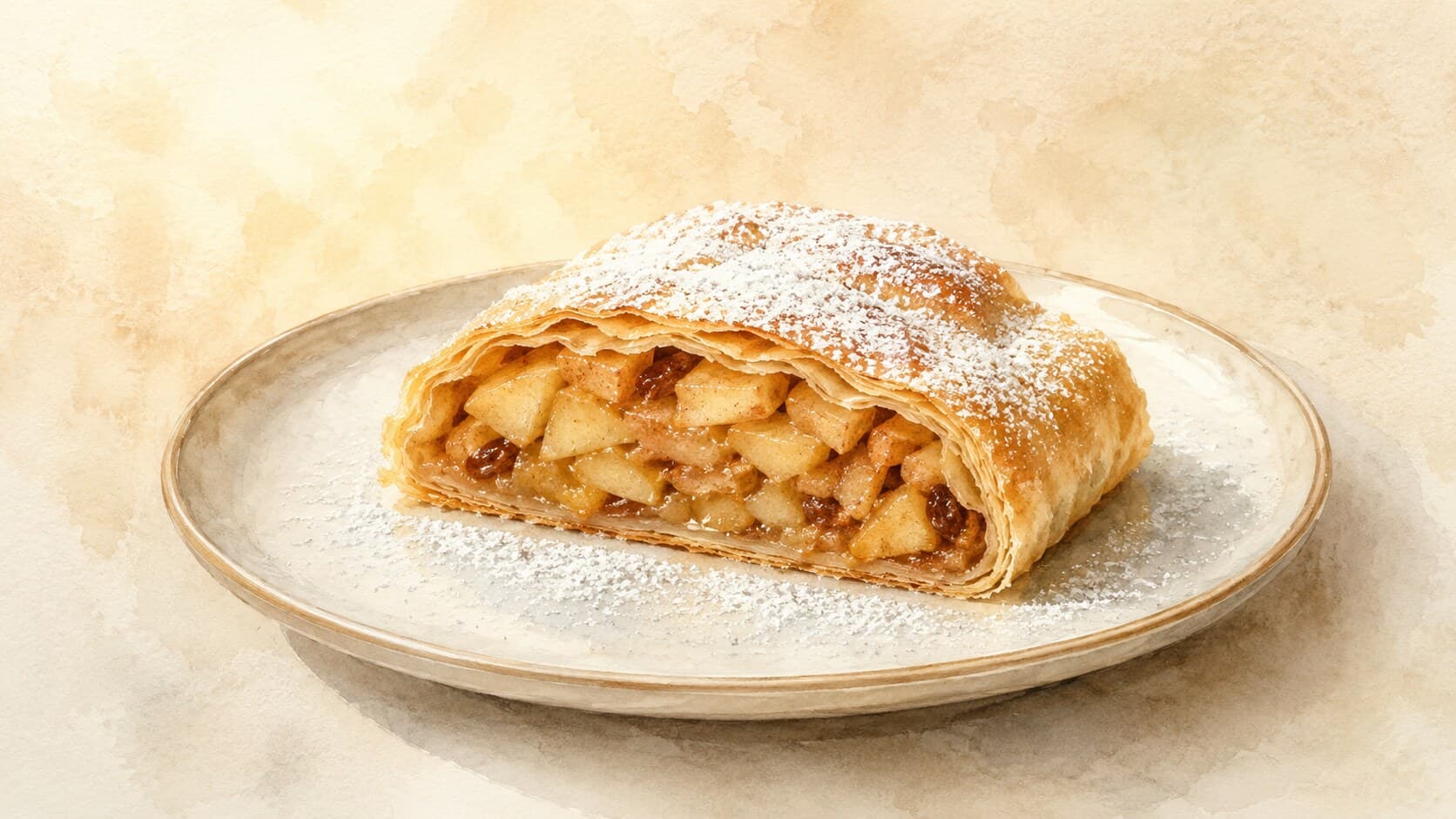
A classic Austrian dessert featuring a flaky pastry filled with spiced apples and raisins.
Contents (5 sections)▾
Ingredients
- 250 g all-purpose flour
- 1/2 tsp salt
- 1 tbsp vegetable oil
- 120 ml warm water
- 5 medium apples, peeled and thinly sliced
- 100 g granulated sugar
- 1 tsp ground cinnamon
- 50 g raisins
- 30 g melted butter
- powdered sugar for dusting
Steps
In a bowl, mix flour and salt. Add oil and warm water gradually, kneading until a smooth dough forms. Cover and let it rest for 30 minutes.
While the dough rests, toss the sliced apples with sugar, cinnamon, and raisins in a separate bowl.
Preheat the oven to 180°C (350°F). Roll out the rested dough on a floured surface until very thin, about 1 mm thick.
Spread the apple filling over the dough, leaving a border. Brush the edges with melted butter.
Carefully roll the dough into a log shape, sealing the edges. Place the strudel seam-side down on a baking sheet.
Brush the top with remaining melted butter and bake for 35-40 minutes until golden brown. Let it cool slightly.
Dust with powdered sugar before slicing and serving.
Why this works
The technique of stretching the strudel dough to a thin layer is crucial for achieving that delicate, flaky texture characteristic of a traditional apfelstrudel. The high-gluten content (gluten is the stretchy protein network that forms when flour meets water and is kneaded) of all-purpose flour provides elasticity, allowing the dough to be rolled out without tearing. If the dough feels too sticky while rolling, dust it lightly with flour to prevent sticking. The apple filling benefits from a balance of sugar and cinnamon, which enhances the natural sweetness and warmth of the apples. If your apples seem too tart, add a bit more sugar to balance the flavors. Baking at a steady temperature ensures the strudel cooks evenly, resulting in a crisp exterior and tender filling. If it breaks during rolling, simply patch it with a bit of dough; the strudel will still turn out delicious. Overall, the combination of a well-prepared dough and a flavorful filling creates a harmonious dessert that celebrates traditional Austrian baking.
Common mistakes
Rolling the dough straight from the bowl.
Target: A full 30-minute rest before rolling.
Why it matters: Freshly kneaded dough is tight and elastic — the gluten resists stretching and snaps back or tears the moment you push it thin. The rest lets the gluten relax so the dough goes thin without fighting you.
What to do: Cover and leave it the full 30 minutes. If it still pulls back, give it another 10. A light film of oil over the dough ball keeps the surface from drying during the rest.
A wet, leaking filling.
Target: Apples that hold their shape, juices that stay inside the roll.
Why it matters: Sugar draws water out of sliced apples by osmosis (the way salt or sugar pulls moisture out of food it sits on). If the tossed apples sit too long, they pool liquid that soaks the thin dough and steams it from the inside, giving you a soggy, split base instead of crisp layers.
What to do: Toss the apples with sugar, cinnamon and raisins just before you fill — not at the start. If they have already released a lot of juice, lift the apples out with a slotted spoon and leave the pooled liquid behind.
Skimping on butter between dough and filling.
Target: A brushed coat of melted butter on the rolled dough before the apples go on.
Why it matters: The butter is a moisture barrier. Without it, apple juice contacts the dough directly and the bottom turns to paste. Butter also carries flavor and helps the surface crisp and brown.
What to do: Brush the stretched dough before spreading the filling, and brush the outside of the rolled log before it goes in the oven.
Pulling it out underbaked.
Target: A deep, even golden-brown crust, firm to a light tap.
Why it matters: A pale strudel is undercooked inside — the layers stay damp and the structure collapses when sliced. The color is your doneness signal; the browning (a Maillard reaction — the heat-driven reaction between proteins and sugars that turns food golden-brown and tasty — in the butter-brushed surface) is also where much of the flavor develops.
What to do: Bake until genuinely golden, not just set. If the top is browning faster than the inside cooks, tent loosely with foil and keep going.
What to look for
- Rested dough: smooth and slack, no longer springing back when you press it. Ready to stretch.
- Rolled dough: thin enough to see your hand through it — the classic test. Even thickness, no thick seams.
- Filling before rolling: glossy apple slices, no puddle of liquid in the bowl. Sugar has coated, not drowned, the fruit.
- Finished strudel: deep golden, crisp shell that gives a faint crackle when tapped; no pale or damp-looking patches.
A note on history
Apfelstrudel is usually traced to the paper-thin stretched-pastry tradition that reached Central Europe through the Ottoman Empire, with roots in the same family of layered doughs as baklava; the technique is thought to have passed through Hungary before settling in Austria. The oldest known handwritten strudel recipe dates to 1696 and is held in the Vienna City Library, and the pastry became a fixture of Habsburg-era Viennese coffeehouse culture in the eighteenth century.
Get the essays in your inbox — free
Weekly notes on flavor, fermentation, and food history — the writing behind the Atlas of Flavor. No spam; unsubscribe anytime.