
Albóndigas en Salsa
Albóndigas en Salsa consists of Spanish meatballs simmered in a tomato-sherry sauce. Focus on meatball formation and sauce reduction techniques.
Contents (5 sections)▾
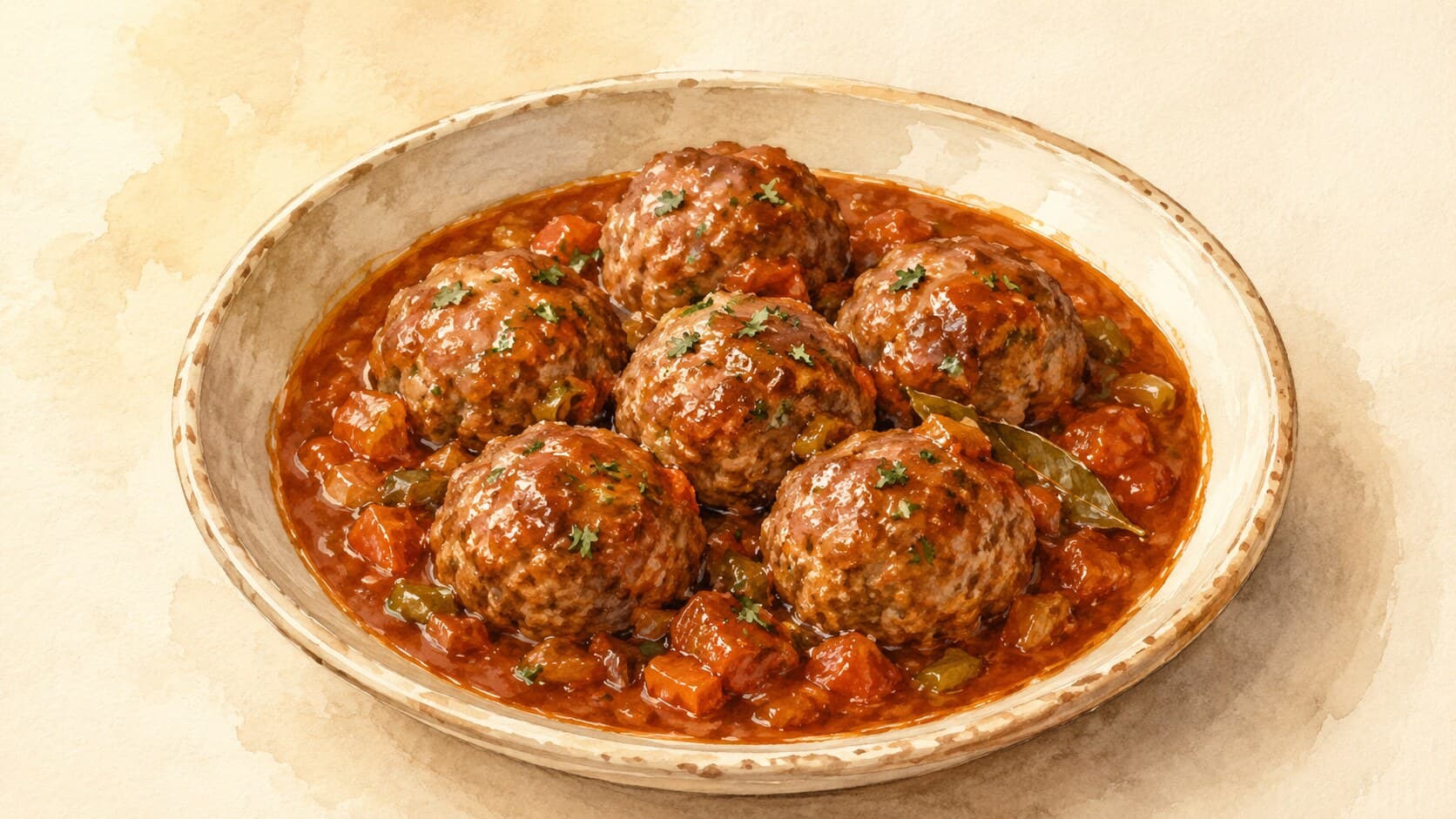
Ingredients
- 500 g ground beef
- 100 g breadcrumbs
- 1 clove garlic, minced
- 1 egg
- 50 g grated Parmesan cheese
- 1 tsp salt
- 1/2 tsp black pepper
- 1/2 tsp paprika
- 1/4 cup fresh parsley, chopped
- 1 tbsp olive oil
- 400 g canned crushed tomatoes
- 100 ml dry sherry
- 1 onion, diced
- 1 bell pepper, diced
- 1 tsp sugar
- to taste salt and pepper
Steps
In a large bowl, combine the ground beef, breadcrumbs, garlic, egg, Parmesan, salt, pepper, paprika, and parsley. Mix until just combined to avoid overworking the meat.
Form the mixture into meatballs, each about the size of a golf ball. Place them on a plate and refrigerate for 10 minutes to help them hold their shape during cooking.
Heat the olive oil in a large skillet over medium heat. Add the meatballs and cook for 6-8 minutes, turning occasionally until browned on all sides.
Remove the meatballs and set aside. In the same skillet, add the onion and bell pepper, sautéing for 5 minutes until softened.
Stir in the crushed tomatoes, dry sherry, sugar, and season with salt and pepper. Bring to a simmer, then return the meatballs to the skillet.
Cover and cook for an additional 10 minutes, allowing the flavors to meld and the meatballs to cook through. Cook the ground meat until it reaches 71 °C / 160 °F on an instant-read thermometer (no longer pink throughout) — colour, float and time are guides, not the safety test.
Why this works
The technique behind Albóndigas en Salsa combines the bold flavors of Spanish cuisine with the comforting texture of homemade meatballs. The mixture of ground beef and breadcrumbs creates a tender meatball, while the addition of egg helps bind the ingredients. Cooking the meatballs before adding them to the sauce ensures a rich, caramelized exterior (a deep-brown, savory-sweet surface that forms when food browns in heat) that enhances the overall flavor. Simmering the meatballs in the tomato-sherry sauce infuses them with moisture and depth. If the sauce seems too thick, add a splash of water or broth to reach your desired consistency. This dish is perfect for make-ahead meals, as the flavors only improve with time.
Common mistakes
Overworking the meat into tough, rubbery balls.
Target: Mixed just until the ingredients come together, then shaped with a light hand.
Why it matters: Kneading ground meat develops the proteins and packs it dense, so the cooked meatballs turn springy and tough instead of tender.
What to do: Combine everything until barely uniform — as the steps say, mix just to bring it together — and stop. Shape gently, without compressing the balls hard in your palms.
Meatballs that fall apart in the pan.
Target: Balls that hold their shape through browning and the simmer.
Why it matters: Without enough binder, or if they go into the pan warm and soft, the meatballs crack and crumble into the sauce. The egg and breadcrumbs bind; the chill firms them.
What to do: Don't skip the 10-minute refrigeration — cold meatballs hold together far better. Brown them undisturbed so a crust forms before you turn them, and they'll be sturdy by the time they simmer.
Crowding the pan so the meatballs steam instead of browning.
Target: A single layer with space between each, browned on all sides over medium heat.
Why it matters: That browned crust is built on the Maillard reaction (the browning that gives seared meat its savory, roasted flavor), and it's a big part of the dish's depth. Pack the pan and the released moisture steams the meat grey instead.
What to do: Brown in batches if needed, leaving room around each ball. Wait for a deep crust before turning; don't rush them around the pan.
A sharp, too-acidic tomato sauce.
Target: A rounded sauce where the sherry and tomato read as savory and slightly sweet, not sour.
Why it matters: Canned tomatoes can be aggressively acidic, and a short simmer doesn't always mellow them. The pinch of sugar and the simmering time are there to balance that edge.
What to do: Add the sugar as written, let the sauce simmer to soften the acidity, and taste before serving — a little more sugar or salt can pull a sharp sauce back into balance. Make-ahead helps too; the flavors round out as it rests.
What to look for
- The meat mixture: just-combined, still a little loose — not smooth or pasty. Overmixed mince looks dense and sticky; you want it to barely hold a ball.
- Browning the meatballs: a deep brown crust that releases cleanly from the pan when you turn them. If they stick and tear, they need another moment to crust.
- The sauce: gently bubbling, slightly thickened, smelling of sherry and sweet tomato rather than sharp acid. It should coat a spoon, not look thin and watery.
- Doneness: the thickest meatball reads 71°C / 160°F on an instant-read thermometer. This is ground beef, so colour and clear juices are not the safety test — push the probe into the centre of the largest meatball to confirm. The interior should feel firm and be evenly cooked through, not raw or rosy.
A note on history
The word albóndiga comes from the Andalusian Arabic al-bunduqa, "the hazelnut," a nod to the meatball's small round shape. The dish entered Spanish cooking during the centuries of Moorish rule in Al-Andalus: recipes for spiced minced-meat balls appear in Hispano-Muslim cookbooks as far back as the 13th century, a Spanish branch of the wider Middle Eastern kofta tradition. (Wiktionary, UNESCO Courier)
Get the essays in your inbox — free
Weekly notes on flavor, fermentation, and food history — the writing behind the Atlas of Flavor. No spam; unsubscribe anytime.