
Yum Woon Sen
Yum Woon Sen is a refreshing Thai glass noodle salad featuring shrimp, squid, and a zesty dressing.
Contents (5 sections)▾
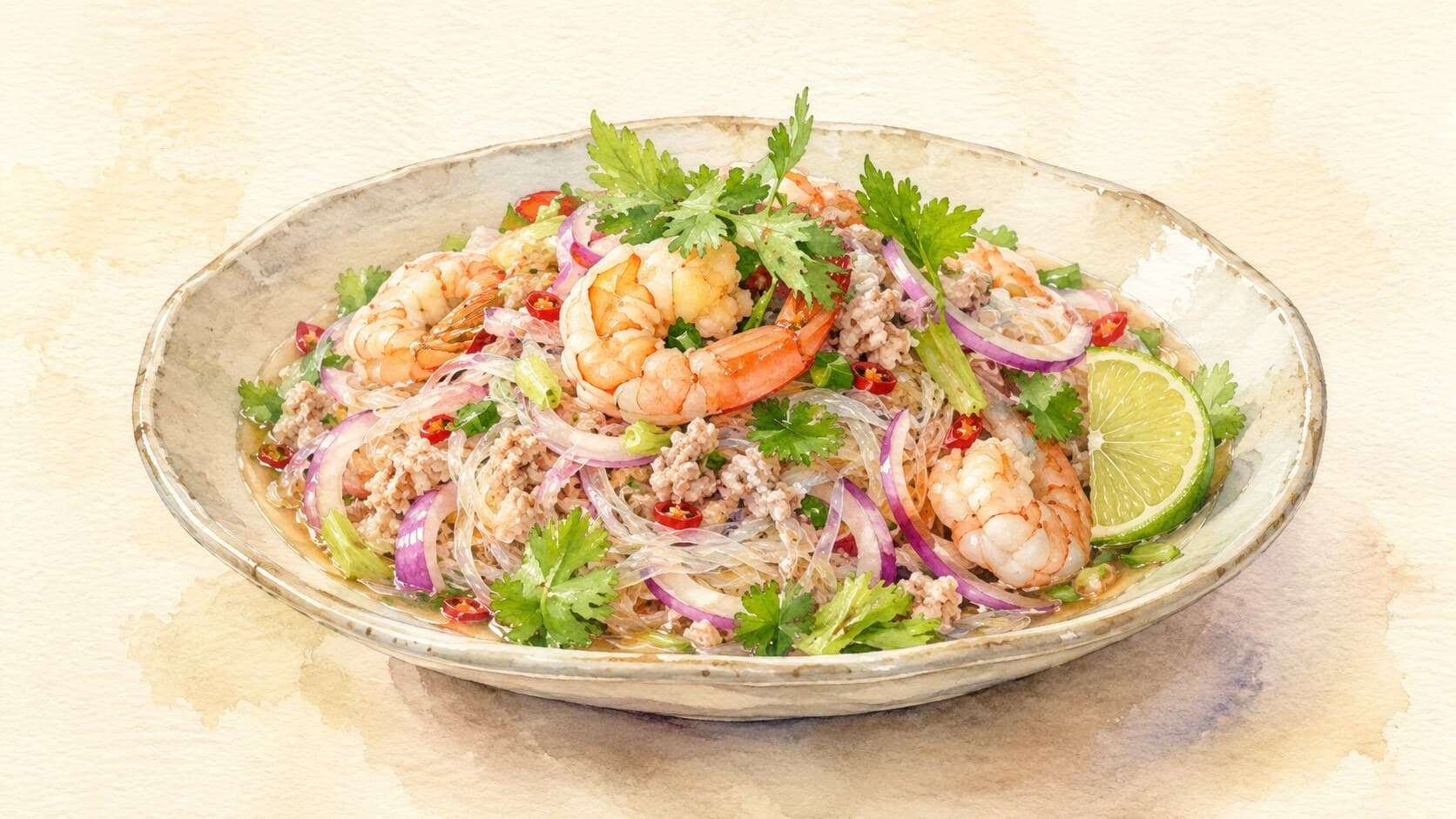
Ingredients
- 100 g glass noodles
- 150 g cooked shrimp, peeled
- 100 g squid, cleaned and sliced into rings
- 100 g ground pork, cooked
- 2 tbsp fish sauce
- 1 tbsp lime juice
- 1-2 red chili peppers, sliced
- 2 sprigs fresh cilantro, chopped
- 2 sprigs fresh mint, chopped
- lime wedges, for garnish
Steps
Soak the glass noodles in warm water for 15 minutes until softened, then drain.
In a pot, bring water to a boil, add the squid rings, and blanch for 2-3 minutes until just cooked. Drain and set aside.
In a large bowl, combine the soaked glass noodles, cooked shrimp, blanched squid, and the ground pork — cook the pork first in a dry pan over medium heat, breaking it up, until no longer pink and it reaches 71 °C / 160 °F on an instant-read thermometer; never add it raw.
In a separate bowl, whisk together the fish sauce, lime juice, and sliced chili peppers to create the dressing.
Pour the dressing over the noodle mixture while it's still warm, and toss well to combine.
Garnish with fresh cilantro and mint, and serve with lime wedges on the side.
Why this works
Yum Woon Sen showcases a harmonious blend of textures and flavors, with the soft glass noodles providing a unique base for the protein and fresh herbs. The key to balancing this dish lies in the acidity from lime juice and the umami from fish sauce, which enhance the overall flavor. When preparing, it's essential that the glass noodles are not over-soaked; if they seem too soggy, rinse them briefly in cold water to firm them up again. The addition of fresh herbs like cilantro and mint gives a refreshing aroma that complements the dish perfectly. Each component must be tossed while warm to ensure the noodles absorb the dressing effectively, enhancing moisture without making the dish too wet. Adjust the chili according to your spice preference—this salad can be mild or fiery, depending on your taste!
Safety note. All seafood and pork in this salad must be fully cooked. Poach the shrimp until just opaque (about 90 seconds), blanch the squid rings until just opaque (30-45 seconds), and brown the ground pork until no pink remains. No raw-shrimp or undercooked variations. Allergen disclosure: shellfish, fish sauce, and peanut.
Common mistakes
-
Over-soaking the glass noodles.
- Target: 10-15 minutes in warm (not boiling) water, until pliable but still with a faint bite.
- Why it matters: Mung-bean starch noodles continue to absorb moisture even after draining; a noodle soaked past the bite point will turn gummy once dressing hits it.
- What to do: Pull one strand at the 10-minute mark and bend it. If it folds without snapping but still resists slightly, drain immediately and rinse under cold water to stop the swell.
-
Dressing a cold salad.
- Target: Toss while the noodles and proteins are still warm to the touch.
- Why it matters: Warm noodles drink in the fish-sauce-and-lime dressing; cold noodles bead it off, leaving the seasoning at the bottom of the bowl.
- What to do: Time the squid blanch and pork render so they finish within a minute of the noodles. Combine, dress, and toss in one motion.
-
Under-cooking the proteins to chase tenderness.
- Target: Shrimp opaque throughout (around 90 seconds in simmering water), squid rings opaque and just firm (30-45 seconds), ground pork with no pink at all.
- Why it matters: Lime juice and fish sauce flavor the proteins but do not cook them. Raw or under-done shrimp, squid, or pork in a room-temperature salad is a food-safety risk, not a texture choice.
- What to do: Cook each protein separately so you can watch the doneness, then chill briefly on a plate before tossing.
-
Flat acidity from a single lime.
- Target: Dressing should taste sharp, salty, and a little sweet all at once.
- Why it matters: Yum (Thai composed salad family) is a salt-acid-heat balance. One axis missing and the dish reads thin.
- What to do: Taste the dressing on a noodle before final tossing. If it reads only salty, add more lime; if only sour, more fish sauce; if harsh, a pinch of palm sugar (unrefined sugar made from palm sap, mellower than cane) pulls everything into focus.
What to look for
- Translucent noodles that hold a curl on the fork — not a puddle that slides off.
- A glossy sheen on every strand from the dressing, with no liquid pooling at the bottom of the bowl.
- Shrimp that are pink and opaque end-to-end, squid rings that are bright white and just-firm, pork crumbles that are evenly browned with no pink.
- A nose-hit of lime and mint when you lean over the bowl, with chili heat arriving a beat after the first bite.
A note on history
Yum woon sen (Thai glass noodle salad, ยำวุ้นเส้น) belongs to Thailand's vast yum (ยำ) family — composed salads built on a fish-sauce (nam pla, the salty fermented anchovy sauce that anchors Thai seasoning), lime, chili, and palm-sugar dressing — with woon sen (วุ้นเส้น), glass or cellophane noodles made from mung-bean starch, as the carrier. The dish reflects Thai cooking's long absorption of Chinese ingredients; glass noodles travelled south with Chinese culinary influence and were reworked through the Thai salt-acid-heat-sweet framework. It is now a standard of central Thai home cooking and street stalls, typically with ground pork and shrimp, sometimes squid, and often peanuts.
Get the essays in your inbox — free
Weekly notes on flavor, fermentation, and food history — the writing behind the Atlas of Flavor. No spam; unsubscribe anytime.