
Xinjiang Cumin Lamb
Savor the bold flavors of Xinjiang Cumin Lamb, a quick and aromatic stir-fry that's perfect for weeknight dinners.
Contents (5 sections)▾
Ingredients
- 300 g lamb shoulder, thinly sliced
- 2 tbsp vegetable oil
- 2 tbsp whole cumin seeds
- 1 tbsp Sichuan peppercorns
- 2-3 dried red chilies, whole
- 3 cloves garlic, minced
- 2 scallions, chopped
- 1 tsp soy sauce
- 1 tsp salt
- 1/2 tsp black pepper
Steps
Heat a wok over high heat until it's almost smoking, about 5 minutes. This temperature is crucial for achieving a proper sear on the lamb.
Add the vegetable oil and immediately add the whole cumin seeds, Sichuan peppercorns, and dried chilies. Stir-fry for about 30 seconds until fragrant, which releases the essential oils and enhances the spices.
Add the thinly sliced lamb to the wok. Stir-fry for 3-4 minutes, ensuring the lamb is evenly coated with the spices and cooked through. The high heat helps to dry-fry the meat, creating a glossy, spice-clinging coat.
Stir in the minced garlic, soy sauce, salt, and black pepper, cooking for an additional 1-2 minutes until the garlic is fragrant. This step adds depth and balances the spiciness.
Remove from heat, garnish with chopped scallions, and serve immediately over steamed rice.
Why this works
The key to perfect Xinjiang Cumin Lamb lies in the technique of dry stir-frying at high temperatures. By heating the wok until almost smoking, you create an environment that sears the lamb quickly, building browned flavor and allowing the spices to adhere. Toasting the cumin seeds and Sichuan peppercorns enhances their flavors, providing that unmistakable depth characteristic of Uyghur cuisine. Stir-frying the lamb in batches can prevent overcrowding, which leads to steaming instead of frying. If the lamb seems to clump together, simply add a splash of water or broth to deglaze the pan, allowing the spices to stick to the meat better. This ensures a balanced dish that retains the aromatic qualities of the spices while delivering tender, flavorful lamb.
Regional note (soft framing). Cumin lamb (孜然羊肉, zī rán yáng ròu) is a stir-fry from the Xinjiang Uyghur Autonomous Region in northwestern China. The cumin-and-chili profile reflects Central Asian influences carried along the Silk Road. This recipe is framed as a Xinjiang Uyghur-style stir-fry — soft, not absolute. The dish is sometimes mis-attributed to Sichuan in Western kitchens despite the Sichuan peppercorn in the spice blend; the canonical attribution is Xinjiang Uyghur.
Common mistakes
- Slicing the lamb too thick.
- Target: 2-3 mm slices, across the grain, partially frozen for control.
- Why it matters: Thick slices need longer in the wok and turn chewy and grey before the spices have a chance to bloom.
- What to do: Chill the lamb for 20 minutes, slice thin against the grain, and pat dry before it hits the heat.
- Starting in a cool wok.
- Target: Wok hot enough that a drop of water vaporises on contact, oil shimmering.
- Why it matters: A cool surface steams the lamb in its own juices, so the meat goes flat and the spice coat washes off.
- What to do: Preheat the dry wok for several minutes, then add oil and aromatics in quick succession.
- Crowding the lamb in one batch.
- Target: Single layer with breathing room — split into two batches if needed.
- Why it matters: Piled lamb drops the wok (a wide, round-bottomed Chinese pan) temperature and pulls water out of the meat, losing the dry-fried, spice-clinging finish.
- What to do: Cook in halves, return the first batch only at the very end to combine.
- Under-cooking the lamb.
- Target: Lamb opaque all the way through, no pink centers, surface glossy with spice.
- Why it matters: Thin home-sliced lamb should be cooked through; rare and medium cues belong to whole chops, not weeknight stir-fry.
- What to do: Stir-fry 3-4 minutes per batch over high heat, breaking up clumps, until the slices are uniformly opaque.
What to look for
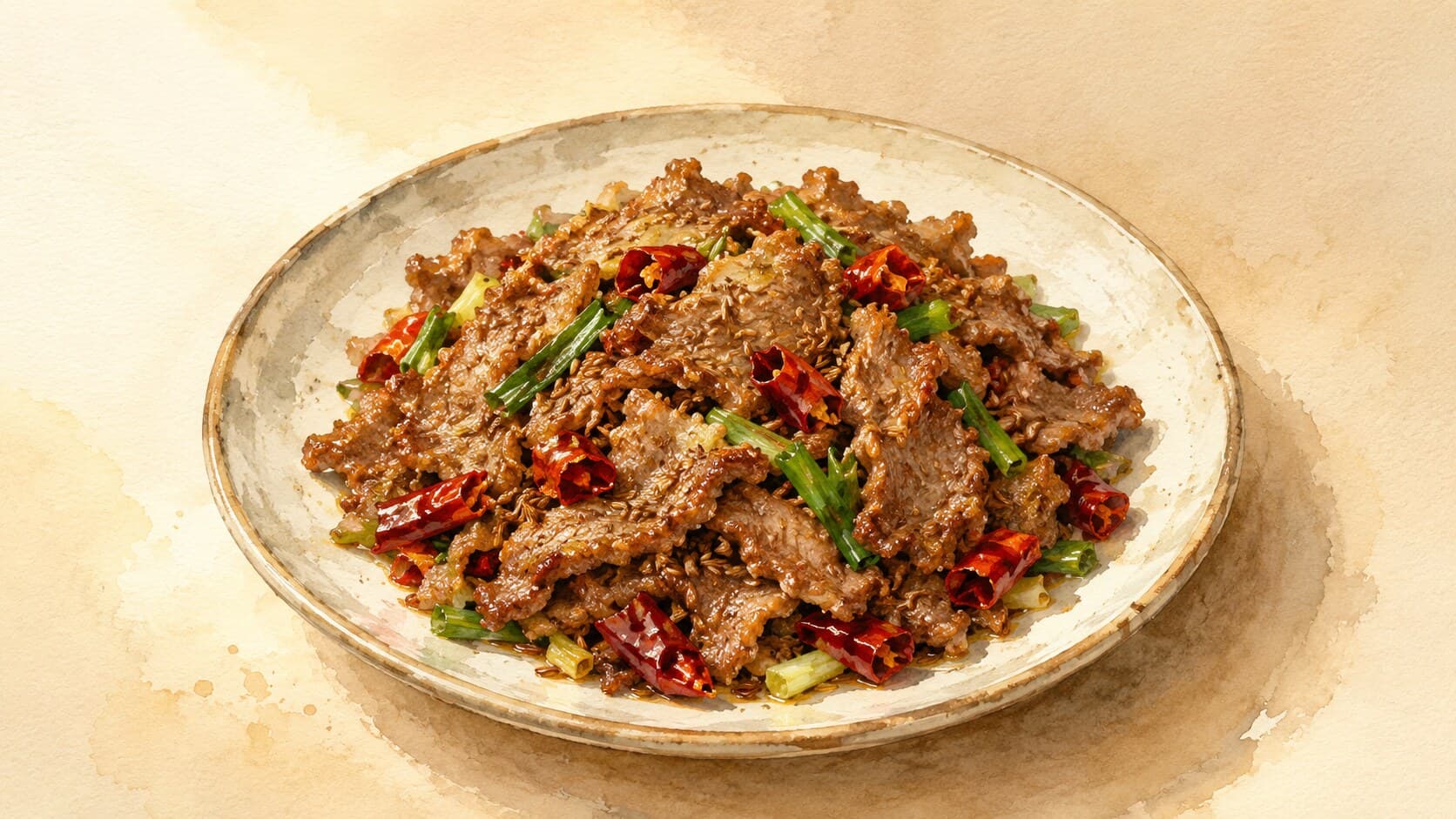
- Lamb slices a deep mahogany, edges crisp and lacquered with spice.
- Whole cumin and Sichuan peppercorns visibly clinging to each piece.
- A dry, fragrant pan with no pooled juices.
- Aroma of toasted cumin and warm chili lifting before the dish hits the plate.
A note on history
Cumin (a warm, earthy seed spice) reached China through Silk Road trade more than two thousand years ago, and over the following centuries Uyghur cooks in what is now Xinjiang made it a signature of their lamb cookery. The Mandarin name for cumin, 孜然 (zīrán), echoes the Persian zireh, a linguistic trace of those routes. The Tarim Basin's climate suits cumin cultivation, and the spice has long been one of the region's most important agricultural products — which is why a Uyghur lamb stir-fry tastes unmistakably of cumin rather than the chili-and-Sichuan-pepper register of Sichuan cooking, even when the two spice systems sit in the same wok.
Get the essays in your inbox — free
Weekly notes on flavor, fermentation, and food history — the writing behind the Atlas of Flavor. No spam; unsubscribe anytime.