
Xihongshi Chao Jidan
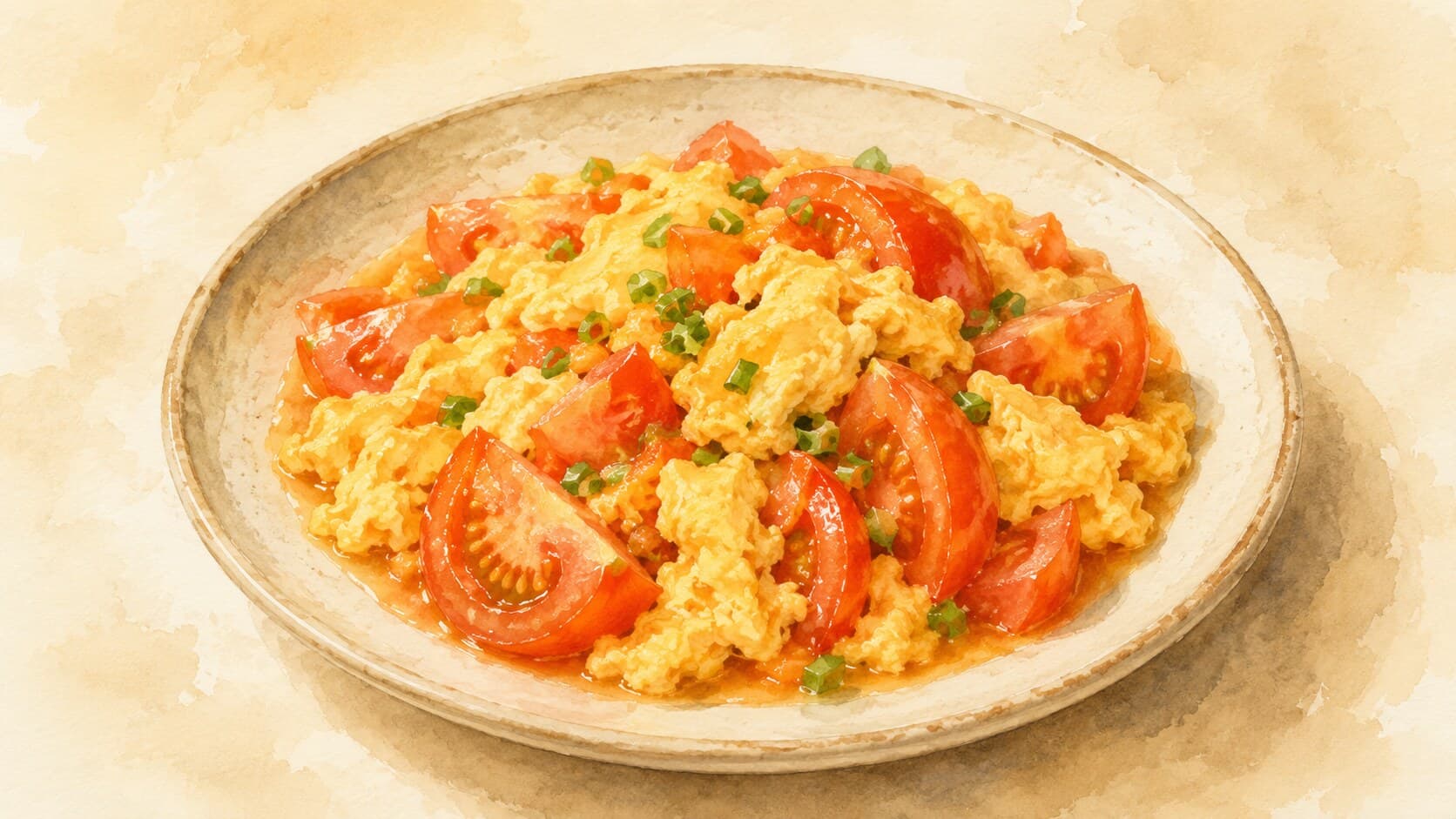
Xihongshi Chao Jidan is a comforting stir-fry of tomatoes and scrambled eggs, perfect for weeknight dinners.
Contents (5 sections)▾
Ingredients
- 2 medium tomatoes, diced
- 4 large eggs
- 2 tbsp vegetable oil
- 1 tsp salt
- 1/2 tsp white pepper
- 2 green onions, chopped
- 1 tbsp soy sauce
- to taste sugar
Steps
Heat 2 tablespoons of vegetable oil in a frying pan over medium heat, approximately 180°C. This helps to create a non-stick surface for the tomatoes.
Add the diced tomatoes and cook for 5-7 minutes, stirring occasionally, until they break down into a juicy pulp. The moisture released from the tomatoes enhances the dish's flavor.
While the tomatoes are cooking, beat the eggs in a bowl with salt and white pepper for about 1 minute. Beating the eggs aerates them, creating fluffy curds.
Pour the beaten eggs into the pan with the tomatoes and let them sit for 1 minute. This allows the eggs to begin setting without stirring, which creates soft curds.
Gently stir the mixture for another 2–3 minutes. With ordinary (non-pasteurized) eggs, cook until the eggs are fully set (no longer runny) — that is the safe endpoint. For a soft, glossy, slightly-runny finish, use eggs pasteurized in the shell (through to the contents) — for everyone, not only high-risk diners. Remove from heat to prevent overcooking.
Fold in the chopped green onions and soy sauce. The green onions add freshness, while the soy sauce enhances umami.
Serve immediately over steamed white rice for a comforting meal.
Why this works
The technique of cooking tomatoes until they turn into a juice-rich pulp is crucial for developing the dish's flavor base. As the tomatoes break down over 5-7 minutes, their natural sugars concentrate, providing a sweet and tangy backdrop that complements the eggs. The key is to allow the eggs to set gently with the tomatoes for about 1 minute, which creates a harmonious blend of flavors and textures. If the eggs seem too dry or overcooked, quickly remove them from the heat and let the residual warmth finish cooking to a creamy consistency. Balancing moisture is essential; if the mix appears too watery, a quick sprinkle of sugar can help enhance the tomato’s sweetness without overpowering. The final dish should be glossy and inviting, showcasing the vibrant colors of the ingredients. The timing for each step is critical; ensuring the right duration allows for optimal flavor extraction and texture, making the dish both satisfying and delicious.
Doneness note. Eggs finish just-set, glossy curds — not dry or fully firm. A soft-set, still-glossy scramble is not fully cooked egg: to serve it soft-set, use a pasteurized egg product; otherwise cook the eggs fully through (about 30 seconds longer). High-risk diners (pregnancy, immunocompromised, very young or old) should use pasteurized egg or a fully-cooked scramble.
Common mistakes
- Cooking tomatoes too briefly.
- Target: 5-7 minutes until the dice collapse into juicy pulp.
- Why it matters: Under-cooked tomato stays watery and acidic, and the eggs end up swimming in raw juice instead of clinging to a glossy sauce.
- What to do: Wait for the dice to lose their shape and release a syrupy red liquid before you pour the eggs in.
- Adding the eggs to a cool pan.
- Target: Pan and tomato mixture hot enough that the eggs hiss on contact.
- Why it matters: Cool tomatoes pull the heat down, so the eggs leach water instead of setting into curds.
- What to do: Bring the tomato pulp back up to a strong simmer before the eggs go in, then leave them undisturbed for the first minute.
- Stirring the eggs constantly.
- Target: One still minute, then 2-3 minutes of gentle folds (slow, broad turns rather than rapid stirring).
- Why it matters: Constant stirring shreds the egg into dry granules and you lose the glossy curd-and-sauce contrast.
- What to do: Let the eggs sit, then fold in slow arcs from the edge to the center until just-set.
- Over-salting before the tomatoes break down.
- Target: Season after the pulp forms and you can taste the balance.
- Why it matters: Salt pulls water from the tomatoes early and makes the finished dish thin and overly savory.
- What to do: Add salt, sugar, and soy sauce once the pulp is glossy, taste, then adjust.
What to look for
- Tomatoes turning from chunks to a glossy, syrupy pulp.
- Egg curds glistening at the edges with a soft, custardy center.
- A unified red-gold sauce clinging to a spoon rather than pooling thin.
- A bright, gently sweet aroma — not sharp or raw.
A note on history
Tomato and egg (xihongshi chao jidan — a stir-fry of tomato and scrambled egg) is one of the most universal home-cooking dishes (家常菜, jiachang cai — everyday family-table cooking) in modern China. It rarely appears on banquet menus and has no single inventor — instead, it sits at the everyday end of the cuisine, taught from parent to child as a first stir-fry. Tomatoes themselves arrived in China relatively late, and the dish is generally understood as a 20th-century home-kitchen invention rather than an ancient regional specialty.
Get the essays in your inbox — free
Weekly notes on flavor, fermentation, and food history — the writing behind the Atlas of Flavor. No spam; unsubscribe anytime.