
Wonton Soup
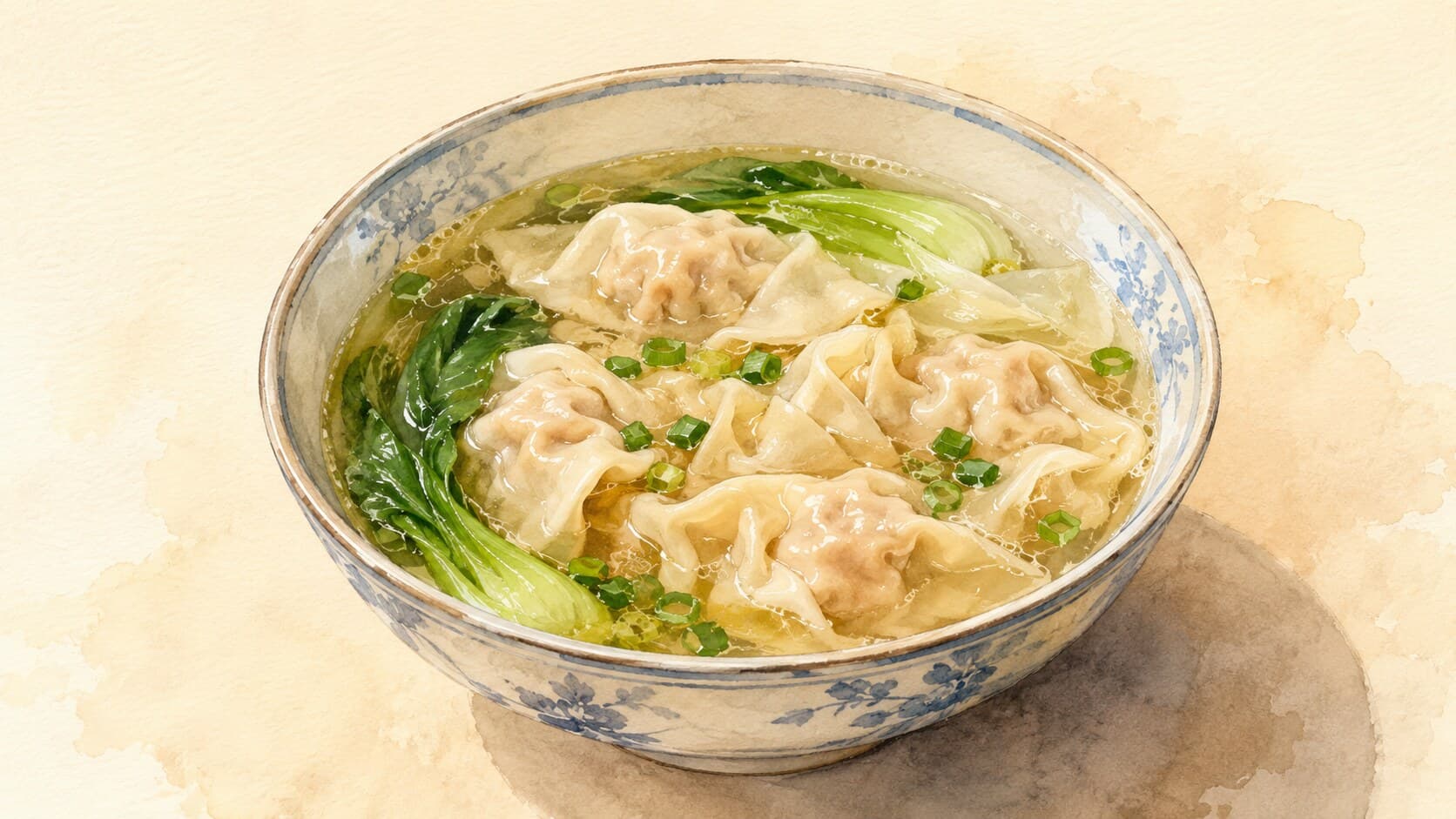
Cantonese wonton soup consists of pork-shrimp dumplings served in a clear chicken broth.
Contents (5 sections)▾
Ingredients
- 200 g ground pork
- 100 g shrimp, peeled and deveined
- 2 tbsp soy sauce
- 1 tbsp sesame oil
- 1 tsp ginger, minced
- 1 clove garlic, minced
- 1/4 tsp white pepper
- 20 wonton skins
- 1 liter chicken broth
- 3 slices ginger
- 2 green onions, chopped
- Salt to taste
Steps
In a bowl, combine 200g ground pork, 100g shrimp, 2 tablespoons soy sauce, 1 tablespoon sesame oil, 1 teaspoon minced ginger, 2 cloves garlic (minced), and 1/2 teaspoon white pepper. Mix well.
Place a wonton skin in your palm and add about 1 teaspoon (5g) of the filling in the center.
Wet the edges of the wrapper with water, fold the skin over to form a triangle, and press to seal tightly.
Bring the two corners of the triangle together and pinch to seal, ensuring no air is trapped inside.
In a pot, bring 1.5 liters of chicken broth to a gentle simmer at 85°C (185°F) over medium heat and add 3 slices of ginger.
Carefully drop the wontons into the simmering broth and cook for about 5-7 minutes. The filling is raw ground pork and shrimp, so floating is a wrapper cue, not a filling cue — cut one open to confirm the filling is firm, opaque, and no longer pink, reaching 71 °C / 160 °F on an instant-read thermometer, before serving.
Once cooked, serve in bowls, garnishing with 2 tablespoons chopped green onions and a drizzle of 1 teaspoon sesame oil.
Why this works
The combination of pork and shrimp provides umami flavor, while the clear chicken broth highlights the wontons' taste. Wrapping the filling in thin wonton skins ensures a tender texture that cooks quickly. Proper sealing is crucial; well-moistened edges pressed together firmly prevent breakage during cooking. If the filling seems dry, adding a splash of water or an extra teaspoon of sesame oil can enhance moisture. Maintaining a steady simmer at 85°C (185°F) is essential; vigorous boiling may cause the wontons to disintegrate. This careful attention to technique results in a balanced dish where each component complements the others.
Common mistakes
- Wontons (small Chinese filled dumplings) that haven't cooked through to the center. A surface-cooked wonton still has raw ground pork inside — a real food-safety risk.
- Target: wontons that float and stay floating for at least 2-3 minutes, with the filling firm and opaque when one is cut open.
- Why it matters: ground pork (and shrimp) must reach a fully cooked, no-pink center before serving.
- What to do: cook for the full 5-7 minutes after the wontons rise; sacrifice one as a test if you're unsure.
- Boiling the broth too aggressively. A rolling boil rips the delicate wonton skins and turns the broth cloudy.
- Target: a gentle simmer (small bubbles, not a full rolling boil) at around 85°C (185°F), with only soft bubbles around the edge of the pot.
- Why it matters: the clarity of the chicken broth is half the dish — visually and on the palate.
- What to do: bring to a boil to release the ginger aromatics, then drop to a bare simmer before the wontons go in.
- Air trapped inside the wonton. An air pocket expands in the hot broth and bursts the seal, dumping filling.
- Target: a snug seal with the filling pressed flat against the wrapper, no visible bubbles.
- Why it matters: broken wontons cloud the broth and leave you eating bare skins.
- What to do: as you fold, press out air from the center toward the seal; wet the inside edge of the wrapper for a firm bond.
- Dry, crumbly filling. Without enough moisture, the pork-shrimp paste cooks into a chalky pellet inside the wrapper.
- Target: a paste that holds together when pinched, slightly tacky but not stiff.
- Why it matters: the bounce and juiciness of the filling is what makes a great wonton.
- What to do: add a teaspoon of water or a splash of sesame oil and stir vigorously in one direction until the paste turns sticky.
What to look for
- A clear amber broth with no clouding — chicken and ginger aromas should rise on the steam.
- Wontons floating with semi-translucent skins, the pink shrimp visible through the wrapper.
- A gentle simmer holding throughout cooking — no rolling boil.
- A clean, sharp ginger note balanced by the warm pork-shrimp depth.
A note on history
Wonton (馄饨 / 雲吞, a thin-skinned Chinese filled dumpling) traces back to ancient Chinese cuisine, with mentions in northern Chinese sources as far back as the Han period. The dish spread south during later dynasties, where Cantonese 雲吞 — meaning "swallowing a cloud," a reference to the wrapper's appearance in the soup — developed the lighter, pork-shrimp style most associated with the modern bowl. Wonton soup remains a staple of Cantonese and broader Chinese home cooking today.
Get the essays in your inbox — free
Weekly notes on flavor, fermentation, and food history — the writing behind the Atlas of Flavor. No spam; unsubscribe anytime.