
Unaju
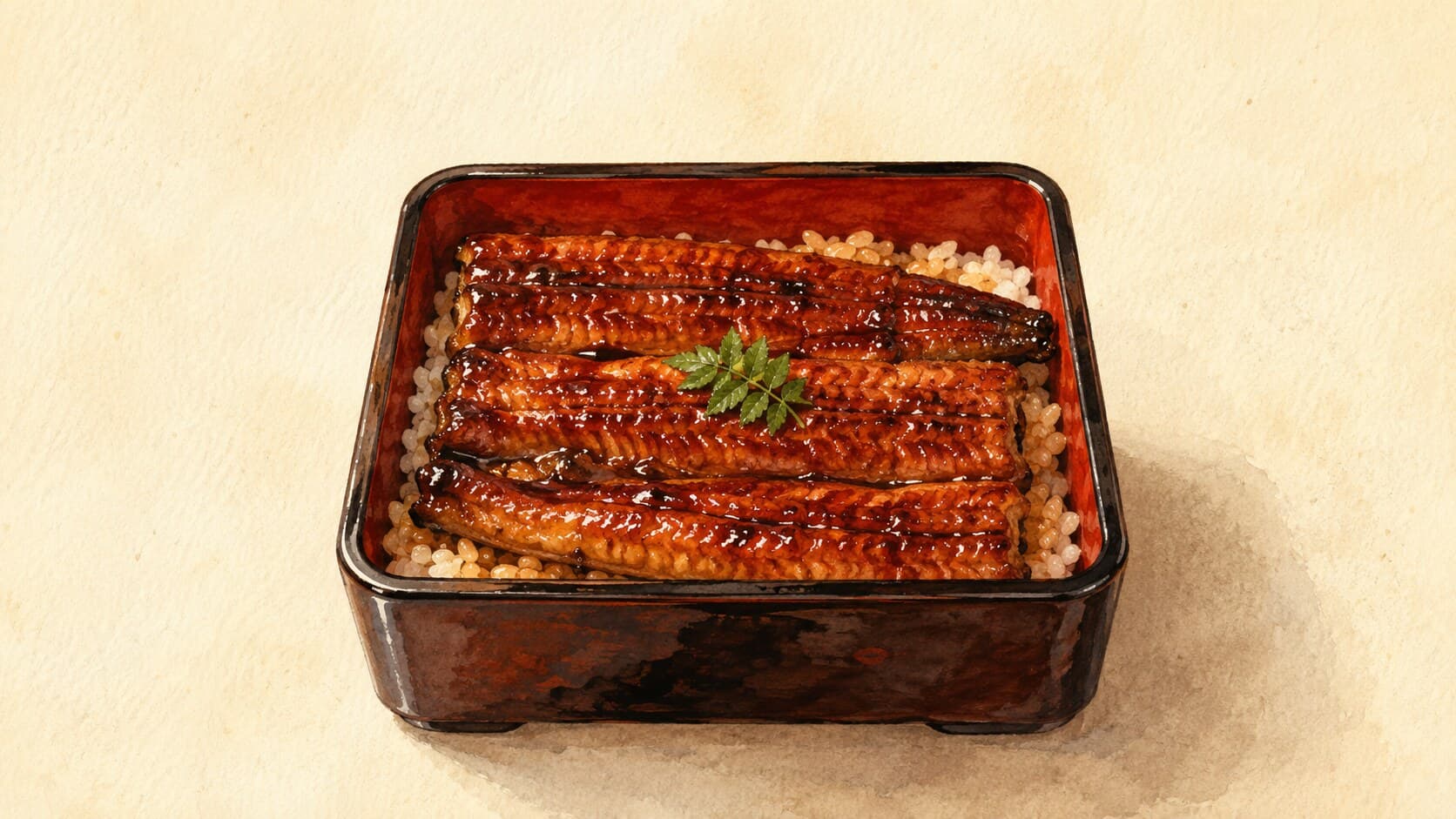
Unaju features tender, sweet-soy-glazed eel fillets served over steaming rice in a lacquered box, perfect for special occasions.
Contents (5 sections)▾
Ingredients
- 2 pre-prepared unagi-kabayaki eel fillets
- 400 g cooked sushi rice
- 2 tbsp tare sauce
- 1 tsp sansho pepper
- 2 leaves of shiso for garnish (optional)
Steps
Start by reheating the unagi-kabayaki eel fillets in a steamer for 10 minutes at 70°C (158°F). This ensures the eel remains moist and enhances its flavor.
While the eel is steaming, prepare the rice by placing it in two lacquered boxes, ensuring it is hot and fluffy, ideally at a temperature of 60°C (140°F) for the best texture.
Once the eel is heated through, place one fillet on top of the rice in each lacquered box, allowing the rich sauce to meld with the rice.
Brush the eel fillets with an additional layer of tare sauce for extra glossiness and flavor, then sprinkle with sansho pepper to finish.
Serve immediately, garnished with shiso leaves if desired, for a fresh contrast to the rich eel.
Why this works
The method of using pre-prepared unagi-kabayaki simplifies the cooking process while still delivering the authentic taste of this cherished Japanese dish. Steaming the eel at 70°C (158°F) for 10 minutes ensures it retains moisture, enhancing its buttery texture and sweet soy flavor. The lacquered box presentation adds elegance and helps keep the rice warm, ideally at around 60°C (140°F). If the eel seems too dry after reheating, adding a bit more tare sauce before serving can help restore its moisture. Additionally, adjusting the amount of sansho pepper to your taste can help balance the dish's umami and spice levels. This preparation is ideal for special occasions, allowing one to enjoy a traditional flavor without extensive cooking time. The precise temperatures and times ensure consistent results, making it easier for home cooks to replicate this delicacy.
Sustainability + occasion note. Unaju is a special-occasion dish in Japanese home cooking, not weekday food. Japanese eel (Anguilla japonica) is on the IUCN red list as endangered; sourcing matters. Where possible, choose eel from a recognized sustainability programme; ask your fishmonger about provenance. The preparation in this recipe is for the eel you can buy responsibly — not for cooking eel often.
Common mistakes
-
Reheating kabayaki (the sweet-soy-glazed grilled eel fillet sold ready-cooked) on direct high heat. Pre-grilled eel dries out quickly under a hot burner.
- Target: Gentle steam at around 70 °C for 10 minutes, or a covered low oven, until the fillet is hot through but the glaze still glossy.
- Why it matters: Commercial kabayaki has already been grilled and lacquered with tare. Aggressive reheating drives moisture out of the flesh and burns the sugars in the glaze.
- What to do: Steam over barely-simmering water with a lid, or wrap in foil with a teaspoon of sake or water and warm at 150 °C. Stop the moment the fillet is hot.
-
Pouring tare straight from the bottle onto the box. Cold tare on hot rice goes muddy and oversweet.
- Target: Tare warmed in a small pan until just simmering, brushed on in two thin coats — once before plating, once after.
- Why it matters: Warm tare bonds with the eel's existing glaze and sinks just enough into the rice to perfume it without drowning the grains.
- What to do: Reduce a few spoonfuls of tare gently, brush the fillet, place it on the rice, then brush again. Reserve any extra for the table.
-
Forgetting the rice mound. Unaju is a rice dish with eel on top, not the other way around.
- Target: Hot, just-cooked white rice — slightly firmer than donburi rice — filling the box about three-quarters deep before the eel goes on.
- Why it matters: The bottom layer of plain rice catches the tare from above. Without it, the dish becomes one-note and the box too dry.
- What to do: Fluff the rice with a wet shamoji, mound it generously, and only then add the eel. Some traditions tuck a thin tare-soaked rice layer in the middle as well.
-
Skipping the sansho (the citrusy-numbing Japanese mountain pepper). Sansho pepper is not optional garnish — it's the cut against the rich tare.
- Target: A pinch of freshly-ground sansho across the eel just before serving, enough to smell sharp and citrusy but not enough to numb.
- Why it matters: The tare is sweet, the eel is fatty, the rice is mild. Sansho is the lift that keeps the whole box from feeling heavy.
- What to do: Grind sansho fresh if possible, or warm pre-ground sansho briefly in a dry pan to wake the aroma. Add at the table, not in the kitchen.
What to look for
- Kabayaki glaze that stays glossy and dark amber after reheating, not dulled or scorched — the gentle warm-through worked.
- Eel flesh that yields cleanly to chopsticks with no resistance — the texture is moist, not tough.
- A box where the rice underneath the eel has taken on a faint amber sheen from the tare — the layering carried.
- Sansho aroma rising the moment the lid comes off — sharp, citrusy, clearly there but not overwhelming.
A note on history
The unagi-on-rice tradition in Japan begins with unadon (unagi donburi — eel served over rice in a bowl), which became popular in the late Edo period. Unaju (the same eel-over-rice dish served in a lacquered jūbako box for formal occasions) — the same dish served in a lacquered jūbako box rather than a donburi bowl — emerged later as a more formal presentation, with sources placing it variously in the Meiji or Taishō eras. The lacquered box served a practical purpose (keeping deliveries warm for the eel-house trade) as well as a presentational one, and the format remains the way unagi is offered in higher-end shops to this day. Many households still eat unagi on Doyō no Ushi no Hi, the midsummer "day of the ox" associated since at least the 18th century with eating eel for stamina.
Get the essays in your inbox — free
Weekly notes on flavor, fermentation, and food history — the writing behind the Atlas of Flavor. No spam; unsubscribe anytime.