
Tres Leches Cake
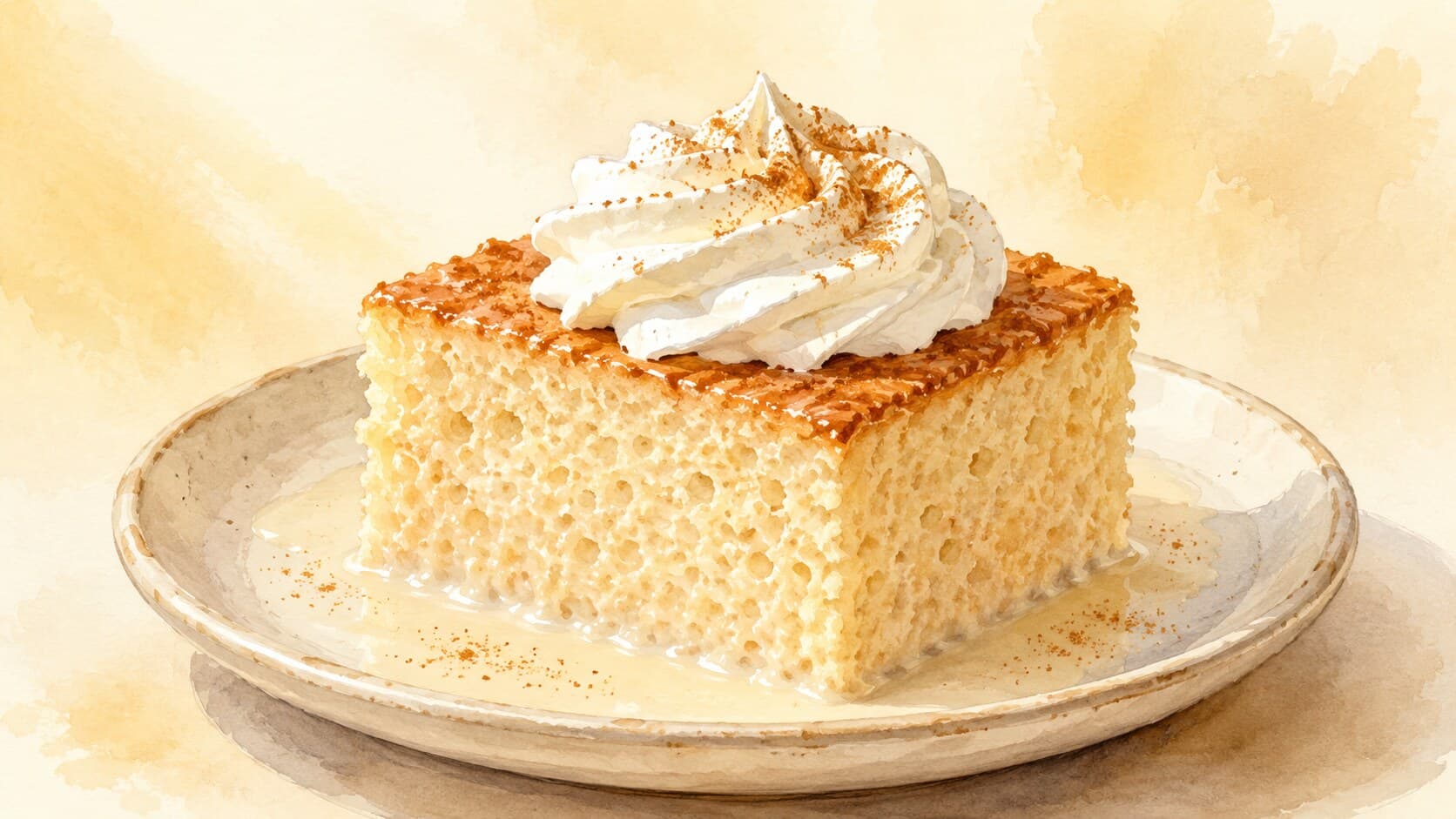
A luscious Tres Leches Cake soaked in three types of milk, topped with whipped cream and a hint of cinnamon.
Contents (5 sections)▾
Ingredients
- 200 g all-purpose flour
- 150 g granulated sugar
- 1 tbsp baking powder
- 1/2 tsp salt
- 4 large eggs
- 120 ml whole milk
- 60 ml vegetable oil
- 1 tsp vanilla extract
- 400 ml evaporated milk
- 400 ml sweetened condensed milk
- 400 ml heavy cream
- 1/2 tsp ground cinnamon
- whipped cream for topping
Steps
Preheat your oven to 180°C (350°F). This ensures that the cake bakes evenly; an oven that isn’t hot enough can result in a dense texture.
In a large mixing bowl, combine flour, sugar, baking powder, and salt. Whisk until evenly mixed.
In another bowl, beat the eggs, then add milk, oil, and vanilla extract. Mix well before incorporating with the dry ingredients.
Pour the batter into a greased 9x13 inch baking dish and bake for 25-30 minutes, or until a toothpick comes out clean. Overbaking can dry out the cake, so check at 25 minutes.
Let the cake cool, then poke holes all over the top with a skewer. This allows the milk mixture to soak in effectively.
In a separate bowl, combine the evaporated milk, condensed milk, and heavy cream. Pour this mixture over the cooled cake, allowing it to absorb for at least 2 hours, ideally overnight.
Before serving, top with whipped cream and sprinkle with ground cinnamon for presentation and flavor.
Why this works
Tres Leches Cake is a masterclass in texture and flavor balance, achieved through the soaking technique that makes it uniquely moist. The combination of evaporated milk, sweetened condensed milk, and heavy cream creates a rich, sweet base that soaks into the sponge cake, making every bite luscious. The light sponge cake is crucial; if it’s too dense, it won’t absorb the milks properly, leading to a dry result. If the cake seems too dry after soaking, simply drizzle a bit more milk mixture over the top to enhance moisture. The whipped cream topping adds a light, airy contrast to the richness of the soaked cake, while a dusting of cinnamon introduces a warm spice note that complements the dessert beautifully.
Common mistakes
- Pouring the milk mixture (the three-milk soak — evaporated, condensed, and cream) onto a still-warm cake.
- Target: The cake fully cooled, ideally to room temperature, before soaking.
- Why it matters: A warm sponge stays open and soaks unevenly — the top floods and pools while the bottom never absorbs.
- What to do: Let the cake cool in the pan, then poke and pour; if you're in a hurry, set the pan on a rack to speed cooling.
- Skipping the poking step or using too few holes.
- Target: Holes spaced roughly every 2 cm across the entire surface, going most of the way through the cake.
- Why it matters: Without enough channels, the milk pools on top and the centre and bottom stay dry.
- What to do: Use a skewer or fork tines and work systematically, not just in the centre.
- Whipping the cream until it stiffens into clumps (overwhipping past soft peaks toward butter).
- Target: Soft to medium peaks — the cream holds a shape but the tip still gently curls.
- Why it matters: Overwhipped cream loses its glossy texture and starts breaking toward butter; once it splits, you can't bring it back.
- What to do: Whip on medium speed, check often once the cream starts thickening, and stop the moment you see soft peaks.
- Adding all three milks at full volume in one pour.
- Target: Add the milk mixture in two or three rounds, letting each one soak in before the next.
- Why it matters: A single flood overwhelms the cake — much of the liquid runs around the edges instead of in.
- What to do: Pour, wait a few minutes, then continue. Tilt the pan slightly to check if liquid still pools at the surface.
What to look for
- a sponge that springs back lightly when pressed before soaking — neither rubbery nor wet
- milk mixture disappearing into the holes within seconds rather than pooling on top
- whipped cream that holds glossy, gently curving peaks, not a grainy mass
- a cleanly cut slice where the soaked layer is uniform from edge to centre
A note on history
Tres leches cake's origins are contested between Nicaragua, Mexico, and other Latin American kitchens, with documented soaked-cake traditions in the region predating the modern version. Its broad popularization is closely tied to mid-20th-century marketing of canned evaporated and condensed milk — Nestlé in particular printed recipes on its product labels in Mexico and Central America, helping the formula spread widely from the 1930s and 1940s onward. The technique itself — soaking a baked cake in liquid to remake its texture — has older European parallels in dishes like trifle.
Get the essays in your inbox — free
Weekly notes on flavor, fermentation, and food history — the writing behind the Atlas of Flavor. No spam; unsubscribe anytime.