
Tori Zosui
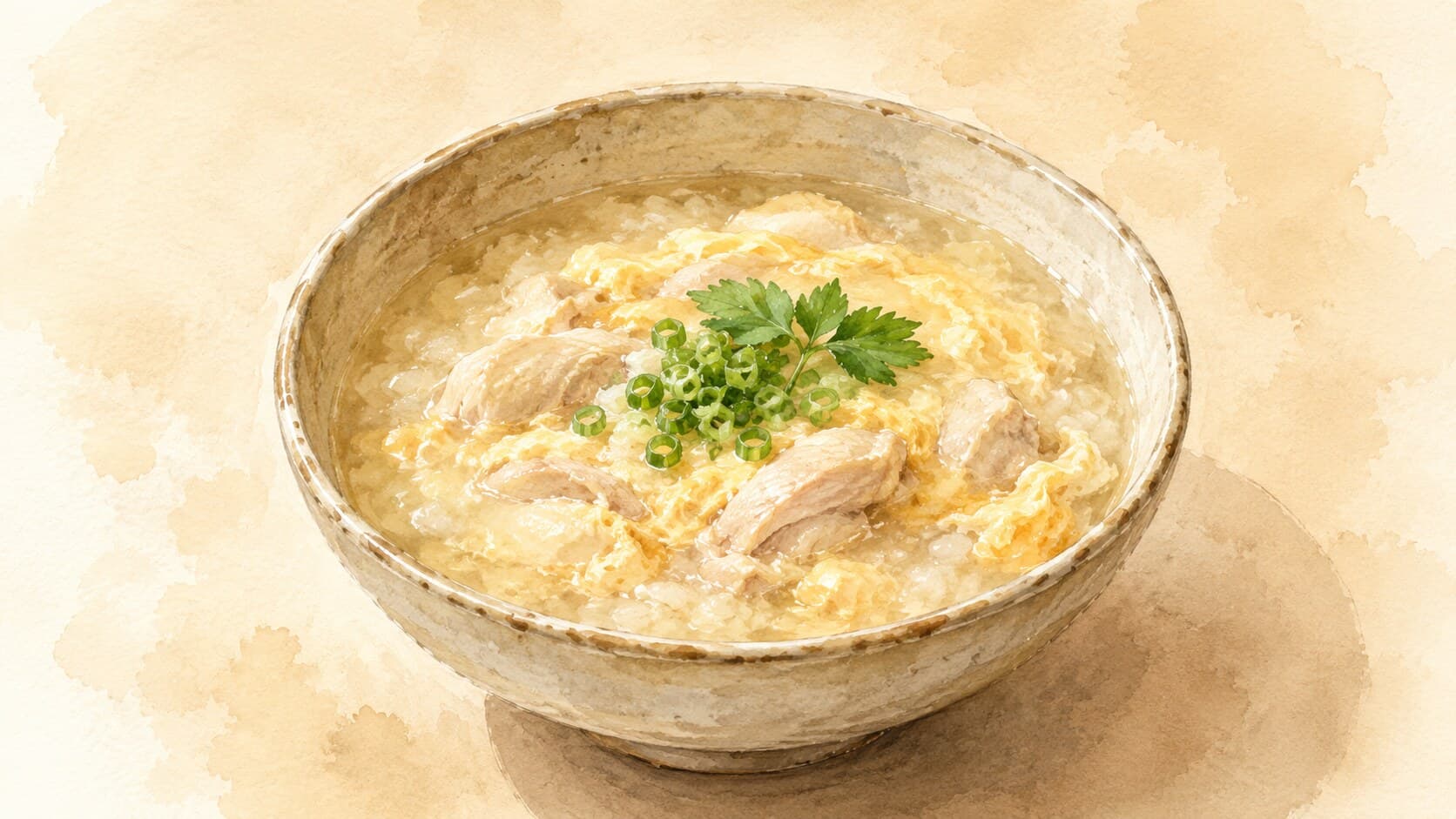
Tori Zosui is a comforting Japanese chicken rice porridge made from leftover rice, chicken broth, and a silky egg finish.
Contents (5 sections)▾
Ingredients
- 2 cups cooked rice
- 4 cups chicken broth
- 150 g cooked chicken, shredded
- 1 cup mixed vegetables (e.g., spinach, carrots, or mushrooms), chopped
- 2 large eggs
- 2 tbsp soy sauce
- 1 tbsp mirin
- 1 tsp sesame oil
- Salt and pepper to taste
- Chopped green onions for garnish
Steps
In a large pot, bring the chicken broth to a simmer over medium heat (about 5 minutes).
Add the cooked rice, shredded chicken, and mixed vegetables to the pot, stirring gently to combine.
Season with soy sauce, mirin, sesame oil, salt, and pepper, and let it simmer for an additional 10 minutes.
In a separate bowl, beat the eggs until well mixed, then slowly pour them into the porridge while it is at a gentle simmer, stirring gently so the egg sets into silky ribbons. With an ordinary (non-pasteurized) egg, keep the porridge at a simmer for another 1–2 minutes until the egg is fully set throughout, with no runny or liquid egg left — that is the safety step. For deliberately soft, barely-set ribbons, use an egg pasteurized in the shell (heat-treated through to the contents) or a pasteurized egg product — for everyone, not only high-risk diners; the porridge's residual heat is texture, not a Salmonella kill step. High-risk diners (pregnancy, immunocompromised, very young or elderly) should have the egg fully set or use a pasteurized egg.
Remove from heat, and serve hot, garnishing with chopped green onions.
Why this works
Tori Zosui is a brilliant way to transform leftover rice and chicken stock into a restorative one-pot meal. The technique of simmering the cooked rice in seasoned chicken broth allows the grains to absorb the flavors deeply, creating a rich and comforting porridge. The addition of shredded chicken and vegetables enhances the dish's nutritional profile and adds texture and color. Pouring in the beaten eggs at the end provides a silky finish to the porridge, which is essential for its comforting character. If the porridge seems too thick, add a bit more chicken broth or water to reach your preferred consistency. Conversely, if it appears too watery, continue to simmer it for a few more minutes until it thickens to your liking. This dish exemplifies the practice of using what you have on hand, making it a perfect weekday meal.
Common mistakes
- Boiling the broth so hard the rice turns to mush. (Zōsui is a Japanese rice porridge — cooked rice gently simmered in seasoned broth until grains soften but still hold their shape.)
- Target: A gentle simmer with small bubbles breaking at the surface — not a rolling boil.
- Why it matters: Aggressive boiling shears the rice grains apart and the porridge loses its loose, distinct-grain character.
- What to do: Bring to a simmer over medium heat, then drop the heat to keep it just bubbling while the grains relax.
- Adding cold leftover rice in one solid clump.
- Target: Loosened, separated grains before they hit the broth.
- Why it matters: A clump steams unevenly in the centre and the porridge ends up part-warm, part-cold.
- What to do: Run the rice briefly under warm water in a sieve to loosen, or break it up with a wet spoon before adding.
- Pouring the beaten egg in a single rush. (The technique here, sometimes called tempering, means slowly streaming beaten egg into hot broth so it sets into soft ribbons instead of scrambling. Streamed egg has no separate Salmonella kill step, so with an ordinary egg keep the porridge simmering until the ribbons are fully set, with no runny egg; for deliberately soft ribbons use an egg pasteurized in the shell or a pasteurized egg product — for everyone, not only high-risk diners — and high-risk diners (pregnant people, young children, the elderly, anyone immunocompromised) should have the egg fully set or pasteurized.)
- Target: A thin, steady stream poured into the simmering broth while gently stirring in one direction.
- Why it matters: Dumping the egg in all at once creates a dense lump rather than the soft ribbons the dish is named for, and the egg setting is uneven.
- What to do: Lift the pot or hold the bowl high, pour slowly, and let the broth do the work — stop stirring as soon as the egg is in so it sets into ribbons rather than scrambling, then hold the simmer until the ribbons are set through (for softer ribbons, use a pasteurized egg as noted above).
- Over-salting before tasting.
- Target: Hold back salt at the start; chicken broth and soy sauce already carry plenty.
- Why it matters: Once the broth reduces, the salt concentrates and there's no easy fix.
- What to do: Season lightly at the start, taste after the rice has simmered, and adjust only at the end.
What to look for
- broth surface with small, steady bubbles — never a rolling boil
- rice grains visibly swollen but still holding their shape, not fully broken down
- egg ribbons that drift in the broth in loose strands rather than a single mass
- a clean, light-amber broth that doesn't look cloudy or starchy on the spoon
A note on history
Zōsui (雑炊, "miscellaneous cooking") belongs to Japan's long tradition of rice-and-broth porridges, used historically as a way to make a small amount of rice stretch and to revive day-old rice with seasoned liquid. The chicken version (tori zōsui) sits within that everyday-economy register and is often associated with restorative meals — something easy to eat when appetite is low. Specific dating is fuzzy across sources, so I won't fix it to a particular era.
Get the essays in your inbox — free
Weekly notes on flavor, fermentation, and food history — the writing behind the Atlas of Flavor. No spam; unsubscribe anytime.