
Tarte aux Pommes (French Apple Tart)
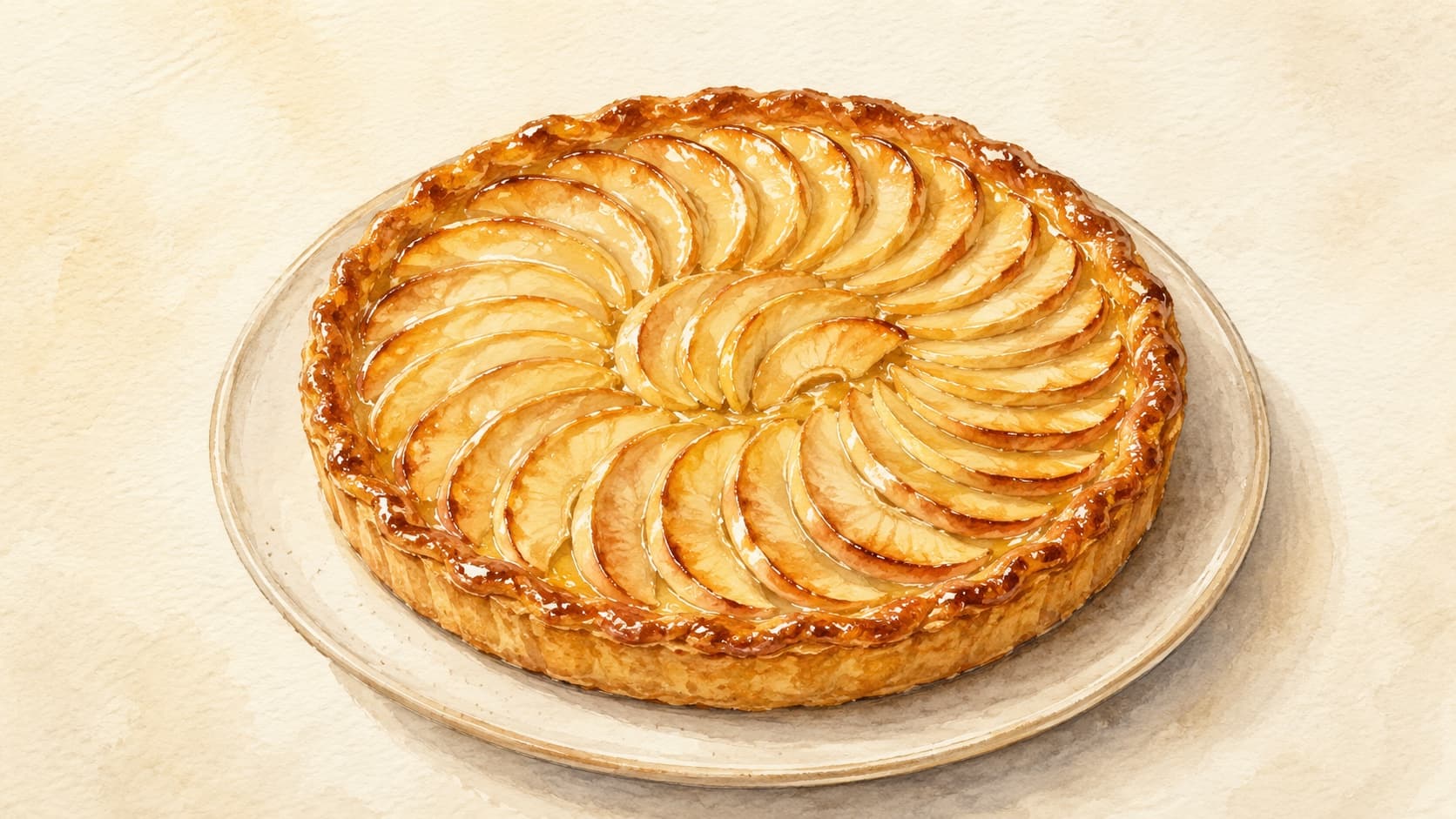
A classic French apple tart featuring a buttery crust and sweet apple filling, elegantly baked to perfection.
Contents (5 sections)▾
Ingredients
- 250 g all-purpose flour
- 125 g unsalted butter, cold and cubed
- 75 g granulated sugar
- 1 large egg
- 1/4 tsp salt
- 6 medium apples, peeled, cored, and sliced
- 50 g granulated sugar (for filling)
- 1 tsp cinnamon
- 2 tbsp unsalted butter, melted (for glazing)
- 1 tbsp lemon juice
- To taste, apricot jam (for glaze)
Steps
In a mixing bowl, combine 250 g flour, 75 g sugar, and 1/4 tsp salt. Add 125 g cubed butter and mix until crumbly.
Add 1 egg and knead the mixture until it forms a dough. Wrap in plastic wrap and refrigerate for 30 minutes.
Preheat your oven to 180°C (350°F). Roll out the chilled dough and fit it into a 9-inch tart pan, trimming excess.
In a bowl, toss apple slices with 50 g sugar, 1 tsp cinnamon, and 1 tbsp lemon juice. Arrange them neatly in the tart shell.
Dot the apple arrangement with 2 tbsp melted butter. Bake for 45 minutes or until apples are tender and crust is golden.
Once baked, brush the top with apricot jam to add shine and sweetness. Allow to cool before serving.
Why this works
The success of a Tarte aux Pommes lies in the perfect harmony of its components—the buttery, flaky pâte brisée crust, the tender, caramelized apples, and the glossy apricot glaze. The pâte brisée is essential as its fat content ensures a crisp texture while providing a subtle flavor that complements the sweet filling. If the dough seems too crumbly, add a few drops of cold water to bring it together. During baking, the apples release moisture, which, when combined with the sugar, creates a syrup that saturates the crust and enhances the overall flavor. To rescue a tart that appears overly dry, you can brush additional melted butter or glaze over the apples after baking. This adds moisture and improves the visual appeal with a beautiful shine. The careful layering of apple slices allows for even cooking, ensuring they remain soft yet retain their structure, creating a delightful contrast with the crunchy crust.
Common mistakes
- Overworking the pâte brisée (the classic French short-crust pastry made from flour, butter, water and a little salt). Too much kneading develops gluten and the crust turns tough.
- Target: the dough should look just-coherent and slightly streaky with butter when you wrap it; cold to the touch, no warm spots.
- Why it matters: flaky French short-crust depends on small islands of butter staying intact in the flour. Work it until smooth and you've made bread dough — the steam can't lift the layers, and you'll get something dense and chewy.
- What to do: Cut butter into the flour with fingertips or a pastry cutter until pea-sized, add egg and water just to bring it together, and stop the moment it holds. Rest 30 minutes minimum, longer if your kitchen is warm.
- Skipping a blind bake (pre-baking the empty tart shell with weights so the floor sets before any filling goes in) or using too-wet apples. A soggy bottom is the most common failure of any fruit tart.
- Target: dock the rolled-out dough and blind-bake at 180°C / 350°F for 12–15 minutes with weights until pale gold, then add the apples.
- Why it matters: apples release a lot of juice as they soften. A raw crust can't form a seal before that juice arrives, so the bottom never crisps. Blind-baking pre-sets the floor.
- What to do: Roll the dough cold, prick it well, line with parchment and rice or dried beans, bake until the edges are setting and the floor is just dry — then load the apples.
- Choosing the wrong apples or slicing them unevenly. Soft apples turn to applesauce; thick slices stay crunchy at the centre.
- Target: firm, slightly tart apples — Reinette, Cox's Orange Pippin, Honeycrisp, Granny Smith — sliced 3 mm thick on a mandoline or a sharp knife.
- Why it matters: the appeal of tarte aux pommes is apples that hold their fan shape but are tender enough to eat with a fork. Soft varieties collapse; thick wedges fight the crust.
- What to do: Toss slices with lemon juice and sugar 10 minutes ahead to draw out a little water and stop browning. Pat dry just before arranging.
- Brushing the apricot glaze on a hot tart. Hot fruit and hot glaze make a runny film that pools.
- Target: cool the tart 10 minutes, warm the strained apricot jam to a brushable consistency, and paint a thin even layer.
- Why it matters: the glaze is what gives the tart its mirror finish and stops the apples drying out, but only if it gels as it cools. Apply too hot and it slides off; too cold and it tears the surface.
- What to do: Sieve the apricot jam first to remove fibres, loosen with a teaspoon of water, warm to just-pourable, and brush with a soft pastry brush — once across each row of apples is enough.
What to look for
- A crust that's a deep, even biscuit gold at the rim, with no pale or shiny patches on the floor when you lift it on a spatula.
- Apples just visibly translucent at the edges of each slice, with the tips touched gold-brown by the dry heat of the oven.
- A mirror-bright glaze that doesn't drip when you tilt the tart, settling thin and smooth across each slice.
- A clean, tall slice when you cut — pastry holds, apples stay in formation, and there's no pooled juice on the plate.
A note on history
The tarte aux pommes is one of the oldest desserts in the French repertoire, with written apple-tart recipes going back to medieval monastic kitchens in the 1300s and a long tradition of regional variations — Normandy and Alsace each have well-known forms. There is no single "official" version: pâte brisée or pâte sablée (a sweeter, more cookie-like short crust), with or without an under-layer of compote or frangipane (a sweet almond cream baked underneath the fruit), glazed with apricot or not. The famous tarte tatin, in which apples are caramelised in the pan and the pastry baked on top before inverting, is a different and much later dish, traced to the Tatin sisters' hotel restaurant at Lamotte-Beuvron in Sologne at the end of the nineteenth century.
Get the essays in your inbox — free
Weekly notes on flavor, fermentation, and food history — the writing behind the Atlas of Flavor. No spam; unsubscribe anytime.