
Tantanmen
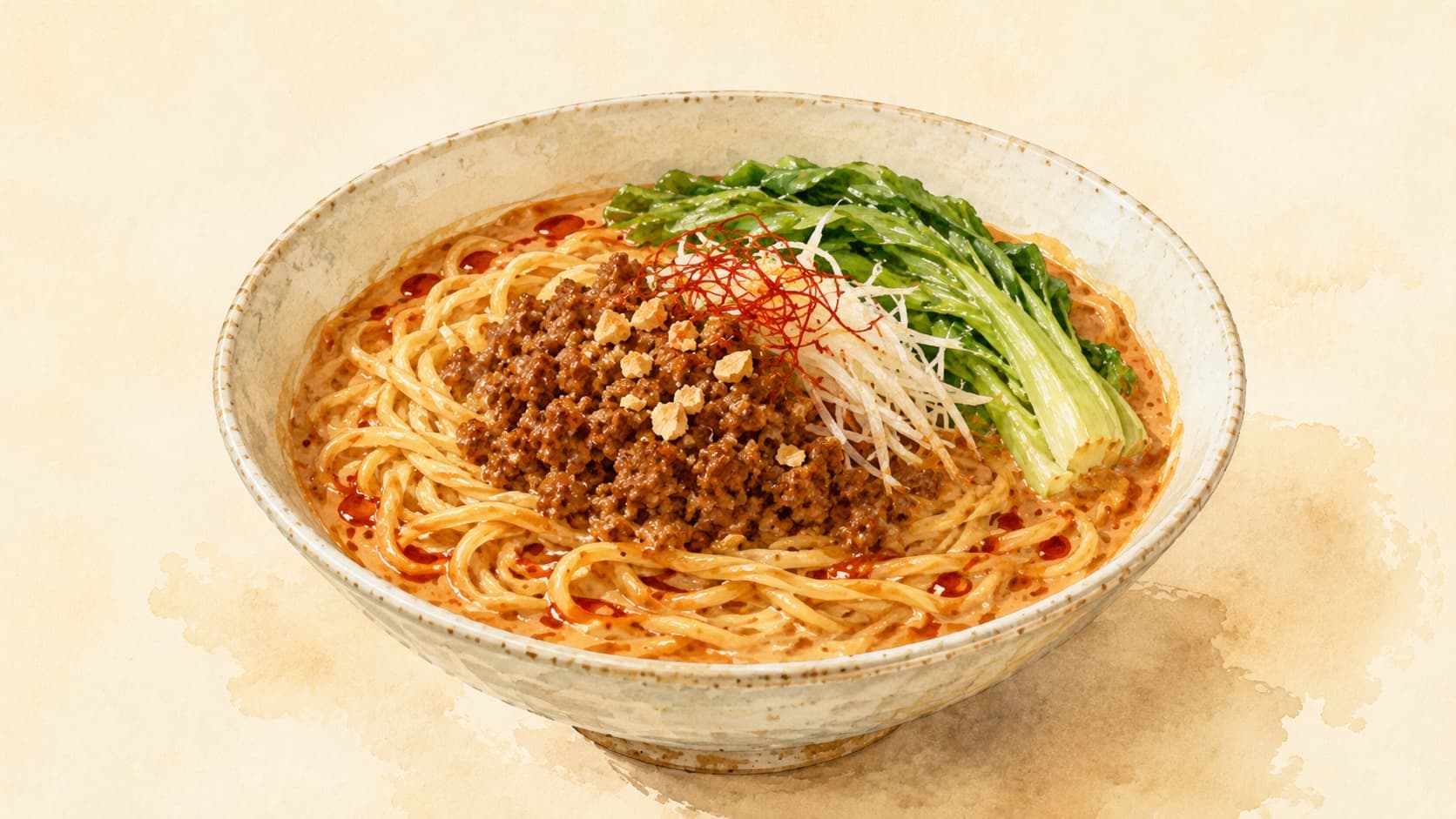
Tantanmen is a ramen dish featuring a broth made from sesame and chili, served with noodles and garnished with green onions and ground meat.
Contents (5 sections)▾
Ingredients
- 200 g fresh ramen noodles
- 500 ml chicken or vegetable broth
- 2 tbsp tahini (sesame paste)
- 1 tbsp chili oil
- 1 tsp Sichuan peppercorns, crushed
- 2 cloves garlic, minced
- 1 tbsp soy sauce
- 1 tsp sesame oil
- 1 spring onion, thinly sliced
- 1 handful of bok choy or spinach
- to taste salt
- to taste pepper
Steps
In a pot, bring the chicken or vegetable broth to a simmer over medium heat. This forms the base for your ramen and enhances the overall flavor.
Add the tahini, chili oil, crushed Sichuan peppercorns, minced garlic, soy sauce, and sesame oil to the broth. Stir well and let it cook for 5 minutes. This step combines the rich sesame and spicy flavors that define Tantanmen.
Meanwhile, cook the fresh ramen noodles according to package instructions, usually about 3-4 minutes in boiling water. Fresh noodles provide the best texture and absorb the broth well.
Add the bok choy or spinach to the broth in the last 2 minutes of cooking. This adds a nutritious element and bright color to your dish.
Drain the noodles and divide them into bowls. Pour the hot broth and toppings over the noodles, then garnish with sliced spring onion. Serve immediately for the best experience.
Why this works
Tantanmen is a fantastic example of how flavor layering creates depth in a dish. The combination of tahini and chili oil introduces a rich, nutty flavor accompanied by heat, while the Sichuan peppercorns add a unique numbing sensation that complements the spiciness. Cooking the garlic in the broth allows its flavor to infuse the soup, creating a more complex flavor. The use of fresh ramen noodles ensures that they have the right texture to hold up against the robust broth, absorbing its flavors. If the broth seems too thick, simply add a bit more water or broth to achieve your desired consistency. Alternatively, if the broth lacks heat, adding more chili oil or a pinch of chili flakes can increase the spice level. This recipe balances the richness of sesame with the heat of chili, making it a satisfying and warming dish for any occasion.
Common mistakes
- Under-cooking the meat topping. This bowl has ground meat in it; pink ground meat is a real safety problem, not a texture preference.
- Target: ground pork or chicken broken into fine crumbs over medium-high heat, cooked through to an internal temperature of 74°C / 165°F. No pink in the center of any clump.
- Why it matters: ground meat mixes surface bacteria throughout the batch, so it needs to hit a fully-cooked temperature all the way through — there is no medium-rare option here. Letting clumps stay pale also gives a soggy, greasy topping.
- What to do: Cook the meat in a hot pan separately before it joins the broth, breaking it apart with a wooden spoon until it crumbles like fine gravel, then build the broth around it.
- Treating the sesame as an afterthought. Cold tahini (ground sesame seed paste — Middle-Eastern in origin but a close stand-in for Japanese white sesame paste neri-goma) dropped into hot broth seizes into clumps and tastes flat.
- Target: whisk the tahini with a few tablespoons of warm broth in the serving bowl to make a smooth paste before ladling the hot broth on top.
- Why it matters: sesame paste needs an emulsion — water bound into the oil — and a thin warm-up is what gives tantanmen its signature creamy body. Direct contact with boiling broth shatters that emulsion and you get oily slick on top, gritty paste at the bottom.
- What to do: Bowl first. Tahini + soy + chili oil + warm broth, whisked. Then noodles, then ladled hot broth. The pour itself finishes the emulsion.
- Letting Sichuan peppercorns (the dried husk of a small Asian citrus-relative berry, prized for the tongue-tingling sensation it produces, not heat) sit in a hot pot too long. Long simmer kills the citrusy lift and just leaves heat.
- Target: dry-toast the whole peppercorns 30–45 seconds in a dry pan, grind coarsely, and add either at the end of the broth simmer or directly to the bowl as a finishing dust.
- Why it matters: the volatile aromatics in Sichuan pepper — the bright citrus that pairs with the numb — burn off after a few minutes in hot liquid. The tingle (málà) is what makes a tantanmen feel alive instead of merely spicy.
- What to do: Toast, grind, sniff (it should smell like citrus peel and pine), then sprinkle over the top. Save a final pinch to add tableside.
- Overcooking the noodles before they meet the broth. Soft noodles dissolve into a sesame slurry within a minute.
- Target: boil fresh ramen noodles 30–60 seconds shorter than the package directs; they should still have a slight chew when you bite a strand.
- Why it matters: the broth is hot and rich and keeps cooking the noodles in the bowl. If they're already al dente when you drain them, they'll be perfect by the second bite; cook them through and they're mush.
- What to do: Time the noodles to land in the bowl the moment the broth is ladled. Have everything else — meat, greens, dust of pepper — ready before you start the noodles.
What to look for
- A glossy, opaque broth with a thin slick of red oil floating on top — not separated, but resting cleanly across the surface.
- A tingling buzz on the lips and tongue tip within a few seconds of the first sip — that's the málà of the Sichuan peppercorn doing its work.
- Noodles that come up coated but still snap cleanly when you bite them; broth clings, doesn't drip off.
- Crumbled meat that holds its texture rather than dissolving into the broth — golden-brown specks, not greyish-pink lumps.
A note on history
Tantanmen is the Japanese-soup form of Chinese dandanmian (the dry Sichuan street noodle dish named after the carrying-pole vendors once used to peddle it), the dry Sichuan street noodle from Chengdu. It was reformulated for the Japanese palate by Chen Kenmin, "father of Sichuan cuisine in Japan", who opened Shisen Hanten in Tokyo in the late 1950s. The original Sichuan dish is served dry, with the chili-and-sesame seasoning at the bottom of the bowl; the soup version is a Japanese adaptation, said to have come about because Japanese diners kept asking for broth — a request his wife is credited with translating into a recipe. Today both the soup-style tantanmen and the more recently revived shirunashi (soup-less) form coexist in Japan as separate dishes.
Get the essays in your inbox — free
Weekly notes on flavor, fermentation, and food history — the writing behind the Atlas of Flavor. No spam; unsubscribe anytime.