
Tanjia
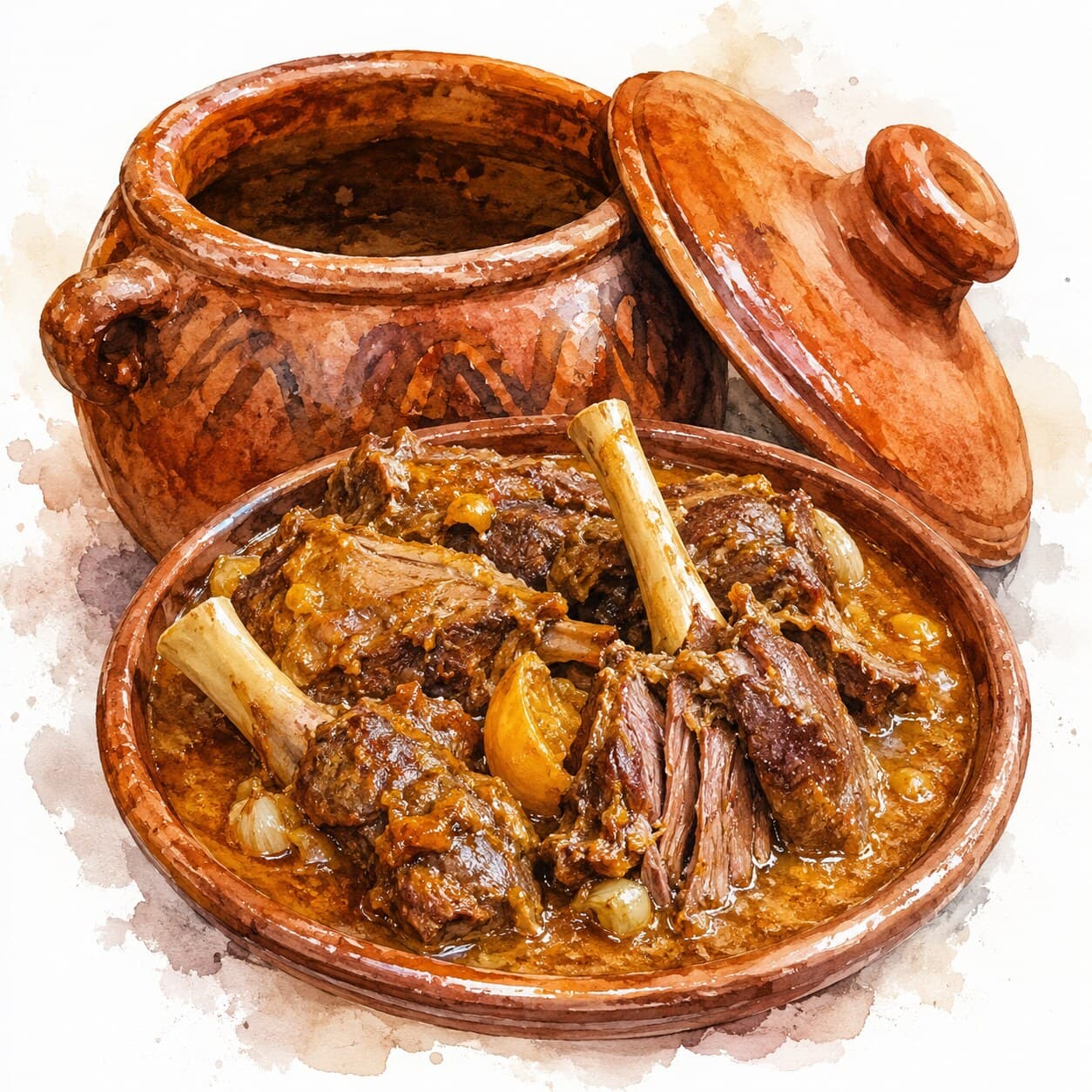
Experience the rich flavors of Marrakech with this slow-cooked Tanjia, traditionally prepared in a clay urn.
Contents (5 sections)▾
Ingredients
- 1 kg beef or lamb, cut into large chunks
- 2 preserved lemons, quartered
- 2 tsp ground cumin
- 100 g smen (preserved butter)
- 1 pinch saffron threads
- 4 cloves garlic, minced
- Salt to taste
- Black pepper to taste
Steps
Preheat your Dutch oven over medium heat. Add the smen and allow it to melt, creating a rich base for the meat.
Once melted, add the minced garlic and sauté for 2 minutes until fragrant. This enhances the overall flavor.
Add the chunks of beef or lamb to the pot, browning them on all sides for about 10 minutes. Browning adds depth to the flavor.
Stir in the quartered preserved lemons, ground cumin, saffron, salt, and pepper. Mix well to coat the meat evenly.
Pour in enough water to cover the meat, about 500 ml, then bring to a boil.
Once boiling, reduce the heat to low, cover the pot, and let it slow cook for 6 hours. This method allows the meat to become tender and infused with spices.
Check occasionally, and if the liquid reduces too much, add more water as needed. If it seems too dry, you can always add more liquid to keep it moist.
Why this works
The technique of slow cooking in a single vessel allows the flavors to meld beautifully, creating a rich and aromatic dish. The use of preserved lemons adds a unique tanginess that brightens the hearty meat, while the smen contributes a deep, savory richness. Cooking at a low temperature for an extended period ensures that the meat becomes incredibly tender and absorbs all the spices. If your dish seems too dry midway through cooking, simply add a bit more water to maintain moisture. Remember, the long cooking time is essential for extracting maximum flavor and tenderness, as well as for allowing the saffron to release its color and fragrance fully.
Common mistakes
Rushing the browning step before the long braise.
Target: Brown the beef or lamb chunks on all sides for the full 10 minutes before adding any liquid, even though the meat still has hours of cooking ahead of it.
Why it matters: Browning (the Maillard reaction — the savory browning that happens when a meat's surface gets hot and dry enough) builds a layer of deep, roasted flavor that hours of gentle simmering alone can't create. Skip it, and the finished dish tastes flatter even after a full six-hour cook.
What to do: Give the meat real space in the pot and let each side develop color before turning it, instead of stirring constantly.
Treating "slow cook for 6 hours" as an instruction to keep it at a hard simmer.
Target: Once the pot is covered and cooking, keep the heat low enough that the liquid barely murmurs — an occasional slow bubble, not a rolling boil.
Why it matters: Tanjia is traditionally cooked buried in the steady, gentle heat of hammam (public bathhouse) furnace embers for hours on end. That low, even heat is what melts tough connective tissue into tenderness without drying the meat out. A hard simmer fights that same logic and can leave the meat stringy even after a long cook.
What to do: Check partway through, and lower the heat if you see vigorous bubbling; the surface should only be trembling.
Stopping at the listed cook time instead of checking for doneness.
Target: Judge doneness by whether the meat shreds or falls apart easily under light pressure from a fork, not only by the clock — it should be fully cooked through with no pink or rare color remaining.
Why it matters: Cook times shift with the exact cut, chunk size, and how low your "low" heat really runs, so a pot pulled early can still be tough and undercooked even after several hours. Meat that hasn't reached a fully cooked state isn't ready to serve.
What to do: Pull a piece out and press it with a fork; it should yield and separate easily. If it resists, re-cover and keep cooking, checking the liquid level as you go.
Letting the pot run dry during the long cook.
Target: Check on the pot occasionally over the hours-long cook and top up with a little water if the liquid has reduced too far.
Why it matters: This method depends on a moist, enclosed, slow cook. If the liquid disappears, the bottom can scorch and the meat dries out and toughens instead of turning tender.
What to do: Lift the lid partway through, and if the liquid level looks low, add a splash more water and re-cover promptly.
What to look for
- Meat that shreds or pulls apart easily under the light pressure of a fork, with no pink or rare color remaining. That is the marker of a fully cooked, properly tenderized tanjia; if it resists, it needs more time.
- A liquid that has reduced into a thickened, clingy sauce rather than a thin, watery pool. Hours of slow cooking should concentrate the preserved lemon and spices into a sauce that coats the meat.
- A surface that trembles gently rather than boils in rolling bubbles. That quiet movement throughout the cook is what keeps the meat tender instead of tough.
- A deep golden-brown crust from the initial sear, still visible even after hours of braising. If the meat looks pale and grey rather than browned, the initial sear needed more time or a hotter pan.
A note on history
Tanjia takes its name from the tall clay urn it's traditionally cooked in, and it is strongly associated with Marrakech, where it's often called "the bachelor's dish." According to the common telling, working men without the time or facilities to cook a full meal at home would season the meat themselves, seal it into the urn, and hand it off to the neighborhood hammam (public bathhouse), where it would slow-cook for hours buried in the embers that kept the bathhouse furnace burning, ready to collect after a full day or overnight.
That reliance on the hammam furnace rather than a home oven reflects a broader pattern in Marrakech's old medina (the historic walled city center), where public bathhouses did double duty as slow-cooking ovens for neighbors who lacked one at home. A home version made in a covered pot in a low oven, as here, is a practical stand-in for that same long, gentle, sealed cooking method — it won't taste identical to one buried in hammam ash, but it follows the same principle.
Get the essays in your inbox — free
Weekly notes on flavor, fermentation, and food history — the writing behind the Atlas of Flavor. No spam; unsubscribe anytime.