
Takenoko Gohan
Takenoko Gohan is a Japanese rice dish made with tender bamboo shoots, highlighting seasonal ingredients and flavor infusion techniques.
Contents (5 sections)▾
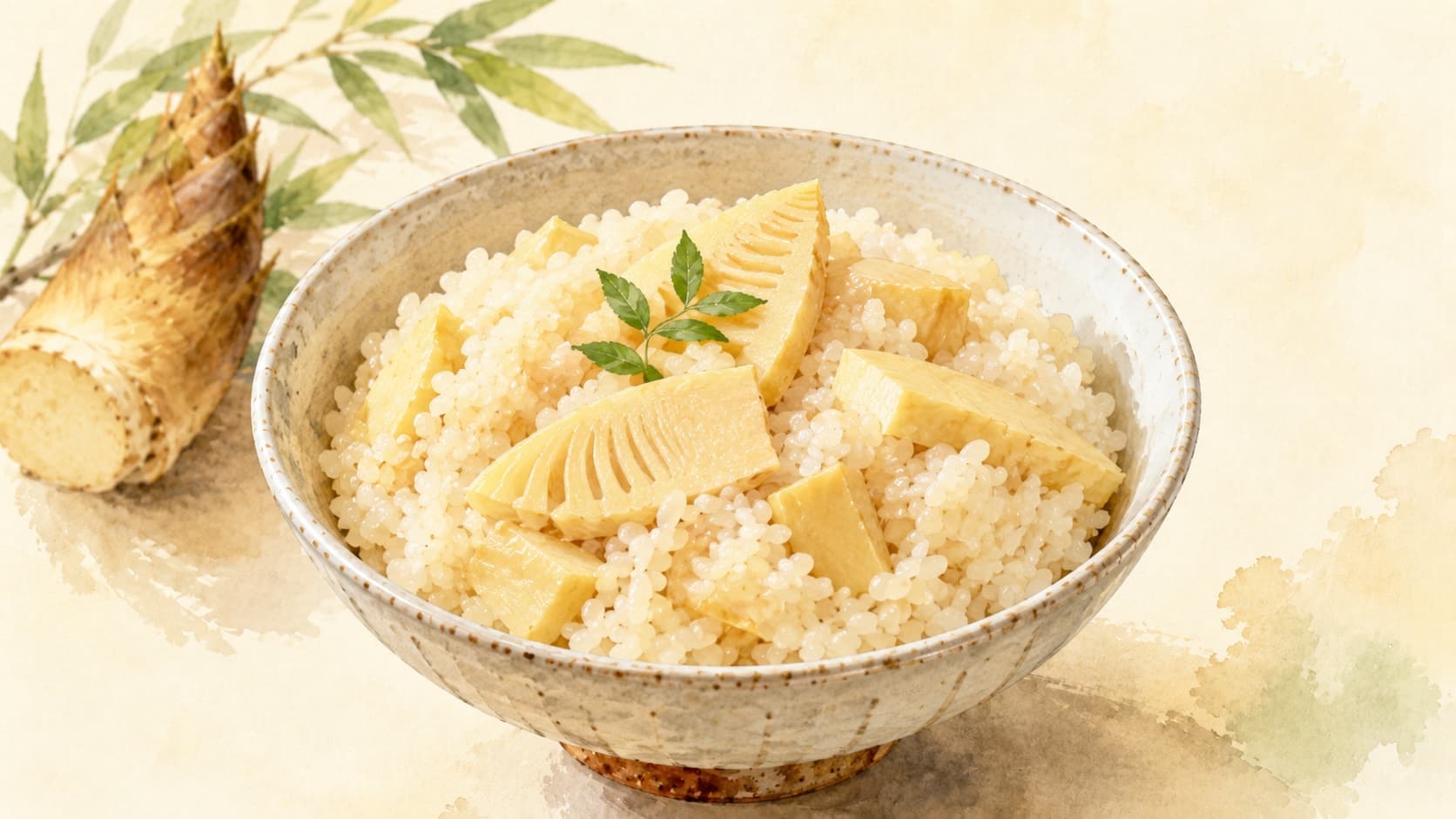
Ingredients
- 300 g Japanese short-grain rice
- 150 g fresh bamboo shoots, sliced
- 100 g green peas, shelled
- 600 ml dashi stock
- 1 tbsp soy sauce
- 1 tbsp mirin
- 2 tbsp sake
- 1 tsp salt
- 2 sprigs of mitsuba (Japanese wild parsley), for garnish
Steps
Rinse the rice under cold water until the water runs clear, about 3-4 washes, to remove excess starch and improve texture.
In a pot, combine the rinsed rice, dashi stock, soy sauce, mirin, sake, and salt. Stir gently to distribute the seasoning evenly.
Add the sliced bamboo shoots and green peas to the pot, layering them on top of the rice mixture.
Cover the pot with a lid and bring to a boil over medium heat. Once boiling, reduce the heat to low and simmer for 12-15 minutes, allowing the rice to absorb the flavors.
After the cooking time, turn off the heat and let the rice sit, covered, for another 10 minutes to allow the steam to finish cooking the rice.
Fluff the rice gently with a fork, then serve in bowls, garnished with mitsuba for a fresh, herbal touch.
Tools you'll want
Why this works
The combination of dashi stock, soy sauce, mirin, and sake creates a rich umami base that enhances the flavors of the bamboo shoots and peas, making for a well-rounded dish. The technique of simmering the rice with the ingredients ensures that each grain absorbs the flavors deeply, resulting in a satisfying texture. If the rice seems too sticky after cooking, allow it to sit uncovered for a few minutes to let some moisture escape, which will improve the grain separation. Additionally, using fresh bamboo shoots adds a crunchy texture and a subtle sweetness that contrasts beautifully with the other ingredients. This recipe captures the essence of spring by celebrating seasonal produce, making it a perfect representative of Japanese 'takikomi-gohan' or mixed rice dishes, where rice is cooked with various ingredients for enhanced taste and texture.
Common mistakes
- Skipping the pre-boil on raw bamboo shoots. Fresh takenoko (Japanese bamboo shoot, harvested as the new stem pushes up from the soil in spring) is bitter and astringent until it has been simmered with rice bran or rice-washing water; that pre-boil is non-negotiable.
- Target: simmer the whole peeled shoot in water with a handful of nuka (rice bran — the brown outer layer left from polishing white rice, sold in bags at Japanese stores) or rice-rinse water plus a couple of dried chilies for 45–60 minutes, then cool in the same liquid before slicing for this dish.
- Why it matters: raw bamboo shoots contain harsh-tasting homogentisic and oxalic acids, and trace cyanogenic glycoside (taxiphyllin) — bitter compounds that boiling with nuka removes. Untreated shoots taste sharp and chalky and leave a scratchy aftertaste.
- What to do: Either pre-boil your own that morning, or use shoots already labelled "yude-takenoko" (boiled) from the store. Rinse off any residual bran and squeeze gently before adding to the rice.
- Cutting the shoot too thick or all in one shape. Big chunks finish raw at the heart while the rice is done.
- Target: thin slices about 3–5 mm for the tender top half, and finer julienne or quartered fans for the firmer base; everything roughly the size of a fingernail.
- Why it matters: the tip is tender and sweet, the base is dense and woody — they want different cuts. Even thickness across pieces means the dashi gets in and the texture is consistent.
- What to do: Split the shoot lengthwise and work top-down: tip into wedges, middle into thin half-moons, base into matchsticks. Discard anything tough at the very root end.
- Using soft, white "salad" peas in place of shelled green peas. Soft peas dissolve in the steam and turn grey-green.
- Target: fresh shelled green peas, blanched 60 seconds in salted water, shocked in ice water, then folded in only after the rest.
- Why it matters: under 25 minutes of moist heat, raw peas go drab and floury. Blanching sets the colour at bright spring green, and folding them in after the rest keeps them whole.
- What to do: Blanch and shock the peas while the rice rests under the lid. Fold them in with the mitsuba at the last fluff so they stay bright.
- Stirring the rice while it's still steaming under the lid. The grains break, and the bamboo crushes against them.
- Target: lid stays on through the full 10-minute rest off heat; first stir uses a shamoji (flat wooden or plastic rice paddle used to fluff cooked rice without crushing the grains) in cutting strokes, not a circular mix.
- Why it matters: rest finishes the cook and dries the surface of each grain; an early stir makes the rice gummy. Cutting strokes — bring the bottom layer up, fold over — keep the bamboo intact and the rice fluffy.
- What to do: Set a timer. Once it goes, lift the lid, run a wet shamoji once around the inside edge, then cut and fold in four or five quick motions.
What to look for
- A clear, savory steam with a faint earthy sweetness when you finally lift the lid — bamboo's signature is woody-sweet, not sharp.
- Bamboo slices that hold their shape and have absorbed the dashi to a pale tea colour all the way through.
- Rice grains tinted a uniform light gold, with a glossy sheen and no scorch at the bottom — okoge (the thin, intentionally toasted rice crust at the bottom of clay-pot rice, prized when tan but not burnt) here should be a thin tan ring, not black.
- A clean, herbal lift from the mitsuba in the bowl — if you can't smell it, the rice is too hot; let it sit half a minute and try again.
A note on history
Takenoko gohan is a classic Japanese spring dish, registered as a regional cuisine in Kyoto and other prefectures, and tied to the brief season when fresh moso bamboo shoots push up through the soil. The mōsō bamboo most often used today is thought to have been introduced from China to Satsuma — modern Kagoshima — in the mid-Edo period via the Ryūkyū Islands, and spread northward from there. By the Edo period the dish was already established as home cooking, and into the early twentieth century neighbourhoods in central Tokyo like Meguro were known for serving takenoko gohan with shoots dug from their own local groves.
Get the essays in your inbox — free
Weekly notes on flavor, fermentation, and food history — the writing behind the Atlas of Flavor. No spam; unsubscribe anytime.