
Tagine de Poulet aux Olives et Citron
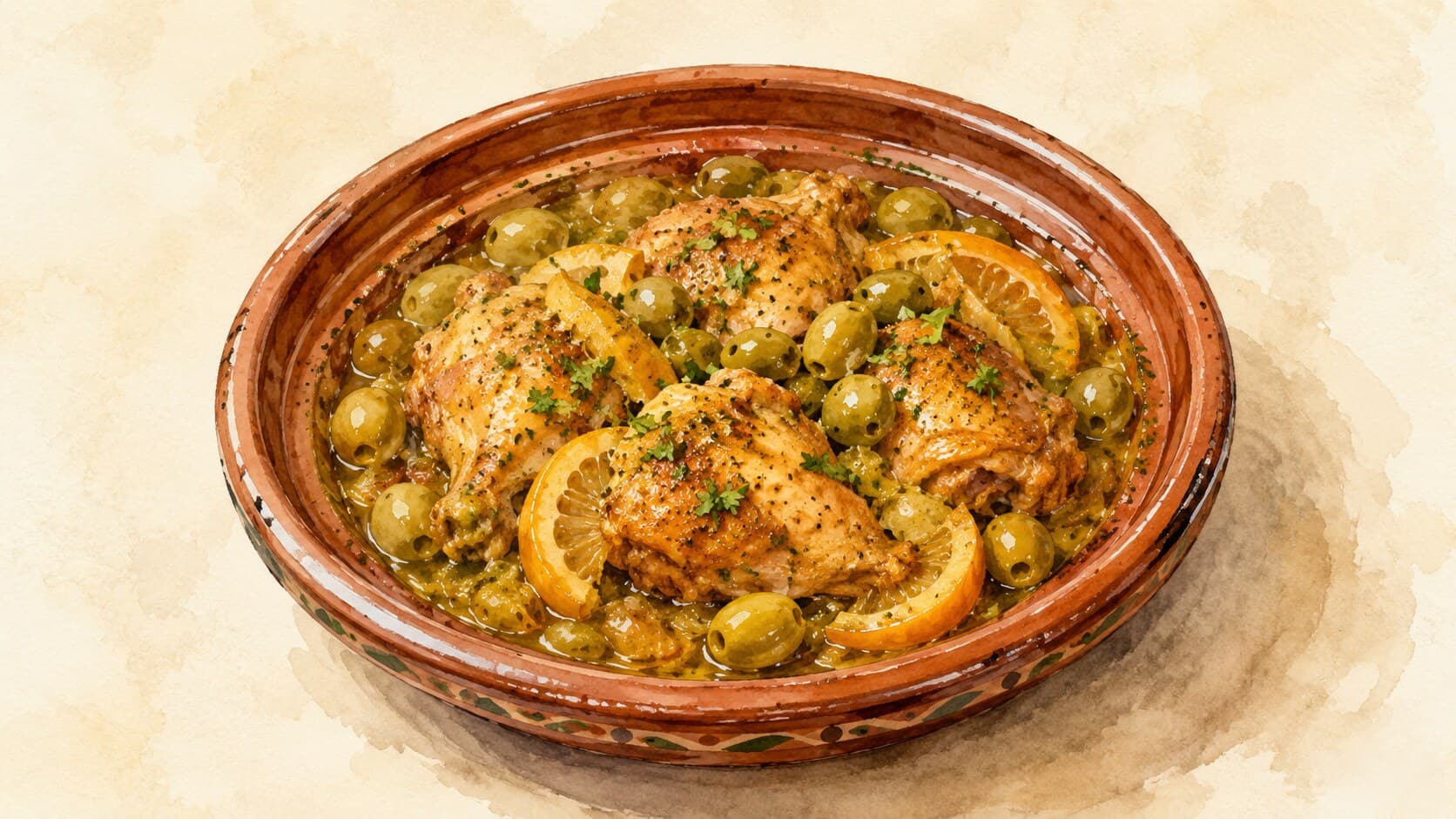
Moroccan chicken tagine slow-braised with olives and preserved lemons, showcasing techniques of flavor layering and ingredient pairing.
Contents (5 sections)▾
Ingredients
- 1 kg chicken thighs, bone-in and skin-on
- 2 tbsp olive oil
- 1 large onion, finely chopped
- 3 cloves garlic, minced
- 2 tsp ground cumin
- 1 tsp ground coriander
- 1/2 tsp ground cinnamon
- 1/2 tsp ground ginger
- 1 1/2 cups chicken broth
- 2 preserved lemons, quartered
- 200 g green olives, pitted
- Salt to taste
- Fresh cilantro, for garnish
Steps
Heat olive oil in a tagine or heavy pot over medium heat. Add the chopped onion and cook until translucent, about 5 minutes, to develop flavor.
Add minced garlic, cumin, coriander, cinnamon, and ginger, stirring for 1-2 minutes until fragrant. This helps release the essential oils in the spices.
Increase the heat to medium-high and add chicken thighs skin-side down. Brown for 5-7 minutes until golden. Browning enhances the dish's depth.
Pour in chicken broth, ensuring the chicken is mostly covered. Add preserved lemons and olives. Season with salt. Bring to a simmer.
Cover the tagine and reduce heat to low. Let it slow-braise for 1 hour, stirring occasionally, to allow flavors to meld and the chicken to tenderize.
Once the chicken is tender and falling off the bone, remove from heat. Garnish with fresh cilantro before serving. Serve hot with couscous or bread.
Why this works
This recipe captures the essence of Moroccan cuisine through the technique of slow-braising, which allows the chicken to absorb the vibrant flavors of preserved lemon and green olives. The process starts with browning the chicken, creating a rich base that enhances the overall flavor. Slow-braising at low heat for an extended period tenderizes the meat while infusing it with the aromatic spices. If the sauce seems too thin, you can remove the chicken once it's cooked and reduce the liquid over medium heat until thickened. Conversely, if the chicken is dry, ensure it is covered adequately during cooking to retain moisture. The combination of spices like cumin and coriander contributes to a warm, earthy flavor, while the preserved lemons add a unique tanginess that balances the dish beautifully.
Common mistakes
-
Adding the preserved lemon at the start.
- Target: add the rind in the last 20-30 minutes of the braise, never at the beginning.
- Why it matters: preserved lemon (whole lemons salt-cured for weeks until the rind softens and the flavour turns deeply floral) is already cured and intensely salty-sour. An hour of simmering blows out its perfume, leaves a bitter pith note, and saturates the entire pot with one-dimensional saltiness.
- What to do: rinse the rind, scrape off the pulp if you want it cleaner, slice or quarter, and stir into the braise late. The aromatic top note should still be present when you bring the tagine to the table.
-
Salting the chicken as if there's no preserved lemon and no olives.
- Target: light salt on the chicken at the brown, no salt added afterwards until you taste at the end.
- Why it matters: both preserved lemons and brine-cured olives release significant salt during the long cook. Pre-salting on top of them gives you a stew that finishes 2-3 times too salty.
- What to do: salt the chicken lightly to help the brown, then leave the seasoning alone. Adjust at the very end if the sauce still needs it.
-
Boiling instead of barely simmering.
- Target: the lid trembles, condensation runs back down the cone, surface bubbles are slow and small. About 90°C (195°F).
- Why it matters: the tagine's cone is designed to recycle moisture. A hard boil pumps that moisture out the seam, dries the bird, and reduces the sauce too far before the chicken is tender. Chicken cooks slow in the conical tagine until tender — past safe temp.
- What to do: start on medium-low, never above a gentle bubble. Lift the lid as little as possible. The braise wants 60-90 minutes of patience, not heat.
-
Browning skin-on chicken in a thin layer of cold oil and walking away.
- Target: golden, crisp skin on the first cooking face — surface deeply coloured, not greyish.
- Why it matters: the browning is your only deep-savoury anchor in a pot otherwise dominated by acid, salt, and brightness. Skipping it leaves the dish bright but hollow.
- What to do: dry the chicken thoroughly, heat the oil until it shimmers, place skin-side down, and don't move for 5-7 minutes. Brown in batches if the pan is crowded.
What to look for
- A sauce the colour of dark egg yolk — gold-yellow with a faint green edge from the olives — clinging to the back of a spoon without being thick.
- Chicken so tender the meat parts from the bone with light pressure from a fork, with skin still intact rather than disintegrating.
- A sharp, distinctly floral lemon perfume that hits first, then a warm cumin-and-ginger base, then the briny pop of green olive at the back of the palate.
- A small slick of clear oil on top of the sauce — not a heavy grease layer — confirming the braise reduced but didn't break.
A note on history
Tagine cookery is rooted in the Berber (Amazigh) traditions of North Africa, with the conical earthenware vessel — also called a tagine, the lid's tall cone catching steam and returning it to the pot — designed to recycle moisture during long, slow cooking. Over centuries the dish absorbed influences from Arab, Andalusi (especially after the 15th-century expulsions from al-Andalus), Ottoman, and French colonial cooking. The chicken-with-preserved-lemon-and-olives combination is one of the canonical pairings of modern Moroccan cuisine; preserved lemons themselves (l'hamd m'rakad) are a North African staple — fresh lemons cured for weeks in salt and their own juices, prized for an intensely floral rind that cannot be reproduced with fresh lemon.
Get the essays in your inbox — free
Weekly notes on flavor, fermentation, and food history — the writing behind the Atlas of Flavor. No spam; unsubscribe anytime.