
Stuffed Peppers
Stuffed peppers filled with a mixture of grains, protein, and spices, then roasted until tender. This dish showcases stuffing and flavor balancing techniques.
Contents (5 sections)▾
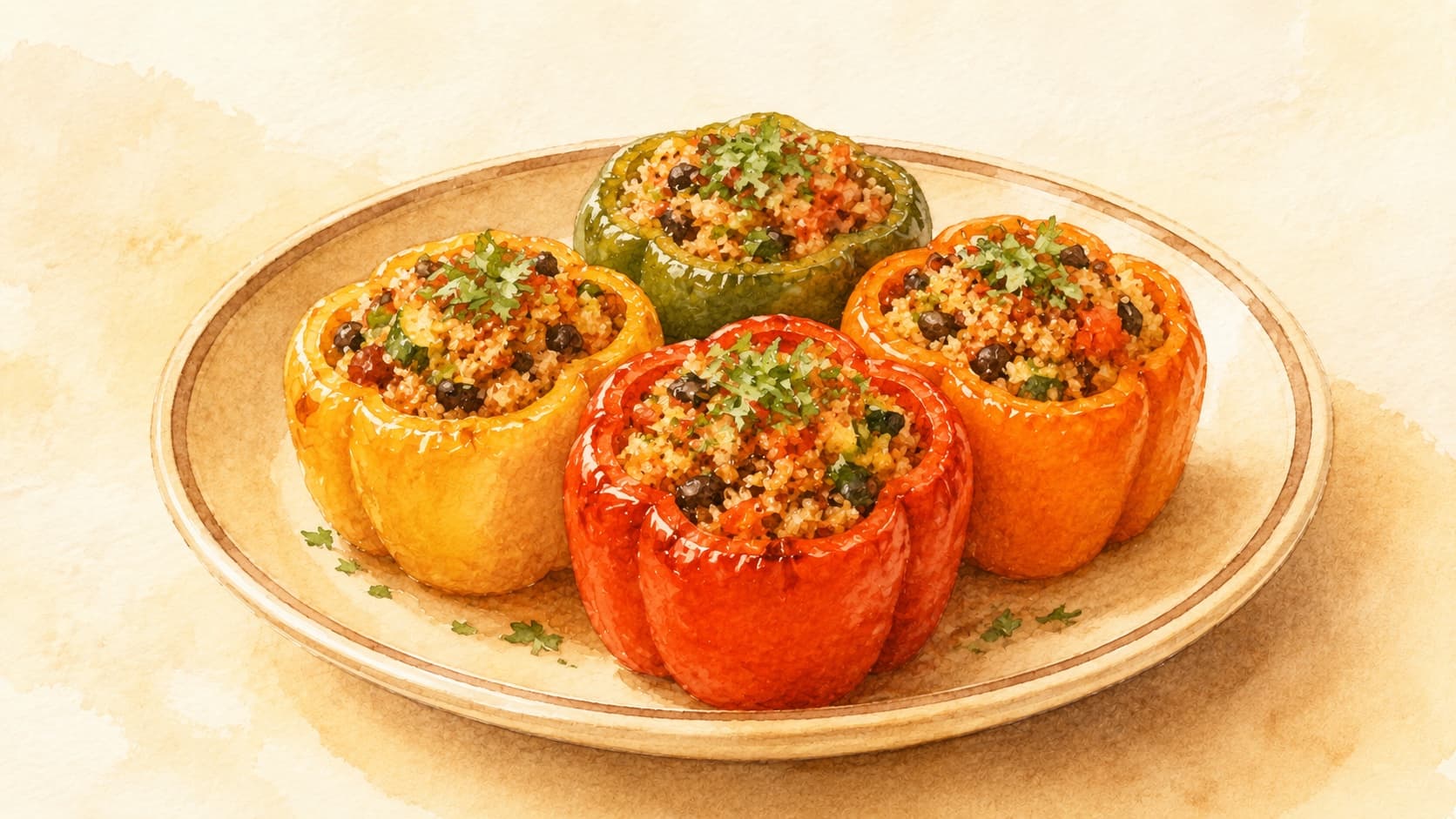
Ingredients
- 4 large bell peppers (any color)
- 300 g minced beef
- 100 g cooked rice
- 1 medium onion, finely chopped
- 2 cloves garlic, minced
- 150 g canned diced tomatoes
- 1 tsp smoked paprika
- 1 tsp dried oregano
- Salt to taste
- Pepper to taste
- 50 g shredded cheese (optional)
- 2 tbsp olive oil
Steps
Preheat your oven to 180°C (350°F). This ensures that the peppers cook evenly and the flavors meld beautifully.
Cut the tops off the bell peppers and remove the seeds and membranes. This allows for easy stuffing and ensures the flavors penetrate the pepper.
In a skillet, heat olive oil over medium heat. Sauté the chopped onion and garlic until translucent, about 5 minutes.
Add minced beef to the skillet and cook until browned, about 7-10 minutes. Drain excess fat if necessary.
Stir in cooked rice, canned tomatoes, smoked paprika, oregano, salt, and pepper. Cook for an additional 5 minutes to combine the flavors.
Stuff each pepper generously with the meat and rice mixture. If desired, top with shredded cheese for added flavor.
Place the stuffed peppers upright in a baking dish and add a splash of water to the bottom. Cover with foil and bake for 25 minutes.
Remove the foil and bake for an additional 10 minutes to allow the cheese to melt and the tops to brown slightly.
Why this works
Stuffed peppers are a delightful one-pan dish that brings together a medley of flavors and textures, making them a favorite in modern global cuisine. The bell peppers serve as a vessel, encapsulating the savory filling of minced beef, rice, and herbs. Cooking the filling beforehand ensures the flavors meld together, while the moisture from the peppers keeps the filling from drying out. If the peppers seem too firm after baking, you can add a little more water to the baking dish and cover them for a few additional minutes to steam them. The addition of cheese on top enhances flavor and creates a deliciously gooey texture that contrasts with the crunch of the peppers. This dish is versatile, allowing for substitutions in the stuffing based on personal preferences or dietary restrictions while maintaining its core appeal.
Common mistakes
-
Skipping the meat browning before stuffing.
- Target: ground beef cooked through to 70-74°C (160-165°F) before the peppers go in the oven, with deep brown bits clinging to the pan.
- Why it matters: the bake time isn't long enough to fully cook raw ground beef inside a thick pepper. You need both the pre-cook AND the oven, not one or the other.
- What to do: brown the beef hard in the skillet for at least 7-10 minutes, breaking it up. Drain excess fat, then finish the filling in the same pan.
-
Filling cold raw meat into the peppers and crossing your fingers.
- Target: filling is hot, seasoned, and tasted before it goes into the shells.
- Why it matters: raw filling means you're betting on the oven to cook beef, rice, and the pepper wall all at the same time — and the centre of the filling is the slowest zone. Internal temperature on a probe should still hit 70-74°C at the centre after baking.
- What to do: pre-cook the filling, taste it, adjust salt and acid, then stuff. After the bake, probe the densest pepper at the centre to confirm 70°C+.
-
Underseasoning because "the cheese will carry it."
- Target: filling should taste fully seasoned on its own — slightly salty, acid-bright from the tomato, smoky from the paprika (here, smoked paprika — Spanish pimentón made from peppers dried over oak smoke, contributing the dish's deep smoky note).
- Why it matters: the pepper's own water dilutes the seasoning during the bake, and cheese can only mask so much.
- What to do: salt the meat as it browns, taste the finished filling cold, and adjust before stuffing. Add a squeeze of lemon or a splash of vinegar if it's flat.
-
Baking the peppers dry on a bare tray.
- Target: at least a 1 cm pool of water (or stock, or thinned tomato) in the baking dish, foil sealed for the first 25 minutes.
- Why it matters: a covered, steamy environment softens the pepper walls and keeps the filling moist. Bare-baked peppers turn leathery on top while the bottom flesh stays squeaky.
- What to do: liquid in the dish, foil on for the first stretch, then uncover for the last 10 minutes to brown.
What to look for
- The pepper walls have given up their squeak and now collapse slightly when pressed with the back of a spoon, but still hold their shape on the plate.
- A faint cap of darker browning where the filling meets air — or a melted, blistered cheese top — not a uniformly pale stuffed pepper.
- A clear, fragrant juice pools at the bottom of the dish: tomato red, smelling of paprika and pepper, not raw or watery.
- A knife glides through the pepper wall and filling in one motion, with no resistance at the centre and no pink streaks in the meat.
A note on history
Stuffed peppers belong to a much wider Eurasian family of stuffed-vegetable dishes — the Turkish dolma (literally "stuffed" — a family of dishes where vegetables or leaves are filled with a seasoned grain-and-meat mixture) tradition, which spread across the former Ottoman world, including the Balkans and Hungary, where it became töltött paprika. Many food historians credit the Ottoman Turks with bringing the technique to Hungary in the 16th and 17th centuries, after which Hungarians made the dish so thoroughly their own that one of the long sweet pepper varieties is simply called tölteni való paprika — "peppers for stuffing." The capsicum itself, of course, came back from the Americas after 1492, so the dish as we know it is a true crossroad of Mesoamerican ingredient and Mediterranean technique.
Get the essays in your inbox — free
Weekly notes on flavor, fermentation, and food history — the writing behind the Atlas of Flavor. No spam; unsubscribe anytime.