
Spanakorizo
Spanakorizo is a Greek dish combining rice and spinach, seasoned with dill and lemon to enhance flavor and aroma.
Contents (5 sections)▾
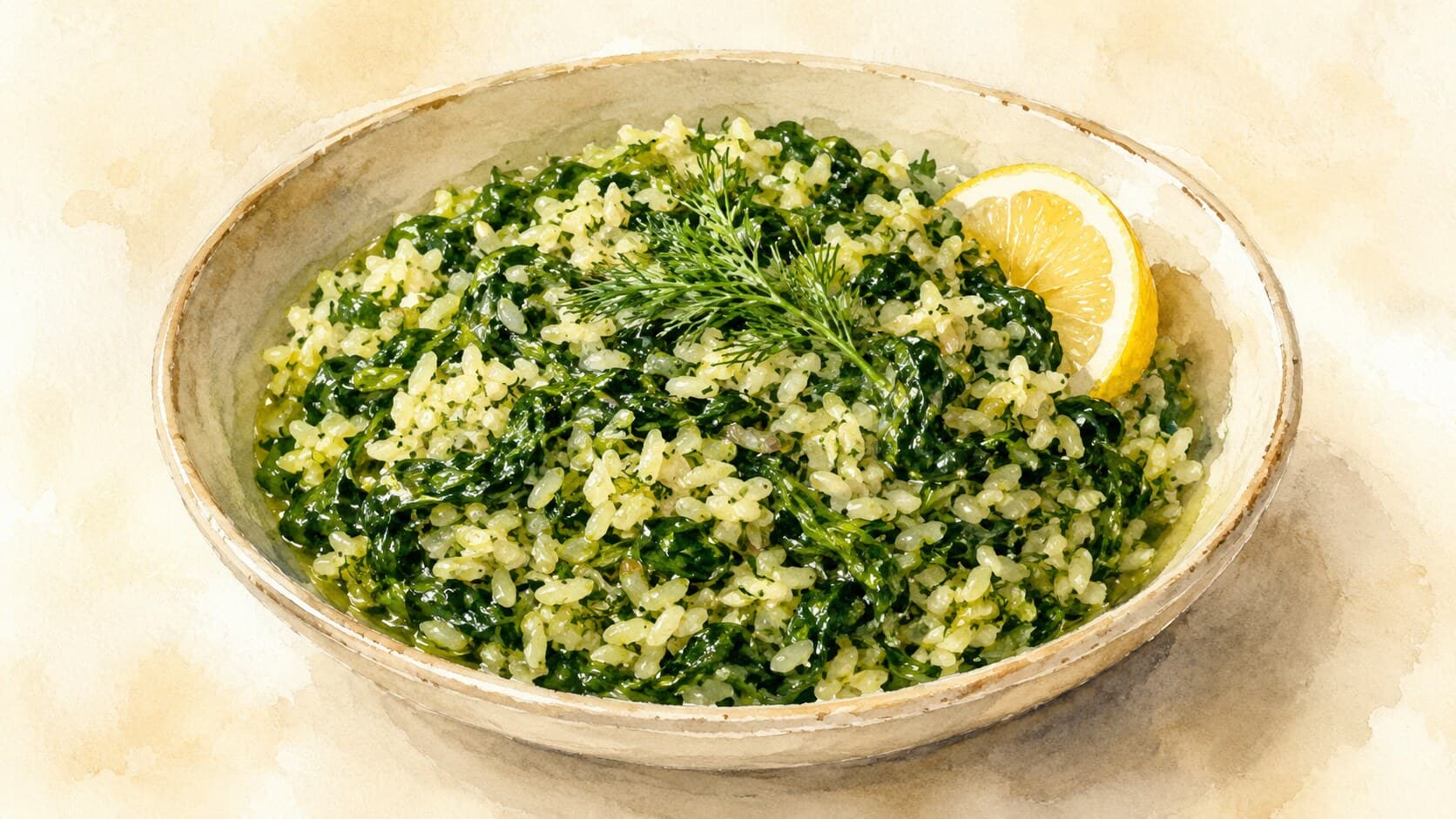
Ingredients
- 200 g rice
- 400 ml water
- 300 g fresh spinach, chopped
- 1 medium onion, finely chopped
- 2 tbsp olive oil
- 1 clove garlic, minced
- 1 tbsp fresh dill, chopped
- 1 lemon, juiced and zested
- Salt to taste
- Pepper to taste
Steps
In a large pot, heat the olive oil over medium heat. Add the chopped onion and minced garlic, cooking until the onion is translucent, about 3-4 minutes.
Stir in the rice and cook for an additional 2 minutes, allowing it to absorb some of the oil and flavors.
Add the water, salt, and pepper. Bring to a boil, then reduce the heat to low, cover, and simmer for 10 minutes or until the rice is tender.
Once the rice is cooked, gently fold in the chopped spinach, dill, lemon juice, and zest. Cook for an additional 2-3 minutes until the spinach wilts and everything is heated through.
Serve warm, drizzled with a little more olive oil and a lemon wedge on the side for extra freshness.
Why this works
Spanakorizo is a quintessential one-pot dish that combines the earthy flavors of spinach and the nutty characteristics of rice, creating a harmonious blend. The cooking process allows the rice to absorb the flavors of the onion and garlic while the spinach adds a vibrant color and texture. The addition of dill and lemon provides a refreshing contrast, enhancing the overall taste profile. If the rice seems too dry during cooking, add a bit more water, a few tablespoons at a time, to ensure it cooks evenly without burning. This technique helps to achieve a perfectly moist, flavorful dish while minimizing cleanup, making it ideal for busy days or Lenten meals.
Common mistakes
-
Adding lemon too early.
- Target: lemon juice goes in at the very end, off the heat.
- Why it matters: acid added at the start makes rice cook unevenly — the grains stay slightly hard at the centre because the acid interferes with starch swelling. The fresh, bright top-note also dulls under prolonged heat.
- What to do: finish with lemon juice and zest after the rice is tender and the spinach is wilted; stir, taste, adjust.
-
Skimping on olive oil.
- Target: a generous glug — this is a ladera dish (Greek vegetable-and-olive-oil one-pots where the oil itself is part of the dish, not just a cooking medium), where the oil is part of the structure, not a coating.
- Why it matters: the olive-oil base carries the alliums, coats the rice, and gives the finished dish its characteristic mouthfeel. A reduced-oil version turns dry and "righteous" instead of tender and round.
- What to do: use 4-5 tablespoons of olive oil for a 200 g rice base, sweat the onion in it slowly, and don't be afraid of a slick on top at the finish.
-
Throwing raw spinach in at the start.
- Target: add spinach in stages, or near the end of the rice cook.
- Why it matters: spinach added at the start cooks into a grey, slimy mat by the time the rice is ready, and the bright green colour and texture both disappear.
- What to do: wait until the rice has been simmering for about 8 minutes, then fold the spinach in by handfuls; it wilts down into the hot rice in 2-3 minutes.
-
Lifting the lid to check.
- Target: cover and leave alone for the full simmer; let the rice rest covered for 5-10 minutes off the heat.
- Why it matters: every lid-lift releases the steam doing the work, and the rice cooks unevenly — gummy on the bottom, undercooked on top.
- What to do: trust the timer; if you must check, do it once. The rest off-heat finishes the absorption and gives you fluffy, separate grains.
What to look for
- the onion fully softened and translucent before any rice goes in — that's the flavour foundation laid down.
- rice grains looking glossy and slightly translucent after the toast step in oil — toasted enough to hold their shape through the simmer.
- the spinach a clear, bright green when first folded in, dulling only slightly as it wilts — added at the right moment, not too early.
- a finished pot where you can drag a spoon and the rice falls back into the gap as separate grains, not as a paste — properly cooked, properly rested.
A note on history
Spanakorizo (Greek spinach rice — a simple one-pot of rice simmered with greens, dill, and lemon) is a classic Greek ladera dish — the family of vegetable-and-olive-oil preparations that anchor everyday Greek home cooking and the Lenten table. The name is exactly what it says: spanaki (spinach) plus rizi (rice). Both ingredients have very old presences in Greek cooking; rice is documented in the region since antiquity, and spinach reached the eastern Mediterranean via Middle Eastern trade routes in the medieval period. The dish itself sits squarely in the ladera tradition of slow-cooked, olive-oil-based vegetable dishes that can be served warm or at room temperature.
Get the essays in your inbox — free
Weekly notes on flavor, fermentation, and food history — the writing behind the Atlas of Flavor. No spam; unsubscribe anytime.