
Souvlaki
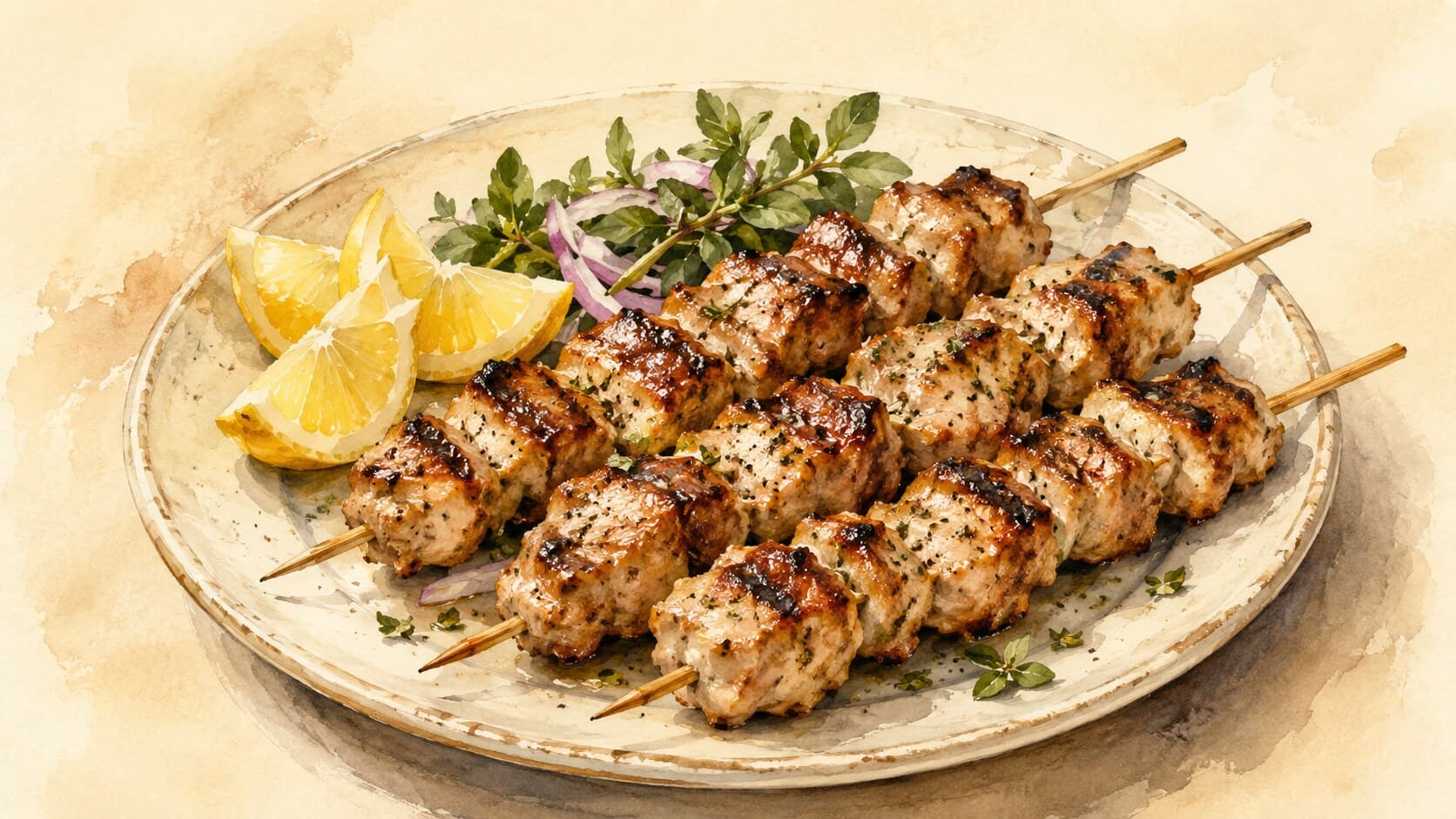
Souvlaki consists of marinated pork or chicken skewers grilled over high heat. It is a traditional Greek dish commonly served with pita and sauces.
Contents (5 sections)▾
Ingredients
- 500 g pork shoulder, cubed
- 4 tbsp olive oil
- 2 tbsp red wine vinegar
- 2 cloves garlic, minced
- 1 tsp dried oregano
- 1 tsp salt
- 1/2 tsp black pepper
- 1 lemon, juiced
- 4 pita breads
- tzatziki, for serving
- lemon wedges, for serving
Steps
In a bowl, combine olive oil, red wine vinegar, minced garlic, oregano, salt, black pepper, and lemon juice. Mix well to create the marinade.
Add the cubed pork to the marinade and stir to coat. Cover and refrigerate for at least 1 hour (or up to overnight) to allow flavors to develop.
Preheat the grill to medium-high heat (about 200°C / 400°F). If using a stovetop, heat a grill pan over medium-high heat.
Thread the marinated pork onto skewers, leaving space between each piece for even cooking.
Grill the skewers for about 10-15 minutes, turning occasionally, until the pork is nicely charred and cooked through (internal temperature should reach 70°C / 160°F).
Serve the souvlaki hot with warm pita bread, tzatziki, and lemon wedges.
Why this works
The key to great souvlaki lies in the marinade, which infuses the meat with tangy and aromatic flavors and helps tenderize it for grilling. The olive oil in the marinade coats the meat and helps it brown evenly; the pork stays juicy as long as you don't overcook it, even at high heat. The acid from the vinegar and lemon juice breaks down proteins, making the meat more tender. When grilling, aim for a medium-high temperature to achieve a nice char while cooking the meat through. If the skewers seem to burn too quickly, you can lower the heat or move them to a cooler part of the grill. Alternatively, if the meat appears too dry after cooking, serve it with a generous dollop of tzatziki, which adds moisture and a refreshing contrast to the savory meat. Consistent turning of the skewers is essential to achieve an even cook and avoid charring one side too much, providing a balanced flavor and texture.
Common mistakes
-
Trusting the marinade as if it pasteurised the meat.
- Target: internal temperature of 63°C / 145°F for pork shoulder; 74°C / 165°F for chicken. Check with an instant-read thermometer.
- Why it matters: acidic marinades flavour and tenderise the surface, but they do not cook the inside. Pork or chicken pulled "by feel" before it hits temperature is a real foodborne illness risk.
- What to do: marinate for flavour, grill for safety. Probe the thickest cube on each skewer; pull when the target is hit.
-
Marinating too long, so the surface turns mushy.
- Target: 1-12 hours for pork shoulder; 30 minutes to 4 hours for chicken thigh. Don't go beyond a day.
- Why it matters: the acid in lemon and vinegar denatures the outer layer of meat. Past a point that layer turns from "tender" to "mealy and grey" — and no amount of grilling will fix it.
- What to do: if you want longer marination, dilute the acid (more oil, less lemon/vinegar) or marinate dry with the herbs and add the acid in the last hour.
-
Cubes too small or unevenly cut.
- Target: roughly 3 cm / 1¼ inch cubes, all about the same size.
- Why it matters: small cubes are dry by the time they're cooked through; mixed sizes mean some pieces are raw while others are leather.
- What to do: trim and cube before marinating; on the skewer, alternate the same-sized pieces and leave a small gap between each for heat circulation.
-
Crowding the skewers tight against each other so the meat steams.
- Target: leave a small finger of space between cubes on each skewer.
- Why it matters: when cubes touch, the contact faces never sear, the juices pool, and you get a boiled-meat texture instead of grilled.
- What to do: thread loosely; the cubes should be friends, not crammed.
What to look for
- a deep mahogany-and-charred surface with at least a few dark crusty edges — that's the Maillard browning (the chemical reaction between proteins and sugars at high heat that creates roasted color and savory aroma) that defines the dish.
- clear or very faintly pink juices running from the cube when pressed, not red — visual back-up for your thermometer.
- the meat just barely yielding when nudged with tongs, not bouncing — texture cue that it's done but not overcooked.
- a quiet sizzle continuing for 10-15 seconds after you pull a skewer off the grill — carry-over heat finishing the inside while the outside rests.
A note on history
Souvlaki (small skewers of grilled marinated pork or chicken — Greek street food) is one of the oldest documented Greek dishes. The word is a diminutive of souvla (skewer); in ancient Greek the skewered meat itself was called obeliskos (ὀβελίσκος), referenced in Homer's Iliad and in later writers like Aristophanes and Athenaeus. Excavations at Akrotiri on Santorini have uncovered stone barbecue sets fitted with skewers that date to the late Bronze Age — strong physical evidence that grilling small cubes of meat on sticks has been part of the Aegean food culture for well over three thousand years.
Get the essays in your inbox — free
Weekly notes on flavor, fermentation, and food history — the writing behind the Atlas of Flavor. No spam; unsubscribe anytime.