
Sopes
Delight in homemade sopes topped with savory ingredients for a perfect Mexican snack.
Contents (5 sections)▾
Ingredients
- 2 cups masa harina
- 1/2 cup warm water
- 1/2 teaspoon salt
- 1 cup refried beans
- 1 cup shredded cooked meat (chicken or beef)
- 1/2 cup shredded lettuce
- 1/2 cup crema
- 1/2 cup crumbled queso fresco
- Cooking oil for frying
- Salsa to taste
Steps
In a mixing bowl, combine masa harina, warm water, and salt. Knead until a smooth dough forms, about 5 minutes.
Divide the dough into 8 equal balls. Flatten each ball into a disc about 1/2 inch thick.
Heat a skillet over medium heat and cook each disc for 2-3 minutes on each side until slightly golden and firm.
Using your fingers, pinch the edges of each disc to create a raised border, forming a small rim.
In a frying pan, heat oil over medium-high heat and fry the prepared sopes for 1-2 minutes on each side until crispy.
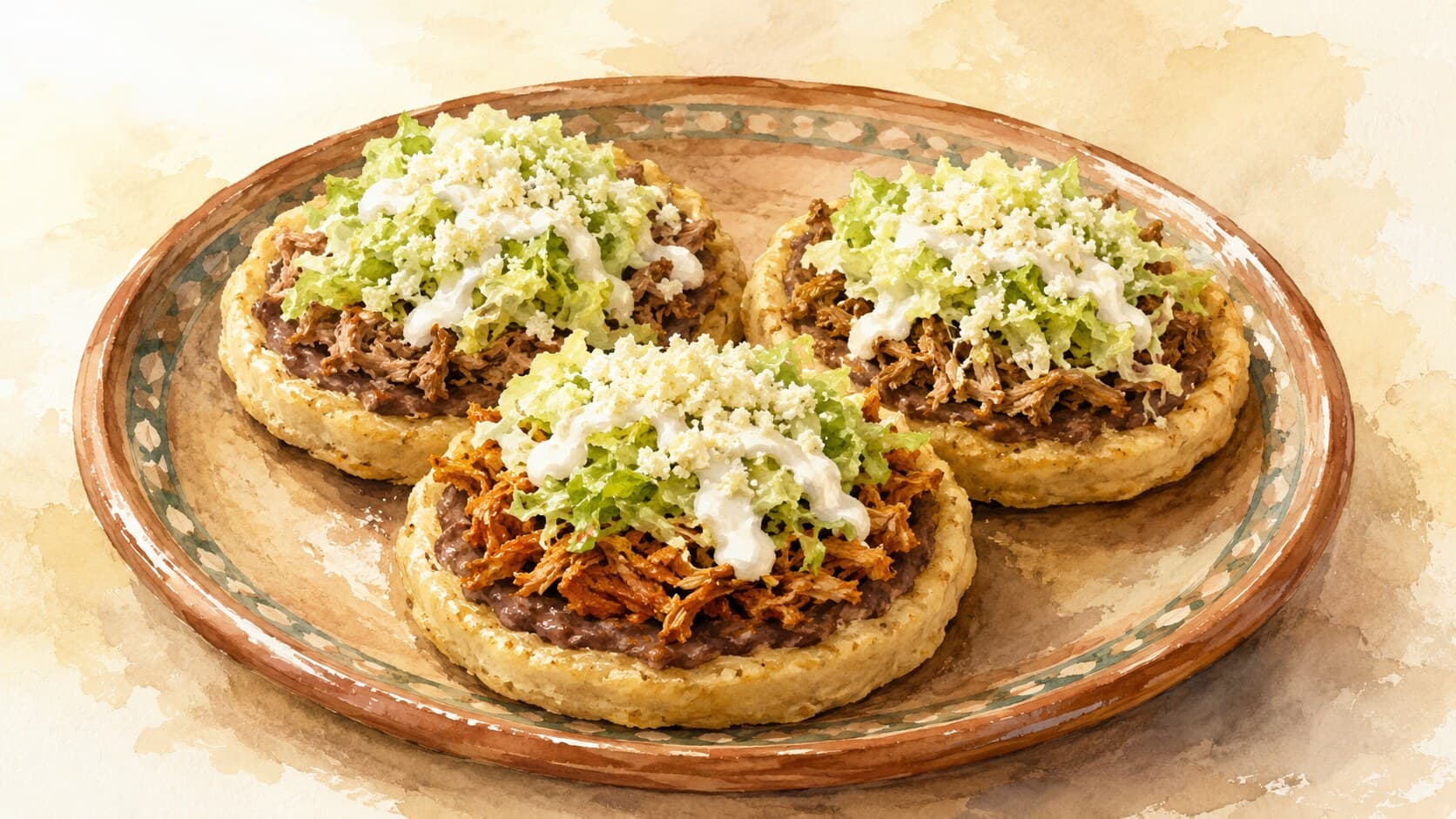
Spread a layer of refried beans on each sope, then top with shredded meat, lettuce, crema, and queso fresco.
Serve immediately with salsa on the side.
Why this works
This recipe for sopes combines the technique of forming thick masa discs with the art of frying them to achieve a crispy base. The masa harina, when mixed with water and salt, creates a dough that is easy to handle and forms the foundation of the dish. The key is to cook the discs on a skillet before frying them, which helps to set their structure. If the masa seems too dry and crumbly, add a little more water until a smooth dough forms. If the edges break while pinching, simply reshape them and ensure they’re adequately thick to hold the toppings. Frying them in hot oil ensures they become golden and crispy, providing an excellent contrast to the toppings' creaminess. This balance of textures is essential for a satisfying bite, making sopes a street food snack. The toppings can be varied to personal taste, allowing for creativity while maintaining the traditional essence of the dish.
Common mistakes
-
Dough too dry, crumbling at the edges.
- Target: the masa (corn dough made from masa harina, the dried nixtamal-corn flour used for tortillas) should feel like soft playdough — pliable, holding a fingerprint, not cracking when you press the rim.
- Why it matters: dry dough cracks when you pinch the border, and those cracks become escape routes for beans and crema. The sope becomes a flat disc instead of a holding dish.
- What to do: add warm water a tablespoon at a time, kneading after each addition. Cover the bowl with a damp towel between batches so the surface doesn't dry while you work.
-
Pinching the rim before the base is cooked.
- Target: par-cook the disc on the dry skillet first (until matte and just set), then pinch the rim while still warm.
- Why it matters: raw masa tears easily and the rim collapses under the weight of toppings. A briefly cooked disc has enough structure to hold a defined border.
- What to do: cook each disc 2-3 minutes per side, lift, and immediately pinch the edge up with your fingertips while it's still hot and pliable.
-
Frying in oil that's too cool.
- Target: oil should shimmer and a small pinch of masa should sizzle on contact — roughly 175°C / 350°F.
- Why it matters: cool oil seeps into the masa and produces a greasy, leaden sope instead of a crisp shell. The exterior never crisps and the interior stays gummy.
- What to do: test with a corner of masa before the first sope goes in; if it just sits there, wait. Fry in small batches so the temperature doesn't crash when you add the discs.
-
Loading toppings before the sope is reheated.
- Target: assemble on a warm sope, immediately before serving.
- Why it matters: a cooled sope re-softens under wet beans and crema, and the textural contrast — crisp base, cool toppings — collapses. This contrast is the whole point.
- What to do: keep fried sopes in a low oven (about 80°C / 175°F) while you assemble; top each one to order.
What to look for
- the dough holding a clear thumbprint without cracking at the edges — that's the hydration window you want.
- the surface of the disc turning matte and slightly speckled after par-cooking — the cue that the structure has set enough to take a pinched rim.
- a clean, dry crackle when the sope hits the frying oil — moisture has come off the surface, and the oil is hot enough to crisp instead of soak.
- a defined rim that holds beans and salsa without leaking down the sides — that's the sope working as the small dish it's meant to be.
A note on history
Sopes belong to the family of Mexican antojitos — small masa-based "little cravings" served as street food and snacks. The form is built on nixtamalized corn (corn soaked in an alkaline solution to soften the hull and unlock its flavor and nutrition), a technique practiced in Mesoamerica for thousands of years and predating the thin tortilla. Today sopes are most associated with central and southern Mexican cities (Mexico City, Puebla, Jalisco), where the thick disc with the pinched rim still functions exactly as it always has — a small edible plate that holds beans, meat, salsa, and crema in one hand.
Get the essays in your inbox — free
Weekly notes on flavor, fermentation, and food history — the writing behind the Atlas of Flavor. No spam; unsubscribe anytime.