
Soft Boiled Egg
Master the art of achieving the perfect soft-boiled egg with this straightforward recipe.
Contents (4 sections)▾
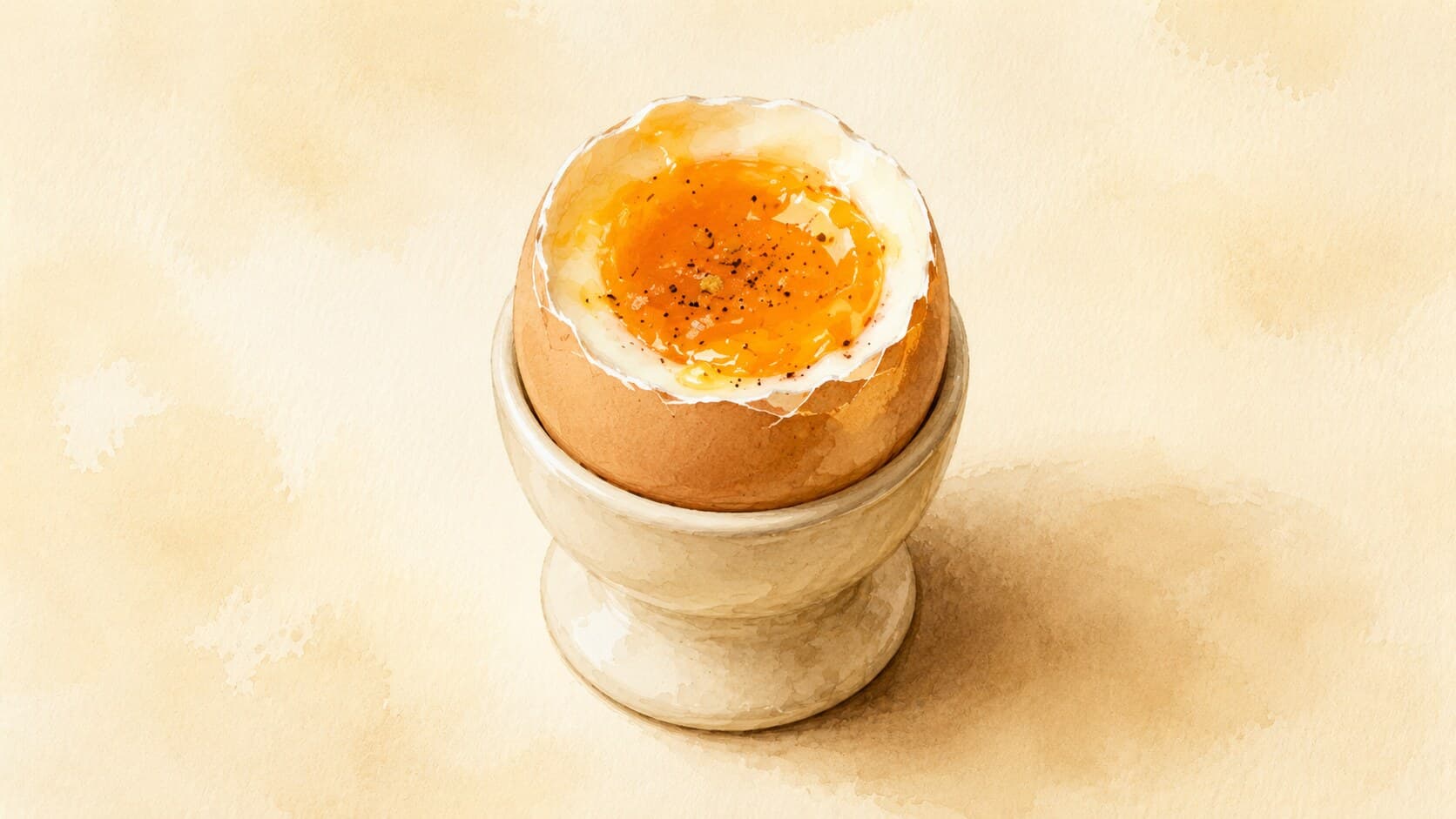
Ingredients
- 2 large eggs
- water, enough to cover eggs
- salt, to taste
Steps
In a medium saucepan, bring enough water to a boil over high heat, reaching a temperature of 100°C (212°F). This will ensure the eggs cook evenly.
Once boiling, gently lower the eggs into the water using a slotted spoon. This prevents cracking.
For a soft, runny yolk (about 6 to 7 minutes), use an egg pasteurized in the shell (through to the contents) — for everyone, not only high-risk diners, because a soft-boiled yolk is not fully cooked. With an ordinary (non-pasteurized) egg, boil about 9 to 10 minutes to a fully set yolk instead. Use a timer to keep track.
While the eggs cook, prepare an ice bath in a bowl with cold water and ice. This will stop the cooking process.
After the cooking time, transfer the eggs to the ice bath using the slotted spoon and let them cool for at least 5 minutes.
Gently tap the eggs on a hard surface to crack the shell, then peel under running water to make the process easier.
Serve the soft-boiled eggs warm, seasoned with salt to taste.
Why this works
The key to a perfect soft-boiled egg lies in the precise timing and temperature. By boiling the water to 100°C (212°F) before adding the eggs, you ensure that the cooking temperature is consistent, allowing the whites to set while keeping the yolk luscious and creamy. The recommended cooking time of 6 to 7 minutes strikes the right balance for a soft, runny yolk. If you find that your yolk is too runny or too firm, adjust your timing slightly in future attempts; just a minute can make a significant difference. If the eggs crack during cooking, don’t worry—this happens sometimes. A gentle simmer rather than a rolling boil can help minimize the risk of cracking. Peeling the eggs under running water helps to remove any stubborn bits of shell without damaging the soft whites. This method captures the ideal texture and flavor, enhancing the overall umami experience when enjoyed alone or as a side dish with vegetables. Mastering these variables will improve your soft-boiled eggs, making them a delightful addition to any meal.
Safety note. A six-to-seven-minute egg has set whites and a runny center — that's the dish, and this method does not include a validated step that reliably kills Salmonella; the soft look, the clock, and the residual heat are not proof that it is safe. To keep the runny center safely, use a shell egg pasteurized in the shell, through to the contents (heat-treated to destroy Salmonella); an ordinary egg that has only been washed, graded, or surface-sanitized — no matter how fresh — is not pasteurized through the contents. For high-risk diners (pregnancy, immunocompromised, very young or old), use pasteurized eggs, or extend the cook to 10-12 minutes for a fully-set yolk. The texture changes; the safety doesn't.
Common mistakes
-
Starting eggs cold from the fridge.
- Target: room-temperature eggs, or at least 10 minutes on the counter before they go in.
- Why it matters: a fridge-cold egg dropped into boiling water cracks more often, and the white sets unevenly because the center has further to travel.
- What to do: pull the eggs out while you bring the water to a boil; if you forgot, run them under warm tap water for 30 seconds.
-
Boiling instead of simmering (cooking liquid kept just below a full boil, with small bubbles only).
- Target: gentle simmer (small bubbles breaking the surface), not a rolling boil.
- Why it matters: a violent boil knocks the eggs against the pot and against each other, which is the main cause of cracking. It also overcooks the outer ring of white before the yolk has time to warm.
- What to do: once the water reaches a boil, lower the eggs in, then drop the heat one notch so the surface is just animated.
-
Skipping the ice bath (a bowl of water plus ice that stops cooking instantly).
- Target: at least 3-5 minutes in genuinely cold water with ice.
- Why it matters: residual heat keeps cooking the yolk for another minute or two after you pull the egg, which is enough to turn a perfect runny center into a fudgy one. The ice bath also contracts the white slightly away from the shell, which is what makes peeling possible.
- What to do: prep the ice bath while the eggs cook so it's waiting when the timer goes off.
-
Peeling dry, on a dry surface.
- Target: peel under a slow stream of cool running water.
- Why it matters: soft-boiled whites are fragile; water slips between the shell and the membrane and floats the bits off, instead of you tearing chunks out of the egg.
- What to do: crack the equator first, peel from the wide (air-pocket) end, and keep the egg turning under the tap.
What to look for
- the surface of the water just animated, not bouncing — that's the simmer (gentle, just-below-boil heat) you want.
- the shell rolling under your palm with a quiet, papery crunch — that even pressure is what cracks the whole shell at once so the membrane lifts off in sheets.
- a yolk that holds its dome for a beat when you cut in, then slowly slumps — set white, jammy center, not running everywhere.
- no green-grey ring around the yolk — that ring means you overcooked; pull the next batch a minute sooner.
Get the essays in your inbox — free
Weekly notes on flavor, fermentation, and food history — the writing behind the Atlas of Flavor. No spam; unsubscribe anytime.